
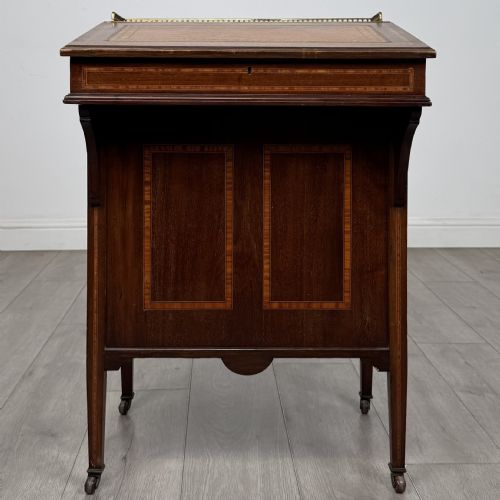
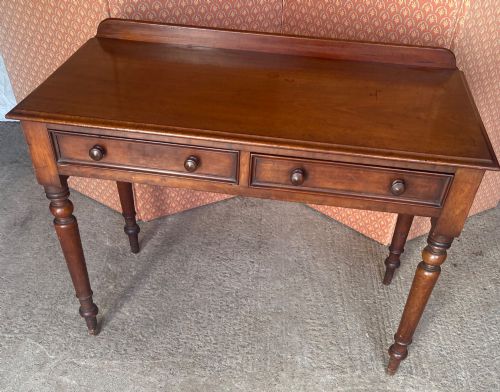
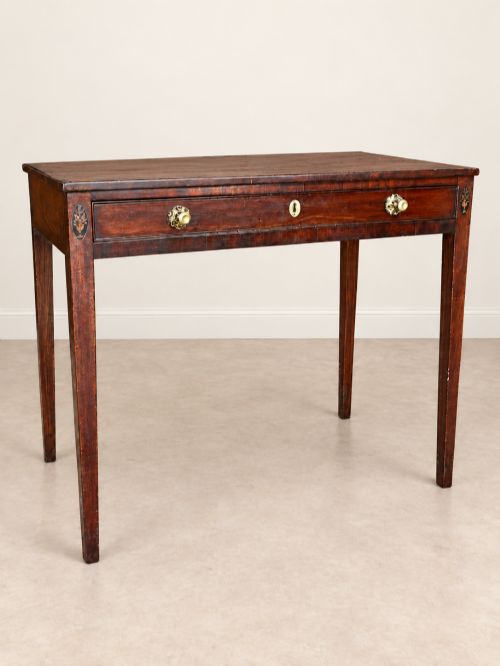
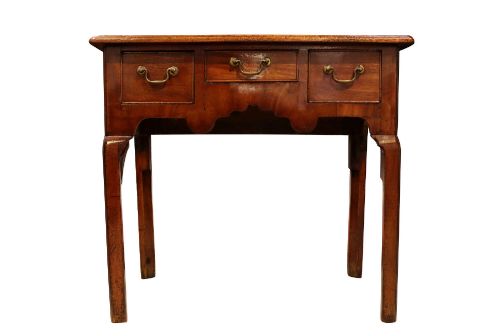
Mahogany Desk Table
When you search for a mahogany desk table, you enter a world of practical writing surfaces shaped by Georgian proportion and Victorian scale.
Mahogany Desk Table
A mahogany desk table brings together utilitarian workspace and domestic refinement, serving generations of writers, administrators and households as a central fixture of the study or library.
The pieces appearing most frequently across these records span the robust pedestal formats of the Victorian era and the lighter, inlaid writing tables characteristic of Edwardian workshops.
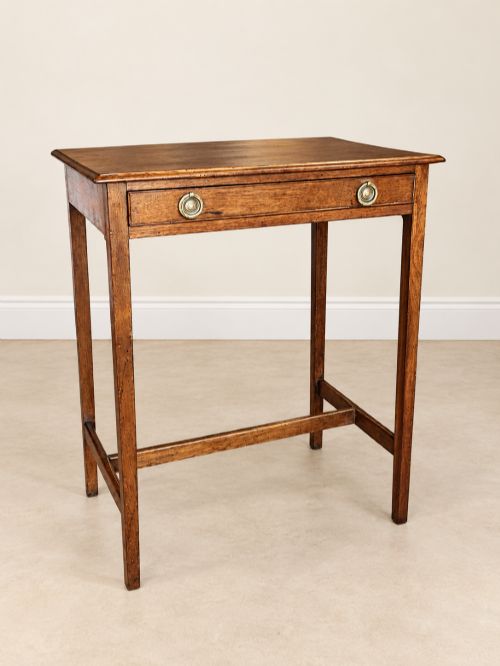
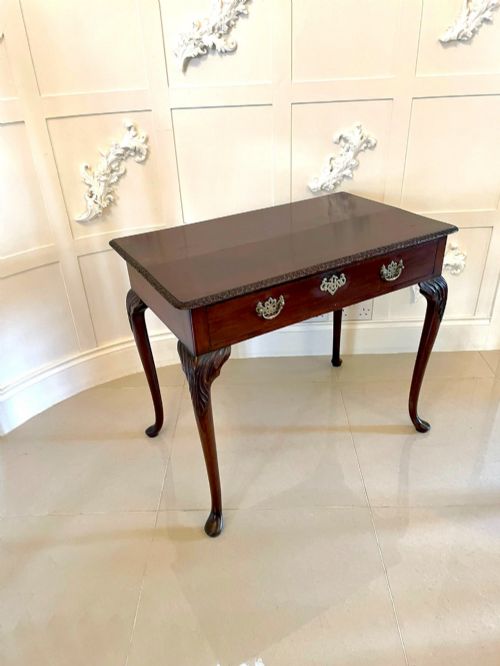
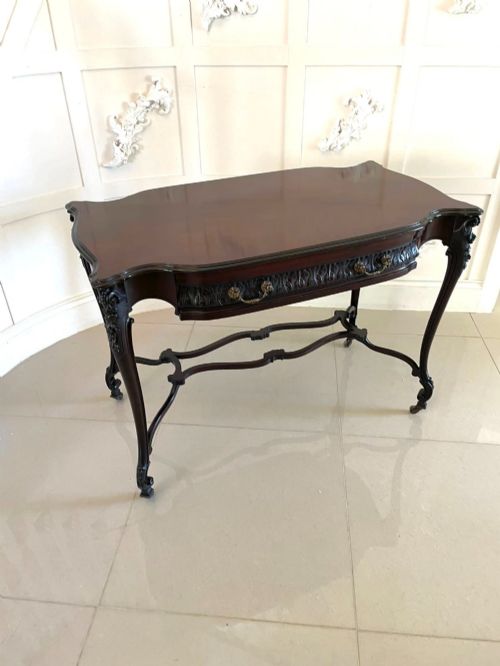
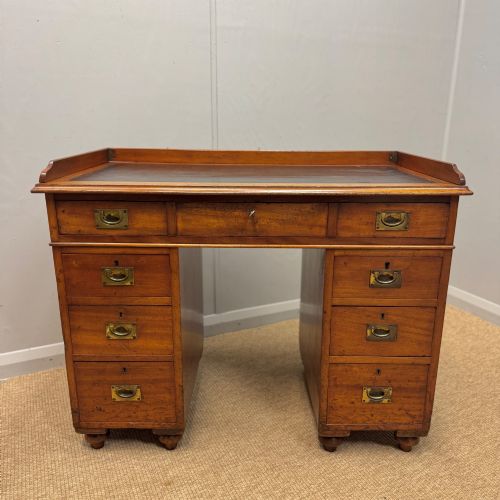
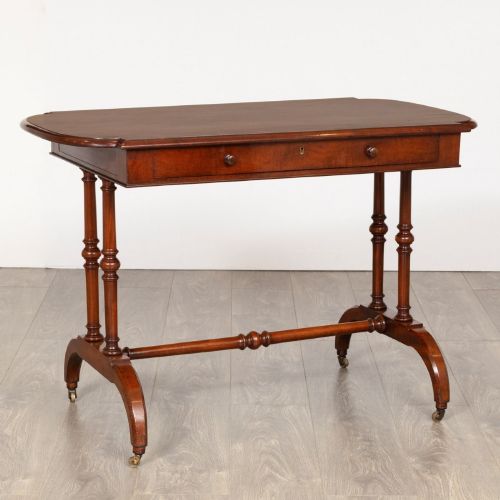
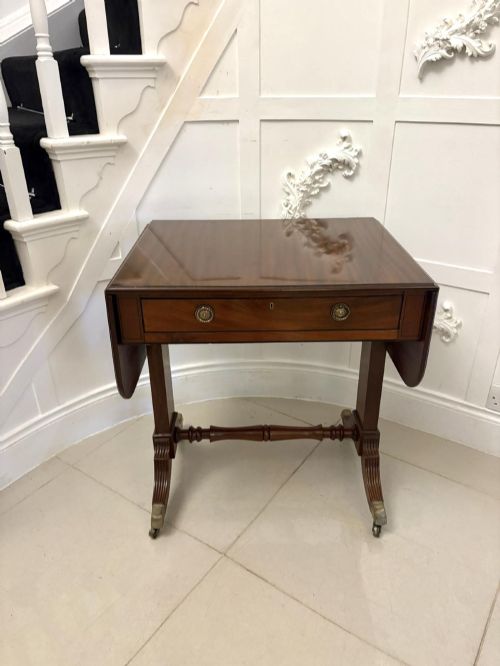
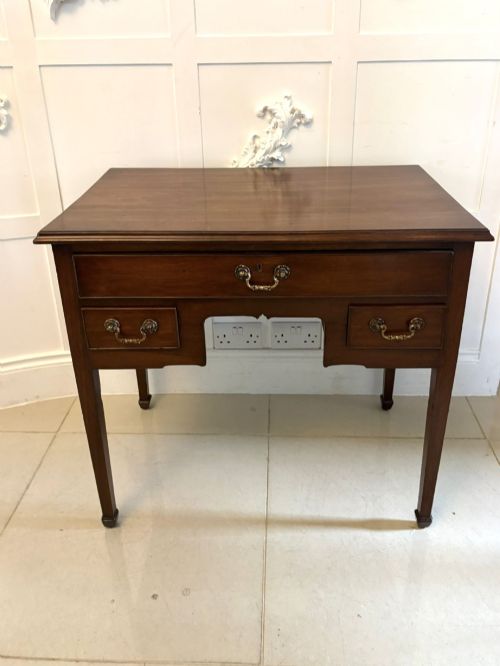
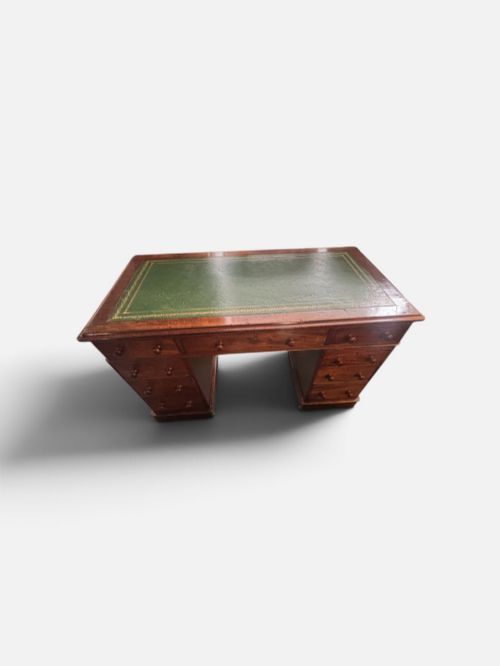
Makers adapted the fundamental mahogany desk table into varied configurations, ranging from twin pedestal partners desks and compact kneehole units to serpentine side tables and kidney-shaped writing desks.
Materials and Construction
Cabinetmakers relied heavily on solid mahogany and rich flame mahogany veneers, prized for deep grain figures and warm reddish-brown tones.
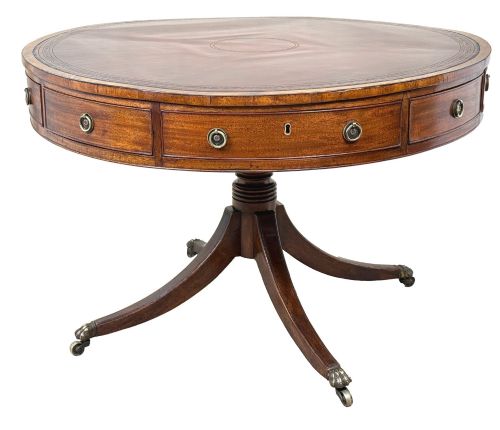
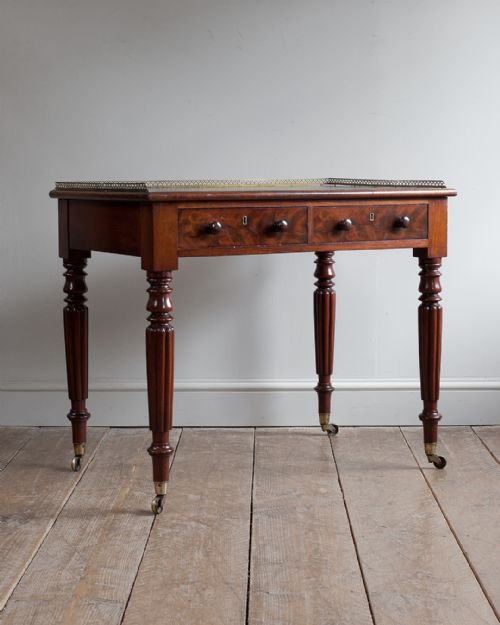
Surfaces were frequently finished with inset tooled leather writing pads, whilst structural details incorporated secondary timbers alongside brass handles, locks and castors.
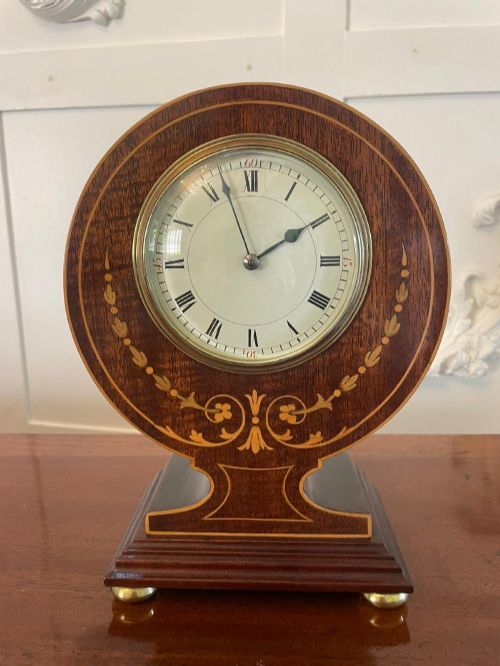
Inlaid decorative schemes often introduced contrasting satinwood, boxwood and maple banding to accentuate borders, drawers and writing surfaces.
Several desks feature hidden compartments, secret drawers, and clever mechanical levers designed to conceal private correspondence from prying eyes.
Evaluating Construction and Finish
Superior examples of a mahogany desk table demonstrate meticulous timber selection, ensuring that veneer figures on drawer fronts match symmetrically and age with a unified patina.
Internal joinery distinguishes finer pieces, evidenced by hand-cut dovetails on drawer linings, sturdy framing and the retention of original hardware such as brass drop handles and working locks.
The refinement of carved mouldings, precise string inlay and the integrity of secondary woods separate high-workshop production from more utilitarian domestic furniture.
Maple & Co.·Heal and Son·Trollope & sons·Gillows·Edwards & Roberts·François Linke·James Mein of Kelso·Spillman & Co·JAS Shoolbred
The Mahogany Desk Table Glossary
- Kneehole desk
- A compact desk featuring a central recessed space for the legs, flanked by pedestals containing multiple small drawers. This form became popular during the Georgian period.
- Partners desk
- A large double-sided pedestal desk designed for two people to work opposite one another, featuring drawers and cupboards on both faces. These pieces were standard in nineteenth-century libraries and offices.
- Satinwood
- A pale, durable exotic wood native to India and Ceylon, used extensively for contrasting stringing and marquetry inlay on Edwardian furniture. It provides a striking visual border against dark mahogany.
- Flame mahogany
- Timber cut from the branch junction or fork of the tree, producing a distinctive flickering flame-like grain pattern. Cabinetmakers reserved this prized veneer for prominent drawer fronts and tabletops.
- Dovetail
- A traditional wood joint interlocking wedge-shaped fingers, securing drawer corners against lateral pull. Hand-cut dovetails indicate earlier craftsmanship before mechanical routing.
Mahogany Desk Table: Frequently Asked Questions
What is a mahogany desk table used for?
These tables served primarily as dedicated writing surfaces for correspondence, bookkeeping and administrative tasks within private homes and institutional offices.
Over time, many adapted to general domestic use as side tables, library consoles or dressing furniture depending on their specific configuration.
How do I date a mahogany desk table?
Dating relies upon examining construction methods, timber choice, handle styles and overall stylistic proportions, moving from Georgian simplicity to ornate Victorian carving and Edwardian inlay.
Secondary woods inside drawers and the presence of maker stamps or paper labels further help establish the period of manufacture.
Are these desks suitable for daily work?
Most antique writing tables and pedestal desks offer sturdy timber construction and functional drawer space well-suited for modern study environments.
Care should be taken with historic leather writing surfaces, which often benefit from protective blotters or professional leather dressing.
What is the difference between a writing table and a pedestal desk?
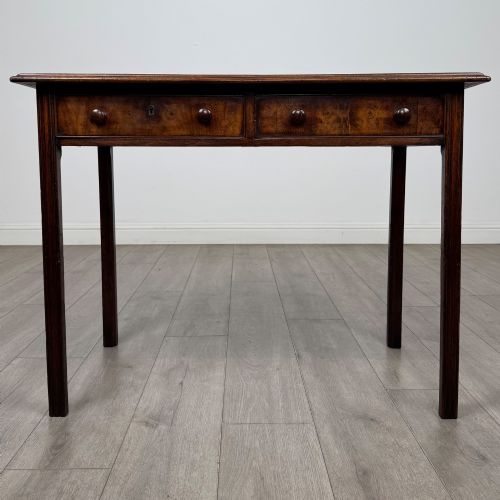
A writing table typically stands on four legs with one or more drawers beneath the surface, offering an open and lighter profile.
By contrast, a pedestal desk incorporates banks of drawers reaching down to the floor on either side, providing substantial enclosed storage capacity.