

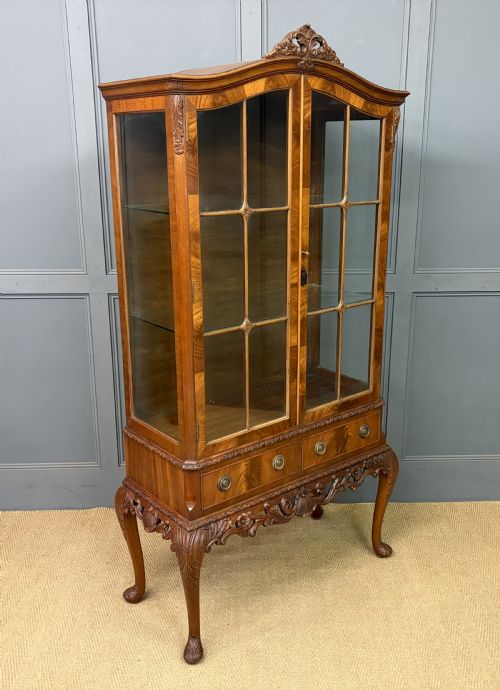
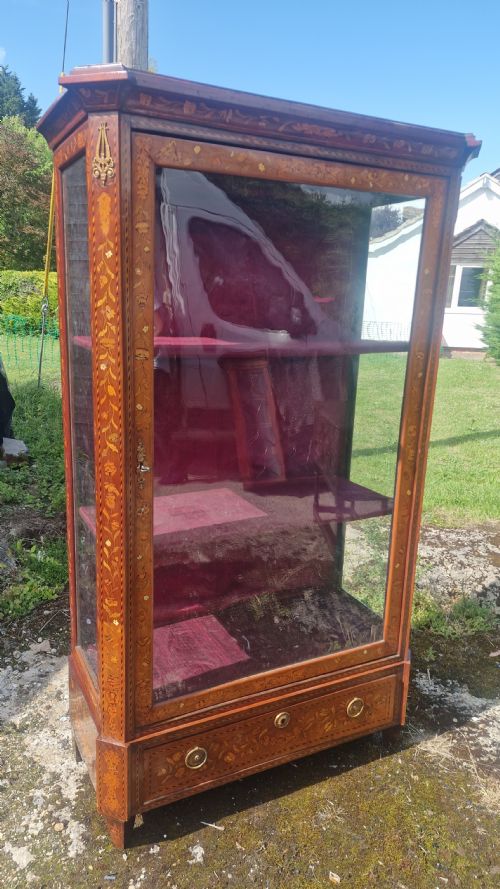


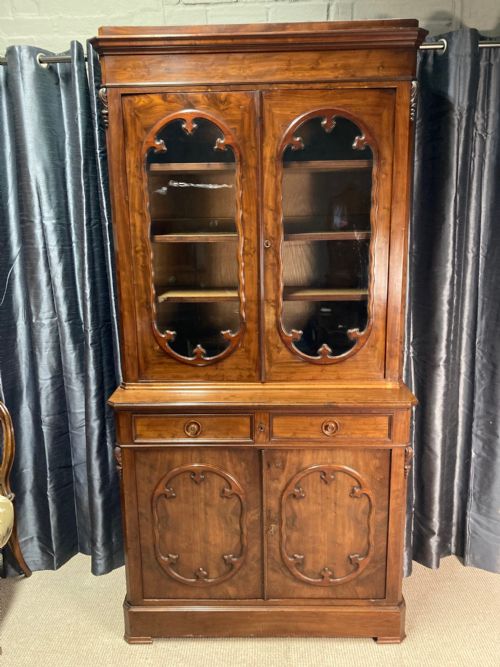

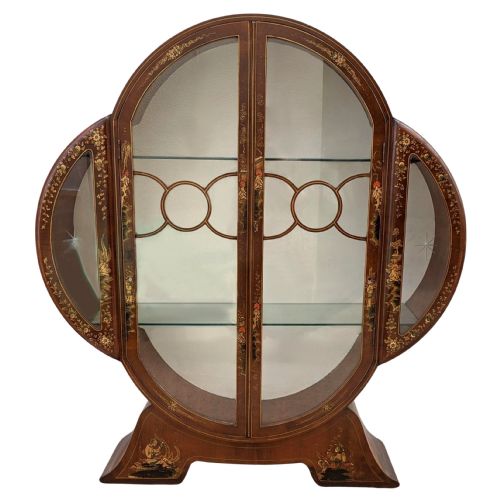


Mahogany and Walnut Bookcase
These mahogany and walnut bookcase pieces combine rich timbers to house libraries and display collections with traditional craftsmanship.
Mahogany and Walnut Bookcase
A mahogany and walnut bookcase brings together two favoured cabinet timbers, offering large open shelving, glazed display cabinets, or fitted cylinder roll top desks. Buyers seeking a mahogany and walnut bookcase will encounter forms ranging from nineteenth-century vitrines and Regency display cabinets to Edwardian open shelves and Art Deco stacking units.
The selection includes specific regional interpretations such as Dutch marquetry and French provincial designs, alongside revival pieces like Queen Anne style display cabinets and Victorian Gothic revival items. Many examples incorporate glass doors, brass fittings, and velvet linings, serving both practical storage and formal display functions in domestic interiors.
How they were made
Constructed primarily from solid wood frames with veneered mahogany and walnut surfaces, these pieces often utilise contrasting grain patterns to create decorative visual impact. Marquetry inlay work appears on select cabinets, incorporating detailed floral or geometric motifs into the timber surfaces.
Glazing bars secure glass panes within cabinet doors, while internal fittings frequently include adjustable wooden shelves and velvet-lined compartments. Brass hardware, such as hinges, handles, and locks, accompanies structural metalwork and gold leaf accents on decorative mouldings.
Mahogany and Walnut Bookcase Retail Price Guide 2026
Typical asking prices for mahogany and walnut bookcase among the pieces listed under this phrase on Sellingantiques today, from the lower quarter to the upper quarter. They describe what is for sale here now, not the wider market.
Listings feature periods spanning from the Regency era through Victorian, Edwardian, and Art Deco, utilising mahogany, walnut, brass, and glass.
What varies in quality
The refinement of the timber selection and the precision of the veneer matching largely define the standard of a piece, with superior examples displaying continuous grain flow across doors and drawers. Finer execution is evident in crisply carved mouldings, hand-cut dovetail joints, and well-fitted internal components that operate smoothly.
Stylistic ambition also separates standard production from exceptional pieces, as seen in elaborate marquetry work, specialised glass treatments, and branded maker attribution. The integration of complex forms, such as cylinder roll top desks combined with glazed bookcases, demands higher levels of joinery skill.
Maple & Co.·Heal's
The Mahogany and Walnut Bookcase Glossary
- Vitrine
- A glass-fronted cabinet designed for the display of curiosities, porcelain, or fine books. These pieces typically feature glazed doors on the front and sometimes the sides to maximise visibility.
- Marquetry
- The art of applying decorative veneer pieces to a structure to form intricate pictorial or geometric patterns. Different coloured timbers, including walnut and exotic woods, create tonal contrast.
- Cylinder Roll Top
- A curved wooden shutter that slides back into the body of a desk to conceal the writing surface and pigeonholes. This mechanism requires precise joinery to operate smoothly.
- Glazing Bar
- A narrow wooden strip holding individual panes of glass within a sash or door frame. These bars form the geometric grid patterns characteristic of period cabinet doors.
Mahogany and Walnut Bookcase: Frequently Asked Questions
How do I care for mahogany and walnut timber?
Keep wooden furniture away from direct sunlight and heat sources to prevent the timber and veneers from drying out and splitting. Regular dusting with a soft, dry cloth preserves the finish without requiring heavy polishes.
Apply a microcrystalline wax periodically to nourish the wood and maintain its natural sheen. Avoid silicone-based sprays, which can penetrate the pores and damage antique surfaces over time.
Can adjustable shelves hold heavy books?
Many period bookcases feature adjustable wooden shelving supported by wooden ratchets or metal pins. While suitable for standard volumes, heavier folio collections require careful weight distribution.
Inspect the shelf thickness and support mechanisms before loading large quantities of books. Thicker solid wood shelves resist bowing better than older veneered panels.
How do I distinguish Regency from Victorian pieces?
Regency furniture typically exhibits classical restraint, clean architectural lines, and subtle brass inlay or mounts influenced by ancient Roman and Greek designs. Proportions remain balanced and light, focusing on the natural grain of the mahogany or walnut.
Victorian pieces often display heavier proportions, more exuberant carving, and revival styles such as Gothic or Queen Anne influences. The decorative vocabulary expanded during this period to include richer marquetry and more complex mechanical desk fittings.
What is a stacking bookcase?
A stacking bookcase consists of modular, glass-fronted shelf sections that sit vertically one upon another beneath a top cornice and above a base plinth. Each tier operates independently to protect the books inside from dust.
This functional form gained popularity for its adaptability, allowing owners to add sections as their libraries grew. They suit both traditional and modern interior settings due to their clean vertical lines.