

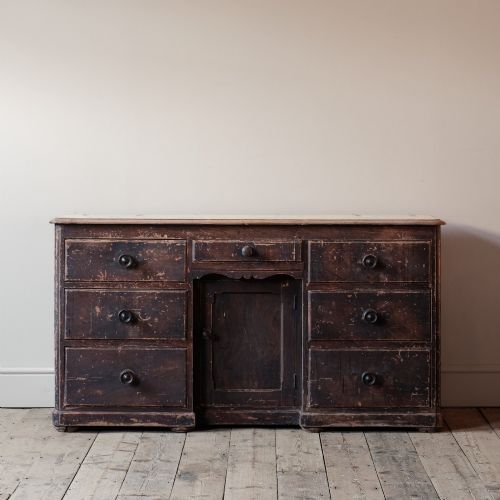
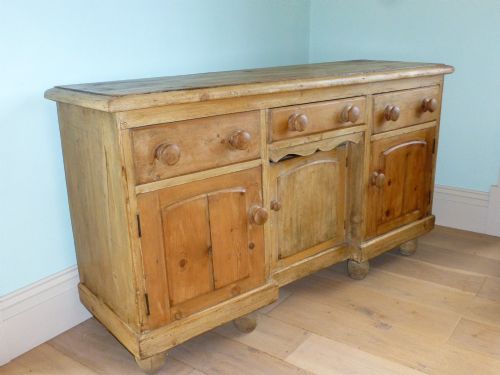
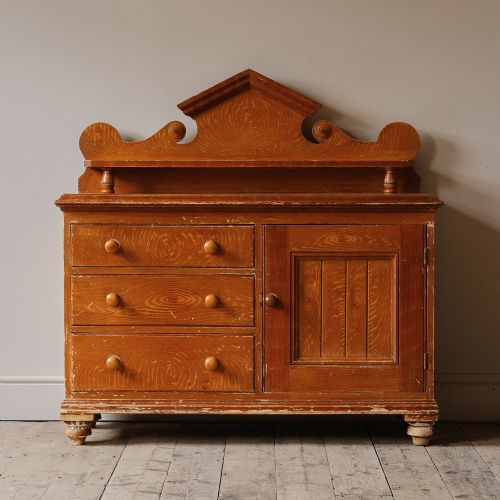
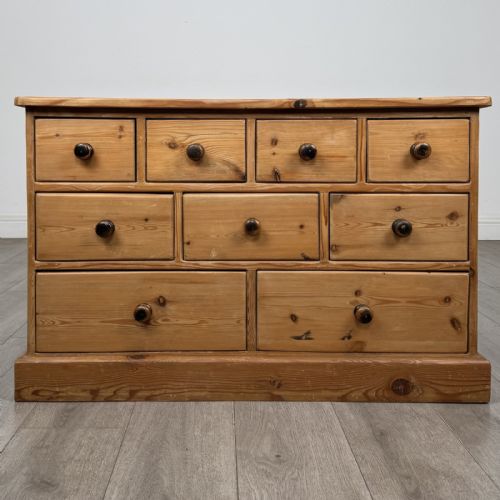




Low Pine Sideboard
A low pine sideboard provides sturdy, functional storage with the honest charm of country and Victorian utility.
Low Pine Sideboard
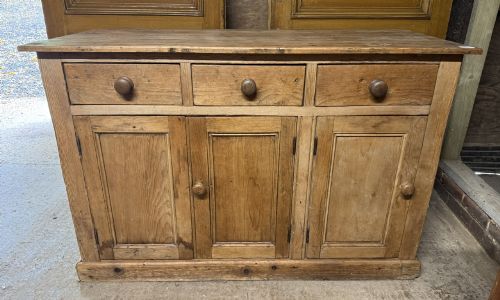
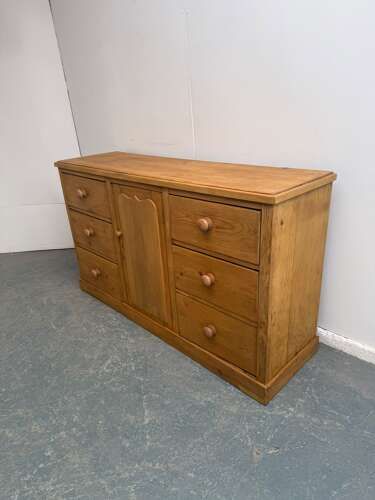
A low pine sideboard brings together the practical forms of kitchen dressers, potboard bases, and boot room cupboards found across the nineteenth and eighteenth centuries. These pieces serve as substantial storage furniture, usually featuring a combination of cupboards and drawers beneath a low timber top.
Most examples encountered here belong to the Victorian and nineteenth-century periods, hailing from English, Scottish, and Swedish workshops. Styles range from plain farmhouse and rustic country to more formal Gothic Revival designs and painted finishes.
How they were made
Construction relies heavily on solid pine and pitch pine, frequently assembled with straightforward board and frame techniques suited to heavy daily use in kitchens and dairies. Iron and brass hardware, including traditional hinges and pulls, secure the doors and drawers.
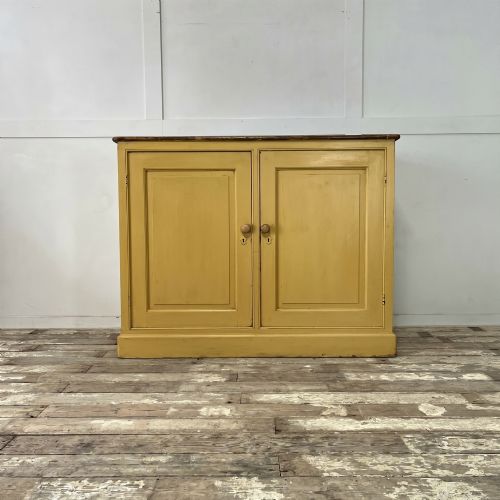
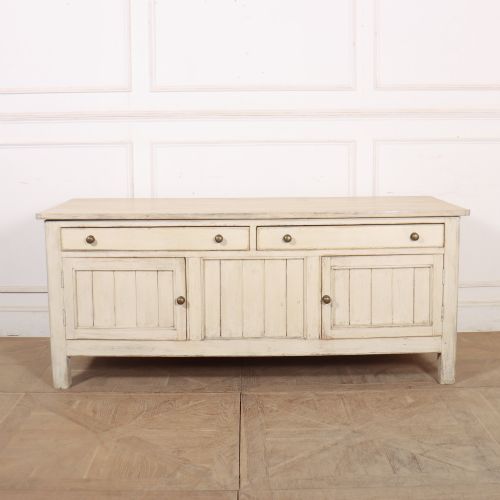
Surface treatments vary between natural waxed finishes that highlight the grain and historical layers of paint. Painted wood and painted timber finishes are common, reflecting the practical maintenance of nineteenth-century domestic spaces.
Low Pine Sideboard Retail Price Guide 2026
Typical asking prices for low pine sideboard among the pieces listed under this phrase on Sellingantiques today, from the lower quarter to the upper quarter. They describe what is for sale here now, not the wider market.
Boot room cupboards often retain faint mud splashes from Victorian hallways, reminding us they served working country homes.
What varies in quality
Quality rests on the integrity of the timber and the honesty of the construction, distinguishing straightforward utility pieces from finer vernacular cabinetwork. Heavier pitch pine yields robust cupboards, while older pieces rely on thick, hand-planed boards.
Originality of surface and hardware dictates the character of each piece. Retaining early paint layers or traditional brass and iron fittings elevates an example above those stripped or altered in later decades.
The Low Pine Sideboard Glossary
- Potboard dresser base
- A low kitchen base featuring an open lower shelf for storing pots and pans. This form underpins many traditional country dining spaces.
- Chiffonier
- A low cabinet equipped with drawers and doors, popular during the Victorian and Edwardian periods. It provides compact storage for tableware or linens.
- Breakfront
- A piece of furniture where the central section projects forward from the flanking cabinets. This configuration adds architectural depth to larger cupboards.
- Gothic Revival
- A nineteenth-century style drawing inspiration from medieval architecture. It incorporates pointed arches, heavy mouldings, and distinct ironwork into functional cabinets.
Low Pine Sideboard: Frequently Asked Questions
What is a potboard dresser base?
A potboard dresser base is a low kitchen cabinet featuring an open lower shelf designed specifically for storing heavy cookware.
These sturdy bases formed the foundation of traditional country kitchens before fitted cabinetry became common.
How do I care for a waxed pine sideboard?
Care involves applying a traditional beeswax polish occasionally to nourish the timber and protect the surface from moisture.
Avoid placing the sideboard near direct heat sources to prevent the pine from splitting or warping over time.
Are these sideboards suitable for modern kitchens?
These low cupboards offer deep storage and sturdy surfaces that work well for modern kitchen prep or dining room storage.
Their practical proportions allow them to sit comfortably beneath windows or alongside contemporary fittings.
How do I distinguish Victorian pine from older pieces?
Victorian pine often displays machine-sawn timber uniformity and standard brass or iron hardware typical of the later nineteenth century.
Eighteenth-century examples tend to show hand-planed board variations, pegged joints, and simpler, heavier iron fixings.