
Louis Style Table
A louis style table brings French court revival elegance into a room through curved lines, fine veneers and cast metal mounts.
Louis Style Table
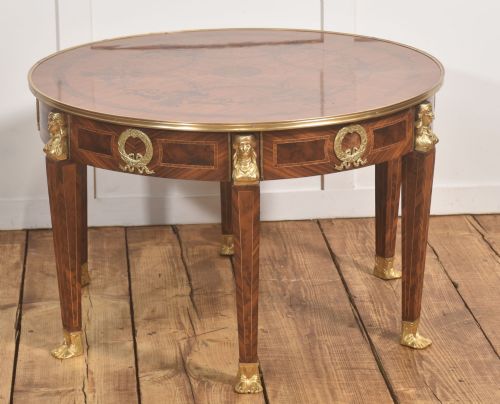
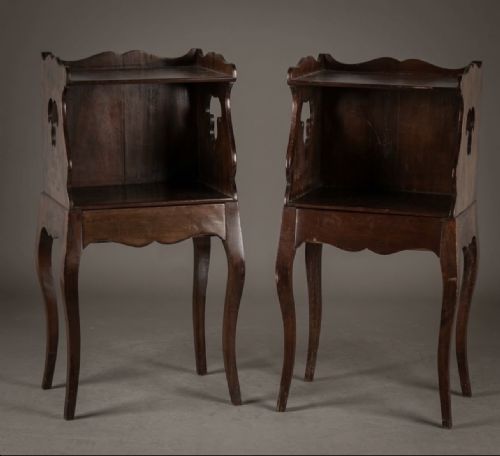
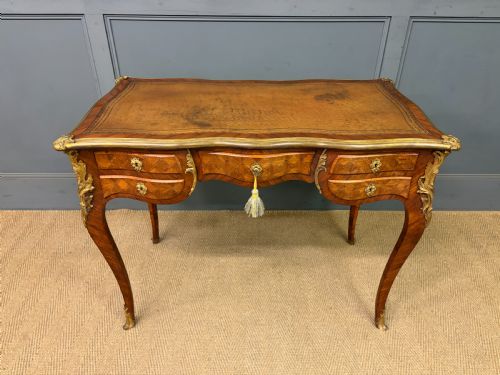
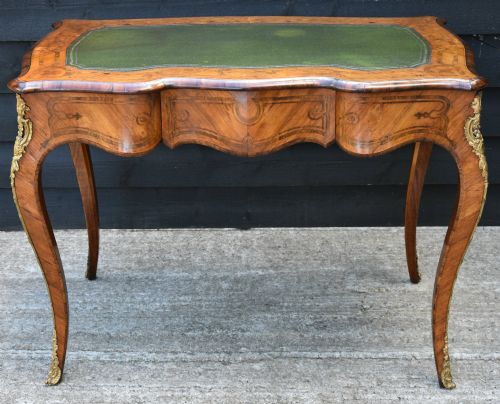
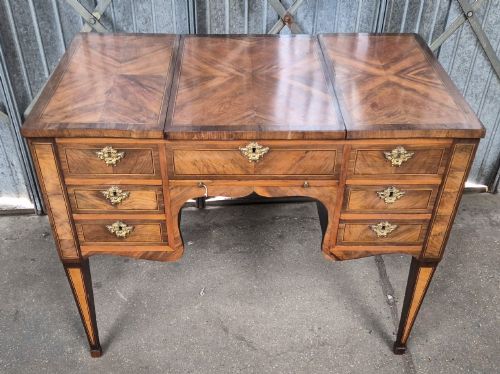
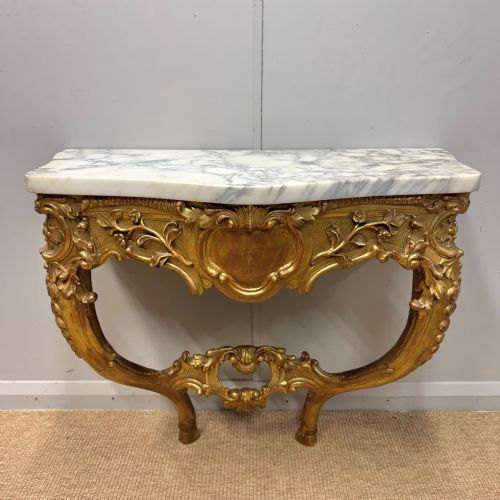
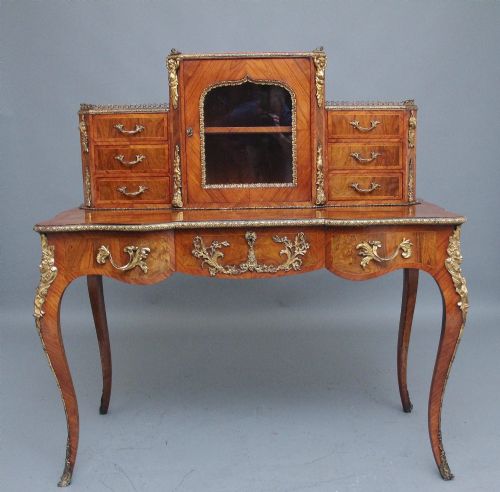
When buyers search for a louis style table, they encounter a range of revived French forms spanning the mid-nineteenth century to the early twentieth century. The selection includes coffee tables, console tables, side tables, and occasional tables, alongside writing desks and poudreuses.
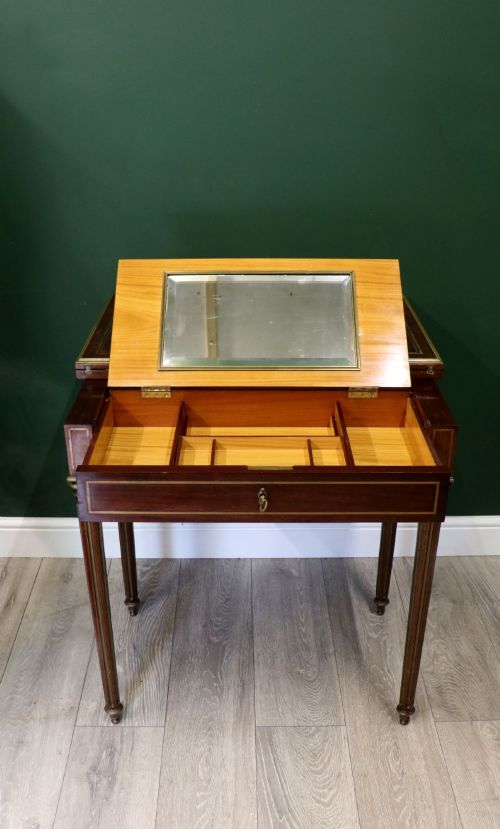
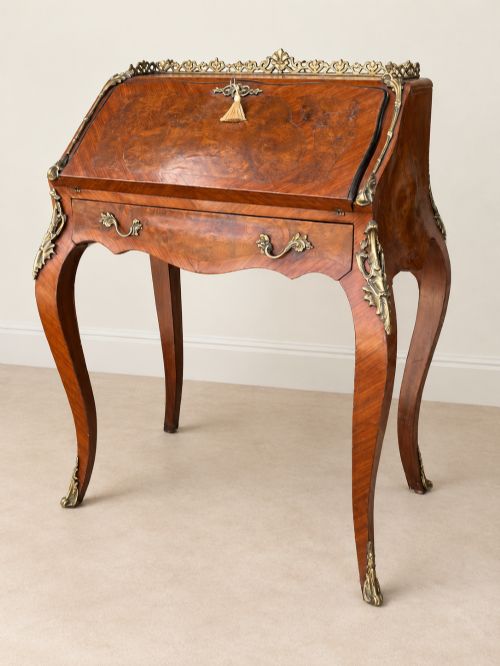
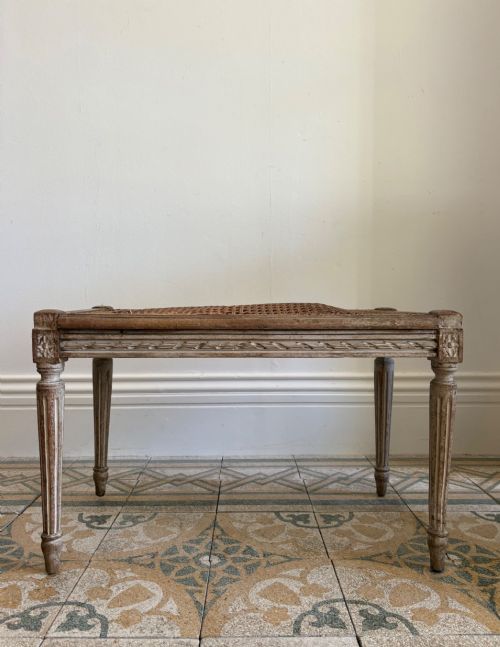
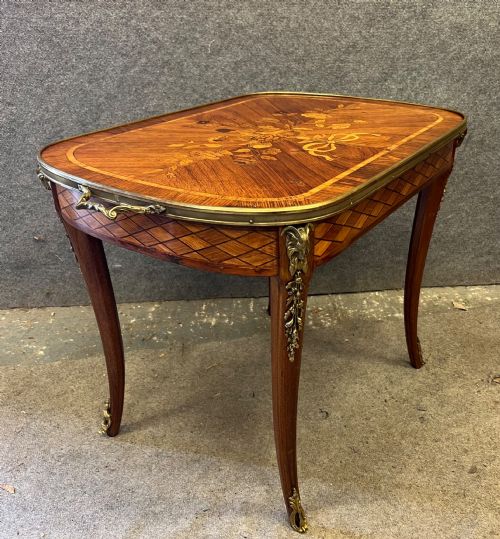
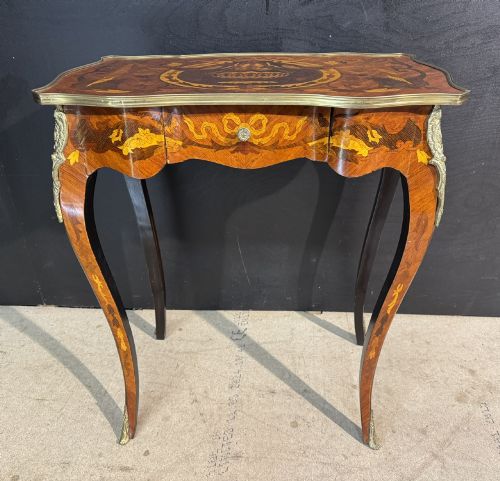
Most pieces seen on this page follow the curvilinear asymmetry of Louis XV revival or the disciplined neoclassical geometry of Louis XVI revival. These surfaces often feature elaborate marquetry or parquetry patterns set into timber grounds.
How they were made
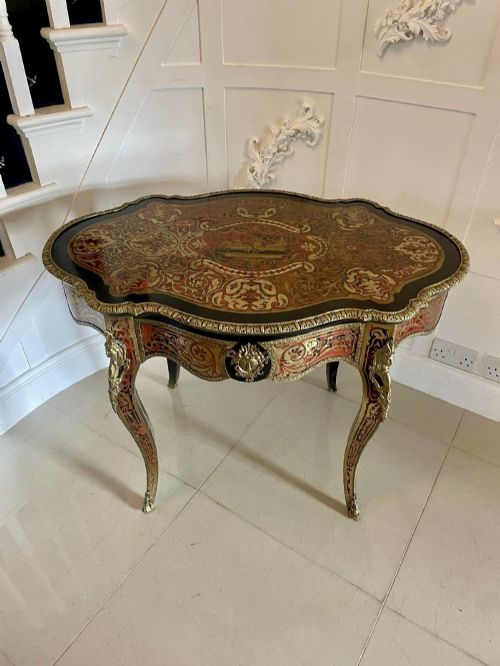
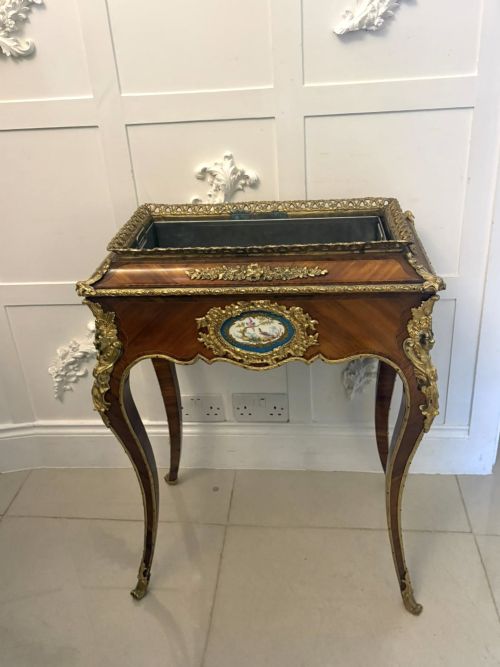
Cabinetmakers constructed these tables using dense timbers such as kingwood, walnut, rosewood, and mahogany, frequently applying detailed marquetry and parquetry in geometric or floral arrangements. Surfaces often incorporate marble tops and glass panels.
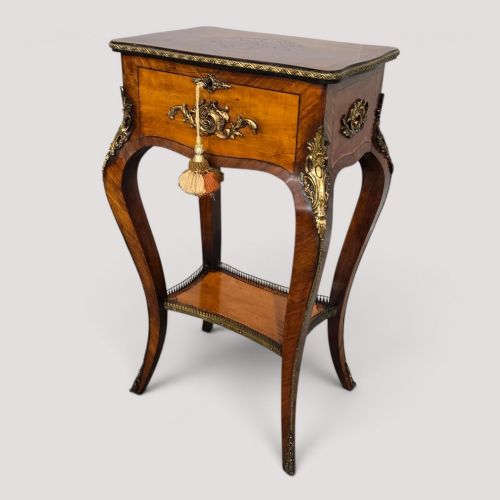
Mounts and decorative accents are cast in ormolu, gilt bronze, and brass, fixed to the timber frames to highlight structural lines and corners.
Listings span the period from eighteen-fifty to nineteen-thirty, uniting walnut, kingwood, and rosewood with cast ormolu and porcelain.
What varies in quality
Quality separates through the crispness of the gilt bronze or ormolu mounts and the precision of the timber parquetry and marquetry inlay. Finer examples show hand-chased metalwork and carefully selected wood grains that align with the piece's proportions.
Construction methods also define the tier of the piece, with freestanding tables finished with detailed veneer work on all sides rather than relying on secondary timbers for unseen areas.
Gillows·JAS Shoolbred·Jean-Baptiste Delettrez·Achille Brocot·Henry Marc·Japy Freres·Francois Linke
The Louis Style Table Glossary
- Ormolu
- Gilded bronze mounts applied to furniture. This technique creates metallic highlights along corners and aprons.
- Marquetry
- Veneer patterns forming pictorial or floral designs. Artisans cut various coloured woods to fit precisely into a ground veneer.
- Parquetry
- Geometric wood veneer patterns such as cubes or chequers. It creates a structured, repeating surface design on table tops.
- Poudreuse
- A French dressing table with folding lids and compartments. These pieces often conceal a mirror and writing space inside.
- Console table
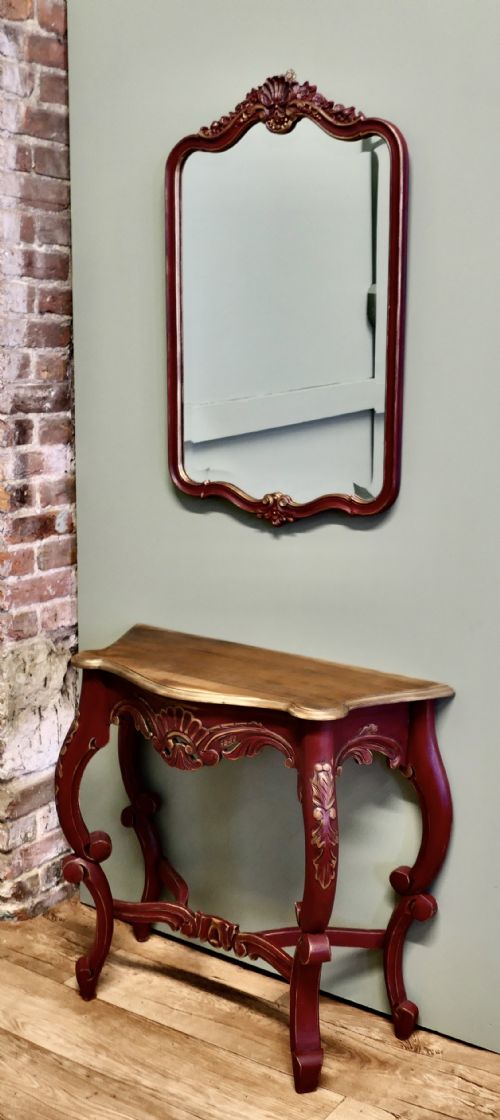
- A table designed to stand against a wall, frequently paired with a matching wall mirror.
Louis Style Table: Frequently Asked Questions
What is a louis style table?
A louis style table is a nineteenth or early twentieth-century revival piece inspired by the decorative arts of the French royal courts. These tables draw on the curved Rococo forms of Louis XV or the straight, classical lines of Louis XVI.
They utilise woods like kingwood and walnut, frequently finished with ormolu mounts, marble tops, and detailed marquetry inlay.
How do I identify Louis XV and Louis XVI styles?
Louis XV style tables feature curving cabriole legs, asymmetrical shapes, and organic scrollwork ornamentation. They focus on fluid lines and serpentine silhouettes.
Louis XVI style pieces display straight, fluted legs, symmetry, and neoclassical motifs like urns and swags. The overall geometry is more restrained and architectural.
Where should I place a console table?
Console tables fit neatly against a flat wall in a hallway, living room, or dining space. They provide a surface for lamps, clocks, or decorative objects without occupying significant floor space.
Many examples are designed to sit directly beneath a matching wall mirror to create a cohesive decorative arrangement.
Are these tables freestanding?
Many of the occasional, coffee, and centre tables on this page are finished on all sides so they can stand in the middle of a room. Desks and poudreuses are also frequently built as freestanding items.
Check the listing details to confirm if a console or side table is designed to sit against a wall or float in open space.