



Library Stairs
Library stairs bring height to high shelves, and these timber sets combine practical climbing with fine craftsmanship.
Library Stairs
When you search for library stairs, you are looking at practical ascents designed to reach high volumes in private rooms and institutional collections. The pieces listed on this page span the eighteenth, nineteenth, and early twentieth centuries, encompassing Georgian, Victorian, and Edwardian periods.
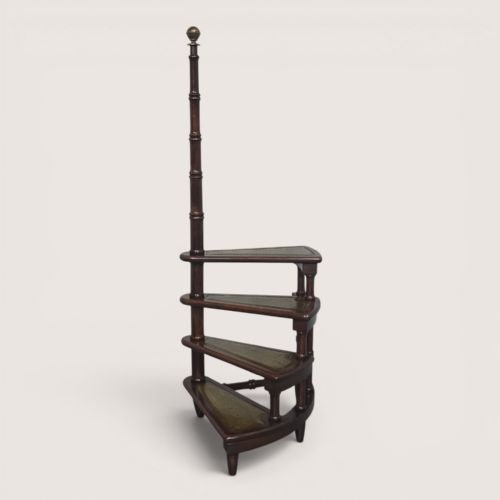
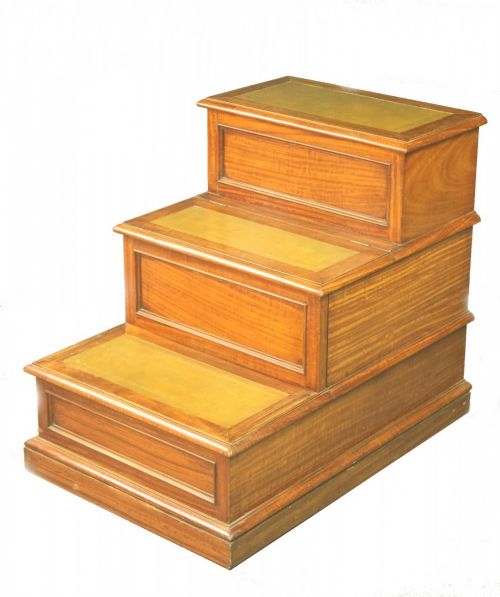
The most common forms you will meet here are library steps, bed steps, library ladders, and spiral variants. These objects range from compact sets of steps to tall ladders in various timbers.
Origins represented in the evidence include standard flights and spiral designs, often incorporating inset leather treads for grip. They serve the dual purpose of functional furniture and sculptural room additions.
How they were made
Cabinet makers utilised dense hardwoods such as mahogany, oak, and satinwood, alongside utilitarian pine for structural integrity. Selected pieces also incorporated brass hardware and leather inserts on the treads.
Construction techniques balanced stability with elegance, particularly evident in turned supports and spiral configurations. Joinery methods secured weight-bearing treads to upright frames designed for frequent climbing.
Library Stairs Retail Price Guide 2026
Typical asking prices for library stairs among the pieces listed under this phrase on Sellingantiques today, from the lower quarter to the upper quarter. They describe what is for sale here now, not the wider market.
Some library steps double as bed steps, proving that Georgian and Victorian owners were remarkably practical about morning climbs.
What varies in quality
Quality rests in the choice of timber and the precision of the joinery, distinguishing sturdy architectural pieces from simpler utilitarian items. Mahogany and satinwood examples with fine grain and finished details sit at the upper end of the scale.
The sophistication of the design, such as spiral configurations or turned supports, dictates the refinement of the piece. Integrated leather treads and Gothic Revival detailing further separate standard utilitarian ladders from distinguished examples.
The Library Stairs Glossary
- Treads
- The horizontal surfaces of the steps upon which one walks. These are frequently topped with leather in finer examples.
- Bed steps
- Smaller sets of steps originally intended to assist in climbing into high four-poster beds. They often double as library steps in domestic settings.
- Gothic Revival
- An architectural and decorative style drawing on medieval forms, featuring pointed arches and structural verticality. Pieces from this movement show distinct pointed motifs.
- Spiral steps
- A winding ascent built around a central axis to save floor space. They require precise joinery to maintain structural stability.
- Satinwood
- A durable hardwood with a lustrous, golden sheen utilised in fine cabinet making. It provides a pale, reflective surface for eighteenth and nineteenth-century pieces.
Library Stairs: Frequently Asked Questions
What are library stairs used for?
Library stairs provide safe access to elevated bookshelves in domestic and institutional settings. They allow users to reach high volumes stored beyond normal standing reach.
Beyond simple utility, these timber structures serve as decorative furniture pieces that add architectural interest to a room.
How do I date library stairs?
Dating relies on identifying timber choices, period styles, and construction methods characteristic of eighteenth, nineteenth, or early twentieth-century workshops. Georgian and Victorian examples display distinct proportions and decorative motifs.
Matching the style, such as Gothic Revival or Regency, to known period manufacturing gives a clearer indication of age.
Are library stairs stable to climb?
Most solid hardwood sets are engineered for regular weight-bearing use during daily retrieval of books. Heavier timber frames and secure joinery provide the necessary foundation for climbing.
Spiral and ladder formats require careful placement on level flooring to ensure safe ascent and descent.
What woods were used for library stairs?
Cabinet makers predominantly used mahogany, oak, and satinwood for fine domestic examples. Pine was frequently employed for larger ladders and utilitarian workshop pieces.
Secondary materials like brass and leather were added for structural reinforcement and grip on the treads.