







Library Music Stand
A library music stand brings architectural timber and adjustable brass together to hold folios and sheets at precisely the correct height for performance or study.
Library Music Stand
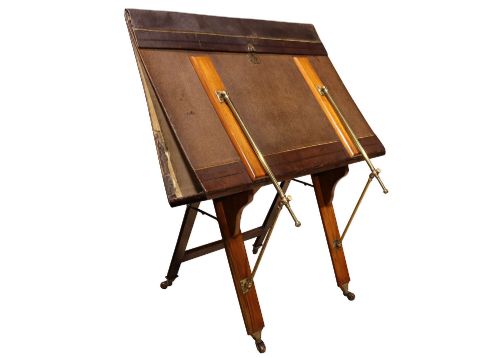
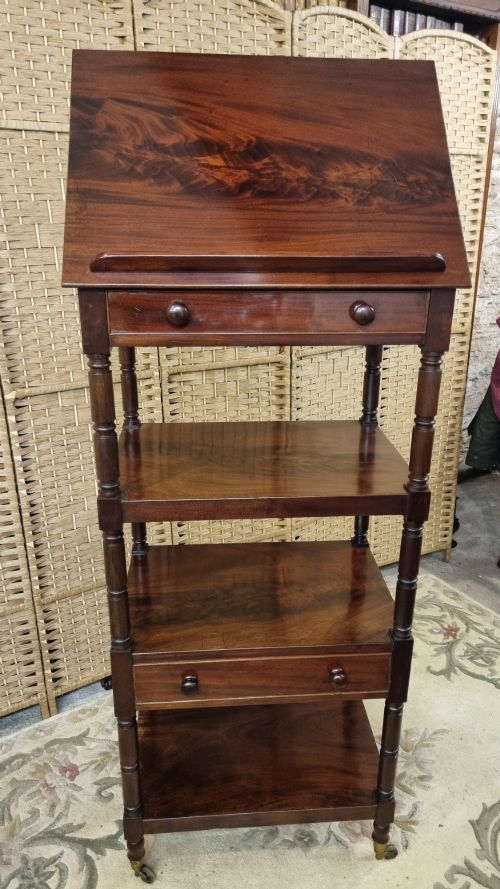
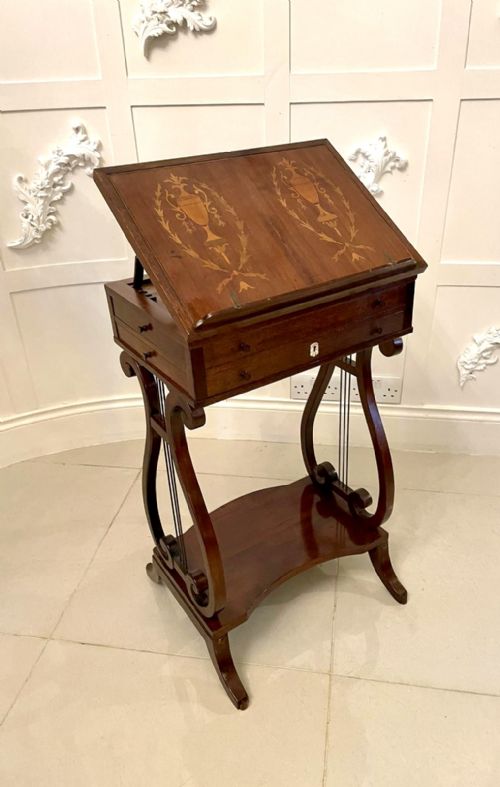
When you search for a library music stand, you encounter pieces designed primarily for reading, writing, and holding sheet music or heavy folios. These objects range from George II mahogany adjustable double reading tables to 1930s Harrods music stands and Victorian ebonised mahogany what-nots.
The versions you are most likely to meet on this page belong to the 19th Century, Victorian period, and Georgian eras. Makers and workshops utilised forms such as writing tables with folio stands, reading tables, and canterburys to serve scholars and musicians in period libraries.
Materials and construction
Makers constructed these pieces predominantly from solid and veneered timbers including mahogany, walnut, rosewood, satinwood, and ebonised mahogany. These woods provided the necessary structural integrity to support heavy books and adjustable reading surfaces without warping.
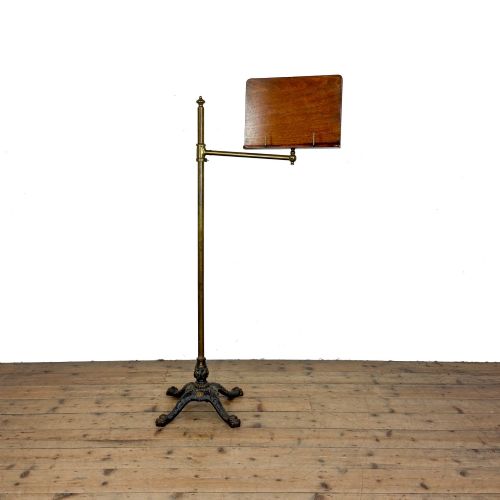
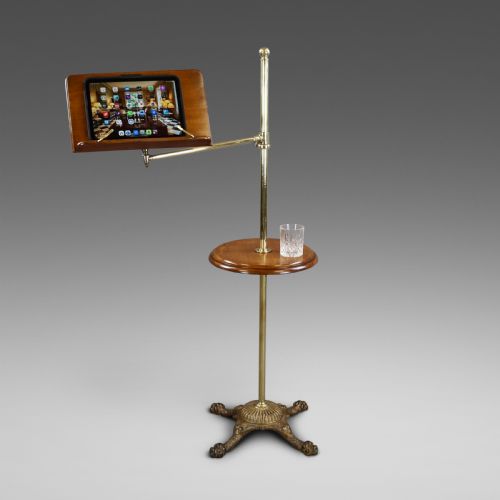
Brass fittings and inlay appear frequently to operate the mechanical height adjustments and to decorate the timber surfaces. Cast iron also provides weight and stability in base components where heavy reading angles require secure balance.
Library Music Stand Retail Price Guide 2026
Typical asking prices for library music stand among the pieces listed under this phrase on Sellingantiques today, from the lower quarter to the upper quarter. They describe what is for sale here now, not the wider market.
The listings here feature pieces spanning the 18th Century, Regency period, Victorian era, and the 1930s.
Distinguishing quality in stands
The distinction between standard examples and superior ones rests upon the sophistication of the adjustable mechanism and the execution of the cabinetry. Pieces attributed to prominent makers exhibit refined timber selection, such as figured mahogany and crisp brass inlay, alongside smooth mechanical operation.
Proportion and structural harmony separate ordinary utility pieces from high-status library furniture. The integration of auxiliary functions, such as combined music stands, writing surfaces, and under-tier storage like canterburys, demonstrates the ambition of the original commission.
Edwards and Roberts·Gillows·Harrods
The Library Music Stand Glossary
- Canterbury
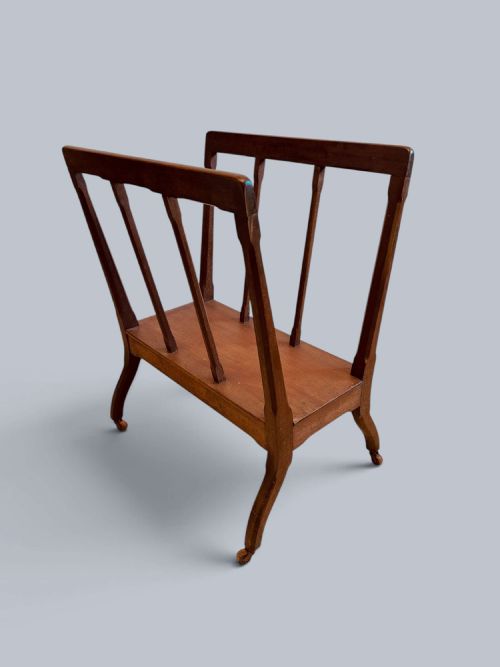
- A low stand fitted with partitions for holding sheet music, folios, or books, often combined with a reading slope or drawer.
- Folio stand
- A vertical or folding rack designed to store large artist portfolios, maps, or unbound musical scores.
- Metamorphic
- A descriptive term for furniture that transforms from one form, such as a side table, into another, such as a reading stand.
- Whatnot
- An open set of multiple shelves used for displaying or storing books and decorative objects in a library or drawing room.
- Reading table
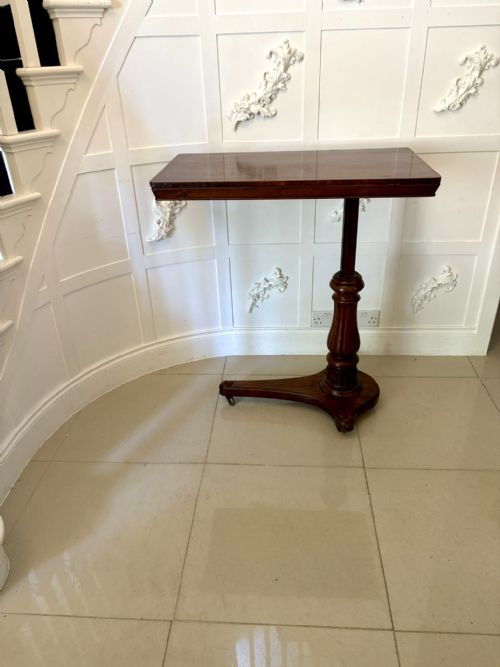
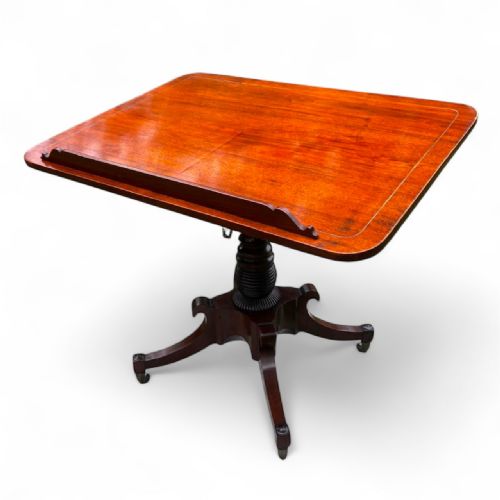
- A specialised table featuring a hinged or ratcheted top that tilts to hold books at an ergonomic angle for the reader.
Library Music Stand: Frequently Asked Questions
How do adjustable reading mechanisms work?
Adjustable mechanisms rely on brass ratchets, sliding brass stems, or wooden supports that slot into predetermined notches beneath the reading surface. These components allow the user to alter both the height and the reading angle of the slope.
Over time, brass components develop a natural patina while retaining their structural movement. Users operate these parts carefully to preserve the original metal threads and timber housings.
Can these stands hold heavy books?
Solid timber frames and sturdy brass supports enable these stands to bear the weight of large folios, heavy bibles, and bound music scores. The inclusion of low ledges prevents volumes from sliding off when angled.
Heavier examples utilise cast iron in the base to maintain stability when extended to maximum heights. Regular use in period libraries demanded robust construction capable of daily handling.
Where were music stands placed?
Libraries, music rooms, and studies housed these stands near windows or primary light sources to assist readers and musicians. Their compact footprints allowed them to sit beside armchairs, desks, or pianos.
Multi-functional pieces like what-nots and canterburys also functioned as central room furniture where sheet music needed immediate accessibility.
How do I date a library stand?
Dating relies upon timber choice, secondary woods, turning styles on the legs, and the sophistication of the brass hardware. Georgian examples favour heavy mahogany and simple ratchets, whereas Victorian pieces often incorporate ebonising or elaborate turned columns.
Retailer labels, construction joints, and stylistic details from periods like the Regency or Edwardian era provide further chronological markers.