



Library Ladder Stool
A library ladder stool brings ingenious domestic engineering into a room, offering clever dual-purpose seating that transforms into a sturdy climb.
Library Ladder Stool
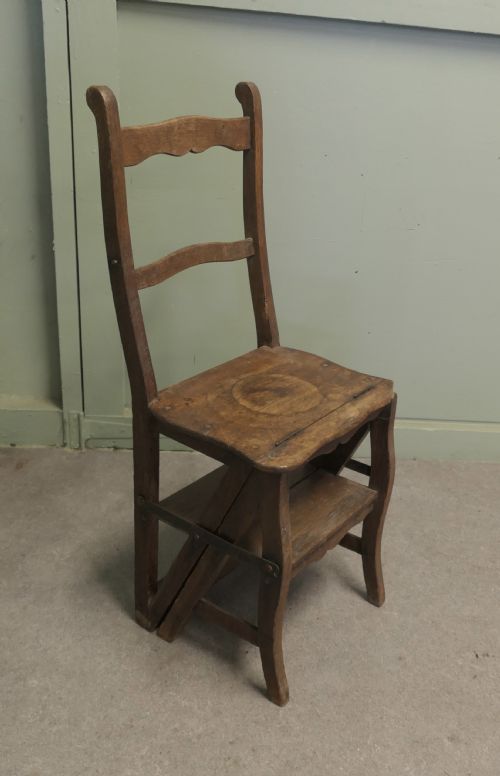
A library ladder stool is a practical hybrid piece designed to reach high shelves while serving as a functional seat when not in use. You will frequently encounter metamorphic chairs and folding flights originating from the eighteenth, nineteenth, and early twentieth centuries.
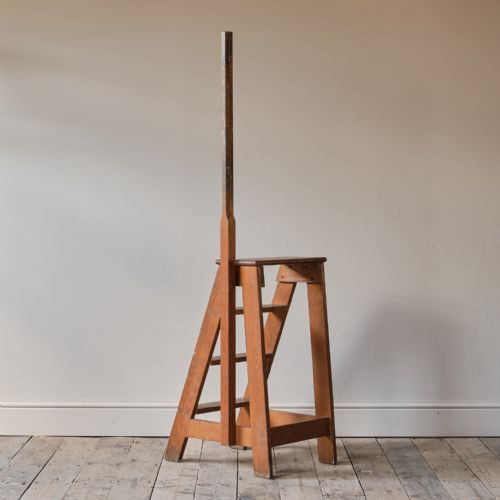
The selection ranges from sturdy oak flight stairs to clever designs that pivot or fold entirely into armchairs. These pieces reflect period domestic utility, bridging the gap between grand architectural libraries and modest domestic spaces.
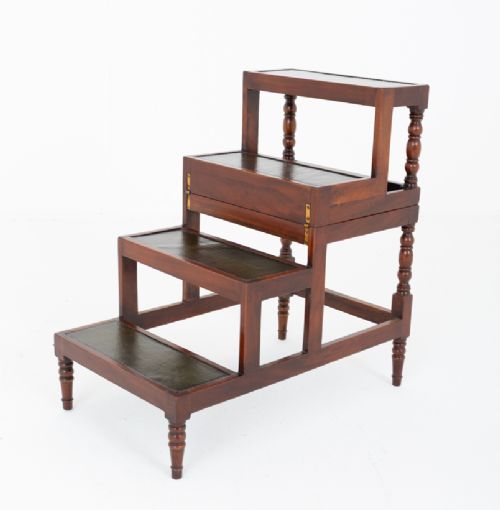
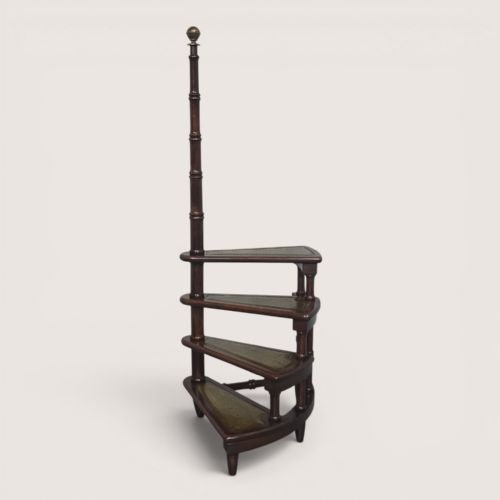
Most examples rely on traditional timber construction, utilising rich mahogany, dense oak, and occasional fruitwood or pine. Many incorporate specialist details like leather-topped treads and turned supports to blend scholarly function with refined interior decor.
Materials and Construction
Cabinetmakers built these pieces using durable hardwoods such as mahogany and oak, ensuring the frame could safely bear the weight of a person climbing. Secondary timbers like pine appear on functional components or country variants.
Hinges, pivots, and locking mechanisms rely on brass and ironwork to facilitate smooth metamorphic movement without compromising stability. Leather inserts on treads provide grip and reduce wear from footwear.
Joinery techniques include dovetail joints and sturdy pegging to withstand the repeated stress of folding and unfolding actions. Surface finishes typically involve polish or paint, protecting the wood while highlighting the grain.
Library Ladder Stool Retail Price Guide 2026
Typical asking prices for library ladder stool among the pieces listed under this phrase on Sellingantiques today, from the lower quarter to the upper quarter. They describe what is for sale here now, not the wider market.
Listings feature woods spanning mahogany, oak, pine, and fruitwood, paired with functional elements in leather, brass, and iron.
Assessing Quality
The sophistication of the mechanical action distinguishes simpler variants from masterwork pieces. Smooth, intuitive transitions between chair and step forms indicate superior initial design and careful execution.
Timber selection and grain matching across moving sections reveal the original maker's ambition. Pieces retaining original leather inserts and sturdy brass hardware preserve their integrity far better than heavily altered examples.
Proportion and stability matter immensely when dealing with climbing furniture. A well-balanced base and tight joinery ensure the piece feels secure in both configurations, whereas inferior examples exhibit looseness in the joints.
The Library Ladder Stool Glossary
- Metamorphic
- Furniture designed to transform from one functional form into another, such as an armchair converting into a flight of steps. This ingenuity was particularly popular in the Georgian and Victorian eras.
- Treads
- The horizontal surfaces or steps upon which a person places their feet when climbing. On these pieces, treads are frequently inset with tooled leather.
- Gothic Revival
- A nineteenth-century style drawing inspiration from medieval architecture, often featuring pointed arches, heavy oak, and religious motifs. This aesthetic appears on several library step variations.
- Aesthetic Movement
- A late nineteenth-century design current emphasising visual beauty over narrative function, promoting simpler lines and craftsmanship. Pieces from this movement often display refined oak construction.
Library Ladder Stool: Frequently Asked Questions
How do metamorphic library chairs work?
Metamorphic library chairs rely on hidden hinges and pivot points that allow the seat back and undercarriage to swing outward. This action exposes a tiered series of steps tucked beneath the framework.
Once unfolded, the structure locks securely into a stable staircase configuration. Users can then reverse the process to restore the piece to a standard armchair or stool.
Were these stools used only in libraries?
While originally commissioned for grand private libraries to access high bookshelves, these versatile pieces quickly found a place in domestic parlours and offices. Their dual utility suited homes where space was at a premium.
Country variants and simpler pine versions also served practical domestic roles in kitchens and general household storage. Their survival demonstrates a long-standing appreciation for clever, space-saving furniture.
How do I care for leather-topped treads?
Leather treads benefit from gentle cleaning with a slightly damp cloth followed by a suitable leather conditioner to prevent drying and cracking. Avoid using harsh chemical cleaners that might strip the original dye or tooling.
Since these surfaces endure regular foot traffic, handling them with care preserves the patina. Regular light maintenance keeps the leather supple without altering its historic character.
Are these pieces safe to climb on?
Most antique library steps and stools remain structurally sound, provided the joints and hinges are secure and stable. It is wise to inspect the locking mechanisms and test the balance before putting weight on the upper treads.
Heavier hardwood examples generally offer greater stability than lighter pine or fruitwood variants. Treating them with respect for their age ensures they remain functional household objects.