
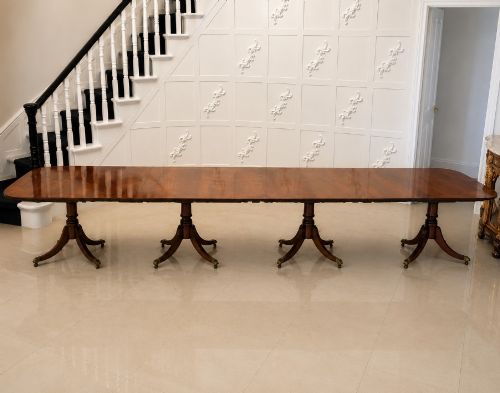
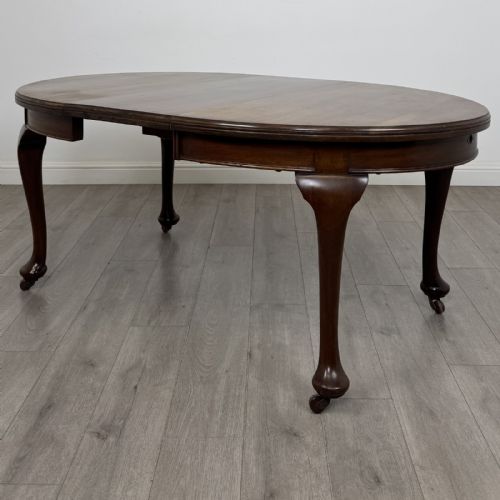
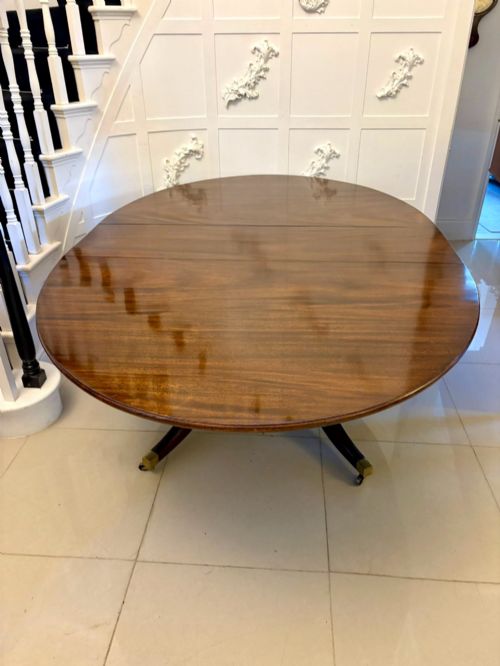
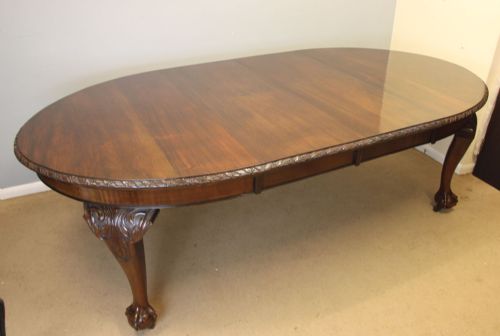
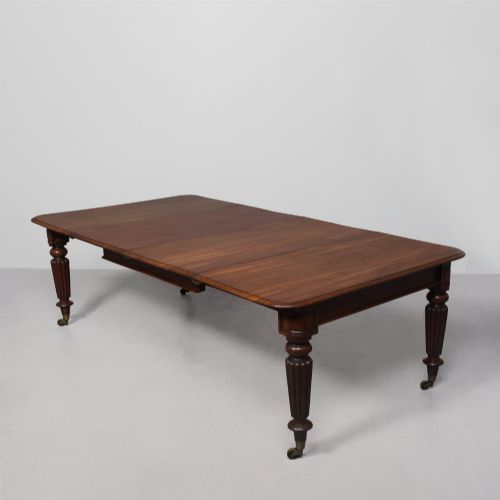
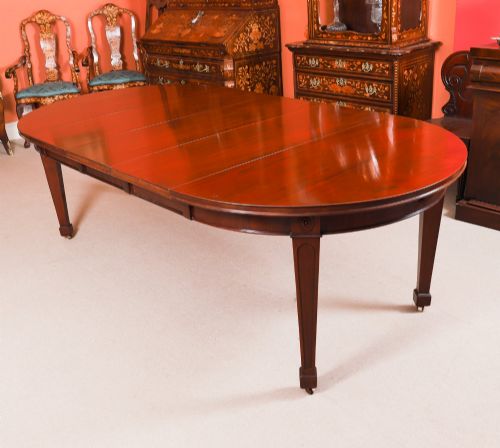
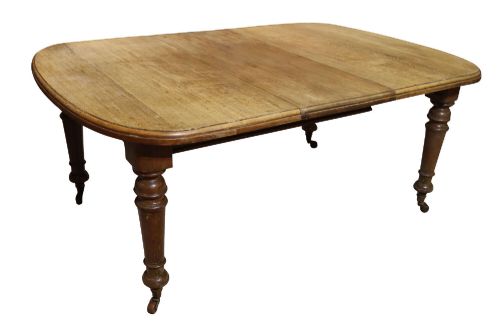
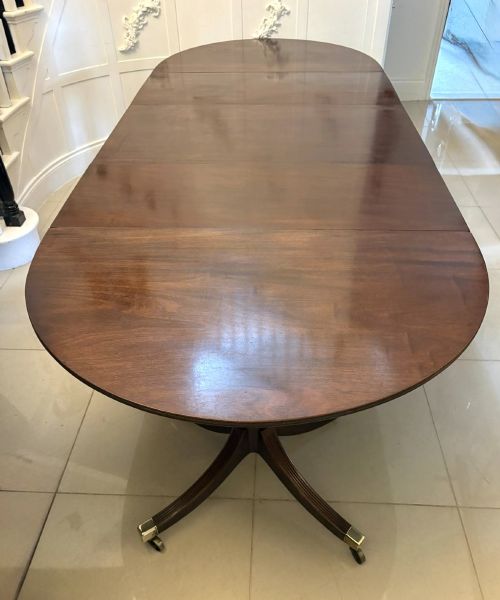
Leaf Extending Dining Table
A leaf extending dining table provides the practical magic of extra seating on demand, blending everyday proportion with generous capacity when company arrives.
Leaf Extending Dining Table
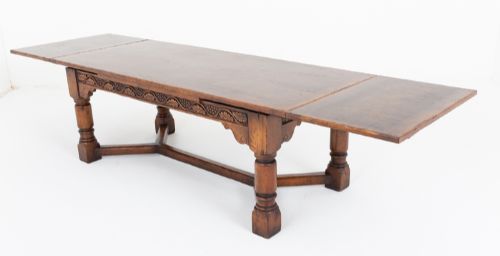
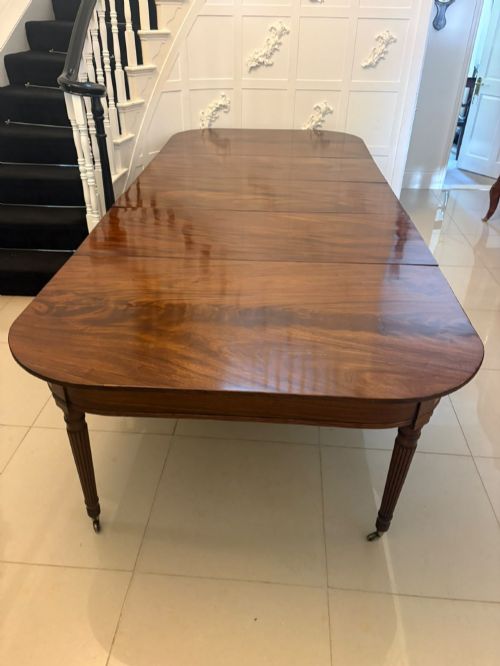
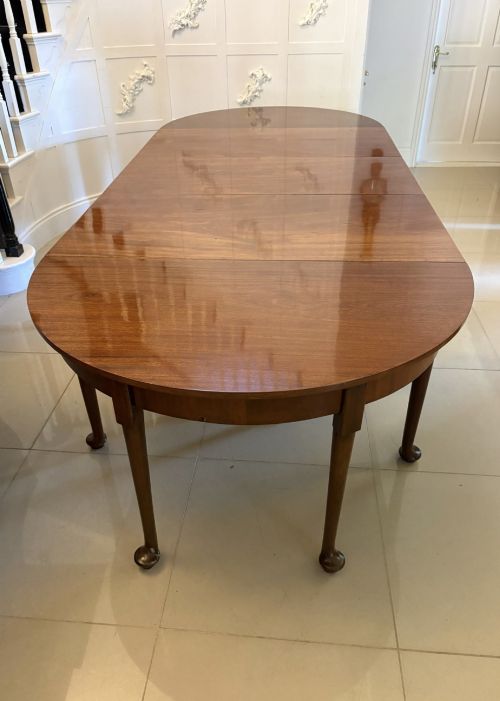
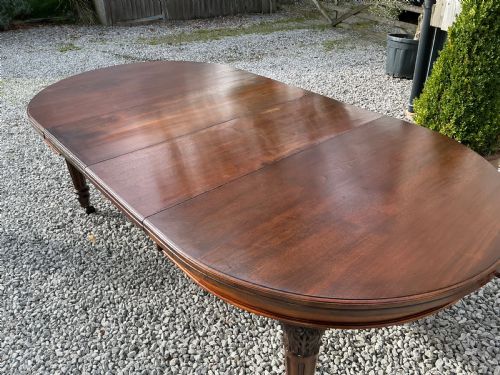
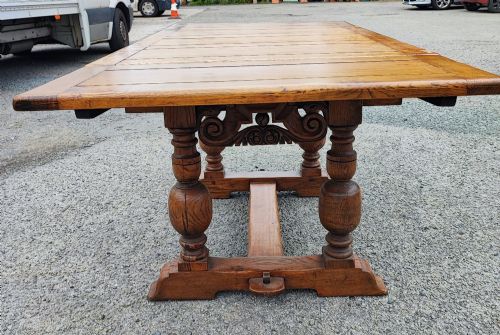
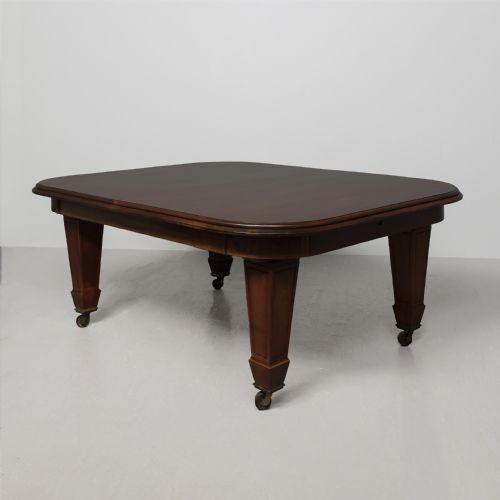
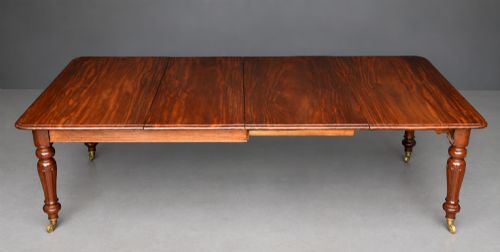
A leaf extending dining table adapts its length to suit the room or the guest list, relying on removable panels, draw leaves, or mechanical wind-out systems. You meet these dining tables most frequently in rich mahogany from the Victorian and Regency periods, or in solid oak following earlier Jacobean, Elizabethan, and refectory traditions.
The form spans formal banquet tables with multiple pedestals and grand D-ends down to rustic kitchen and farmhouse boards. Makers incorporated clever mechanisms, from concertina actions to drop leaves and pull-out leaves, ensuring the surface expands smoothly without losing stability.
How they were made
Cabinet makers utilised dense hardwoods like mahogany, walnut, and oak to build the primary frames and tops, often selecting figured veneers for visual depth. Structural stability relied on substantial brass hardware, internal runners, and solid timber framing to support the added weight of extra leaves.
Secondary timbers such as fruitwood appeared in internal framing, while leather occasionally surfaced on associated seating or specialised surfaces. Joinery techniques ranged from traditional draw leaf sliding frames to heavy pedestals fitted with winding mechanisms.
Several pieces come equipped with their own dedicated walnut leaf holders, saving households from hunting down misplaced table sections.
What varies in quality
Quality rests in the precision of the extension mechanism and how seamlessly the extra leaves match the grain and colour of the main top. Superior examples maintain absolute rigidity and level surfaces across all sections, whether fully closed or extended to maximum capacity with multiple leaves in place.
The choice of timber figure, the cleverness of the concealed runners, and the crispness of carved details on legs or pedestals separate utilitarian pieces from exceptional ones. Premium specimens often include matching leaf holders or retain original winding handles and numbered leaves.
The Leaf Extending Dining Table Glossary
- Draw leaf
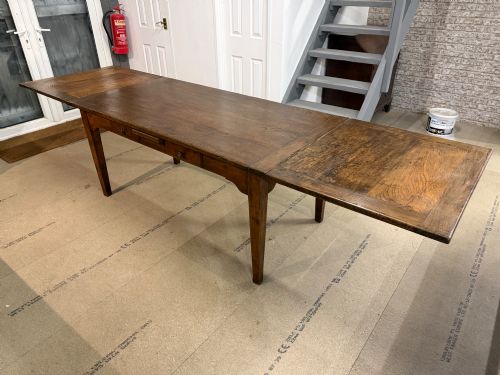
- A table design featuring two concealed leaves stored beneath the main top that pull out from each end to extend the surface. This mechanism was popular in oak refectory and farmhouse styles.
- D-end
- A dining table format with semicircular ends that divide when extended to insert additional leaves. They frequently appear in Regency and Georgian mahogany designs.
- Wind-out
- A mechanical extension system operated by a crank handle that separates the table halves to accommodate multiple drop-in leaves. This innovation defined many grand Victorian dining tables.
- Refectory
- A long, narrow table style traditionally used in communal dining halls, adapted by later makers into sturdy oak extending versions. They often feature strong stretcher bases.
- Parquetry
- Geometric wood mosaic work utilised to decorate tabletops, particularly seen on walnut examples from the early twentieth century. It adds decorative contrast through alternating grain patterns.
Leaf Extending Dining Table: Frequently Asked Questions
How do I operate a draw leaf table?
Draw leaf tables use pull-out panels stored underneath the main surface. You simply lift the main top slightly and slide the leaves out from each end until they drop into place.
This simple mechanism allows one person to lengthen the table quickly without storing loose boards elsewhere.
How do I care for mahogany dining leaves?
Protect mahogany surfaces from direct heat and moisture by using pads under hot dishes. Regular polishing with traditional beeswax maintains the rich lustre of the timber.
Store extra leaves in a stable environment with consistent humidity to prevent warping or colour fading relative to the main table.
Can I seat twelve people comfortably?
Tables featuring three or four extra leaves, particularly longer Regency and Victorian banquet styles, easily accommodate twelve or more guests. Measure the extended length alongside your dining room dimensions to ensure adequate chair clearance.
Check whether the base uses pedestals or corner legs, as pedestal configurations offer more flexible legroom for large groups.
What is the difference between a pedestal and a leg table?
Pedestal tables use central columns supported by branching feet, while standard tables place legs at the four corners. Pedestals provide greater flexibility for positioning chairs around extended lengths.
Four-legged tables, common in oak refectory and farmhouse designs, offer robust traditional framing and visible stretcher supports.