



Large Silver Centerpiece
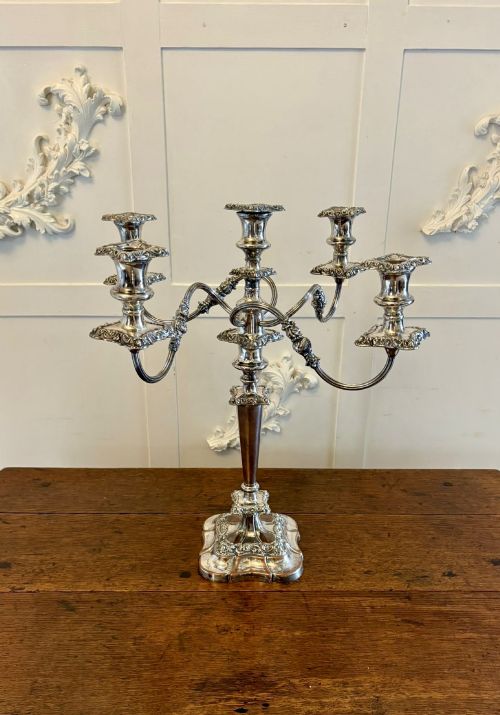
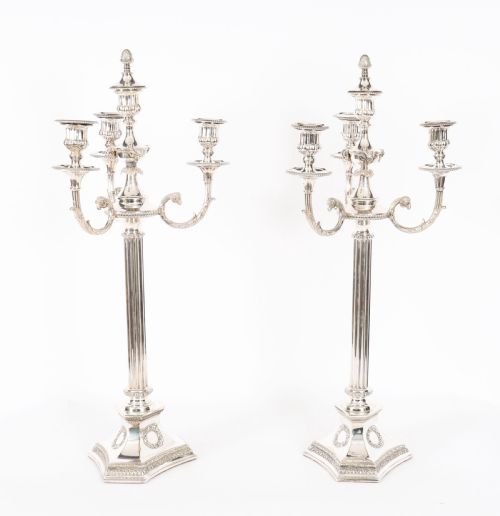
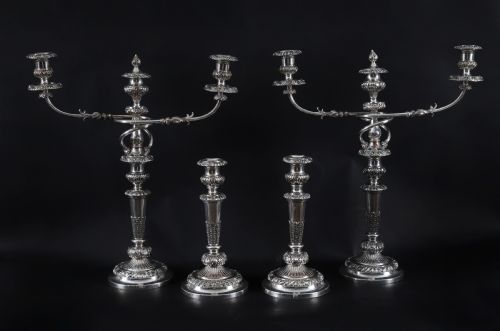
A large silver centrepiece commands the dining table, offering scale and presence through substantial bowls, candelabra, and baskets.
Large Silver Centerpiece
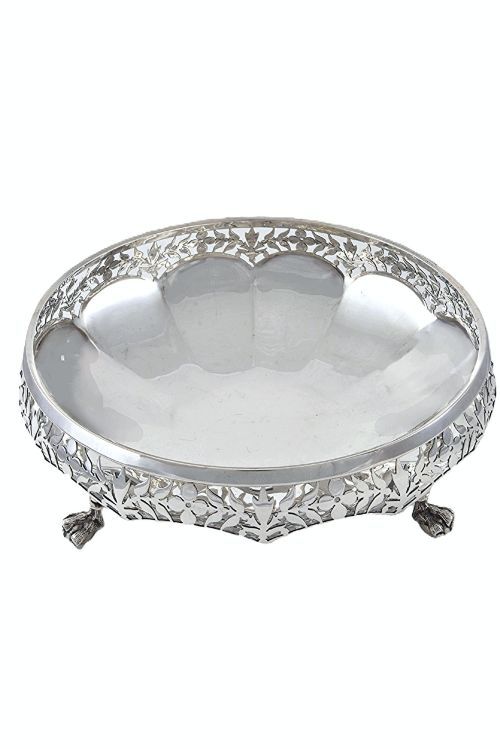
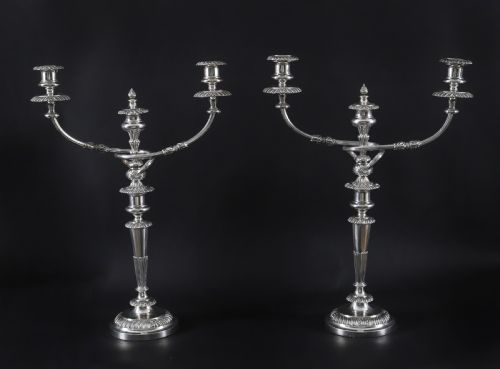
A large silver centrepiece serves as the focal point of a formal table setting, appearing in forms such as expansive bowls, multi-branch candelabra, punch bowls, and pedestal dishes. When exploring this selection, buyers frequently encounter heavy silver-plated iterations alongside solid sterling silver examples from the eighteenth, nineteenth, and twentieth centuries.
The objects span diverse stylistic movements including Georgian, Victorian, Edwardian, Art Nouveau, and Art Deco. Pieces range from multi-piece suites and candelabra with detachable sconces to pierced bread baskets, wine coolers, and monteith bowls produced across Britain, Europe, and India.
Materials and methods of construction
Craftsmen utilised sterling silver, silver plate on copper, old Sheffield plate, and base metals, occasionally incorporating wood, gilt metal, cobalt blue glass liners, or crystal inserts. Construction techniques combined heavy casting, hand-hammering, and silver-soldering to achieve substantial structural integrity for large items like candelabra and punch bowls.
Surface ornamentation relied on repoussé work, chasing, piercing, and engraving to create floral, bird, and cherub motifs. Makers also applied applied cast borders and gadrooned rims to reinforce the edges of large bowls and baskets.
Large Silver Centerpiece Retail Price Guide 2026
Typical asking prices for large silver centerpiece among the pieces listed under this phrase on Sellingantiques today, from the lower quarter to the upper quarter. They describe what is for sale here now, not the wider market.
Some nineteenth-century dining tables required sturdy engineering to support heavy candelabra featuring cheerful cherubs and multiple detachable sconces.
Distinctions in execution and weight
Quality rests upon the thickness of the silver or plating layer, the crispness of repoussé and pierced details, and the overall weight of the piece relative to its dimensions. Heavier gauges of silver and sturdy internal construction prevent sagging or distortion in large candelabra branches and expansive bowls.
Refinement shows in the hand-finishing of cast decorative elements such as cherubs, floral scrolls, and handles. Superior examples maintain structural balance, ensuring that multi-light candelabra or large centrepiece bowls stand firmly without wobble.
Matthew Boulton·Barker Ellis·Joseph Rodgers·Alexander Clarke and Co·Josiah Williams and Co·Elkington·S. Kirk and Son Company
The Large Silver Centerpiece Glossary
- Monteith
- A bowl featuring a scalloped or notched removable rim designed for chilling wine glasses. The glasses hung by their bases over the edge into iced water.
- Repoussé
- A metalworking technique where the artisan shapes the metal from the reverse side by hammering to form raised decorative patterns on the front. This creates deep relief floral and pictorial scenes.
- Sconce
- The nozzle or cup at the end of a candelabra branch that holds the candle in place. Detachable versions allow easier cleaning and wax removal.
- Comport
- A shallow dish or bowl raised on a pedestal or stem, used historically for serving fruit or sweets at table. They often match the height of surrounding candelabra.
- Old Sheffield plate
- A composite material made by fusing a sheet of silver to a thicker copper ingot before rolling them into sheets. This early plating method produces a durable surface that wears down to reveal the warm copper beneath.
Large Silver Centerpiece: Frequently Asked Questions
How were large silver centrepieces used?
These pieces anchored the middle of formal dining tables during large banquets and dinners. They served practical functions like holding fruit, cooling wine, or illuminating the room with multiple candles.
Over time, their role shifted toward decorative display. Wealthy households utilised them to showcase craftsmanship and familial prestige during entertaining.
What is the difference between sterling silver and silver plate?
Sterling silver consists of solid precious metal, typically marked with standard hallmarks indicating its purity. It holds intrinsic value and develops a rich patina with age.
Silver plate applies a thin layer of silver over a base metal such as copper, nickel, or brass. This technique allowed Victorian and Edwardian manufacturers to produce impressive, large-scale items at a more accessible cost.
How do I care for a large silver centrepiece?
Regular dusting with a soft cloth prevents surface grime from accumulating in crevices and repoussé details. When tarnish builds up, gentle cleaning with a specialised silver polish and a soft sponge preserves the finish without stripping thin plating.
Avoid abrasive cloths or harsh chemical dips, particularly on plated items or pieces with applied glass and wood elements. Store pieces in stable environments away from direct moisture.
How can I tell the period of a centrepiece?
Hallmarks provide the most reliable indicator for solid silver items, allowing buyers to trace assay offices and exact manufacturing years. Stylistic clues such as Rococo revival scrolls, Art Nouveau sinuous lines, or Art Deco geometric forms also point toward specific decades.
Construction methods further distinguish eras. For instance, old Sheffield plate methods differ visibly from twentieth-century electroplating techniques.