
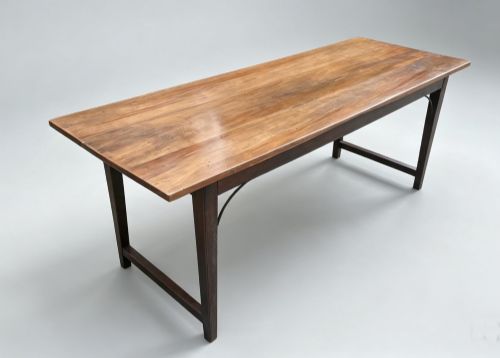
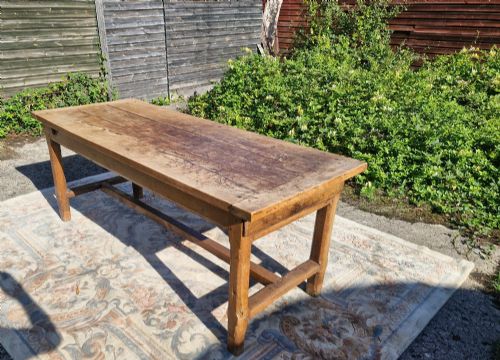
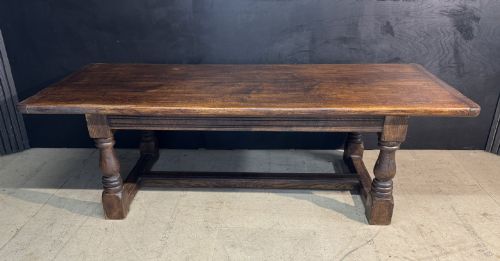
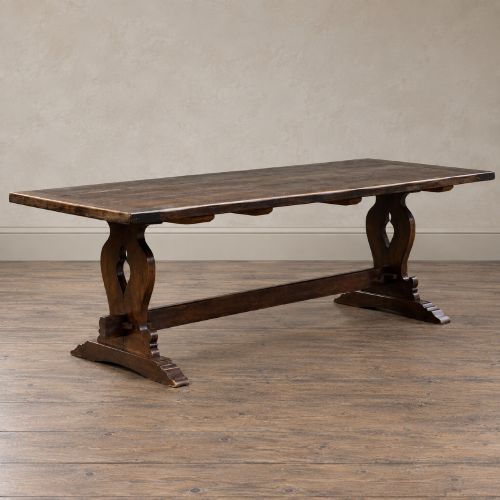
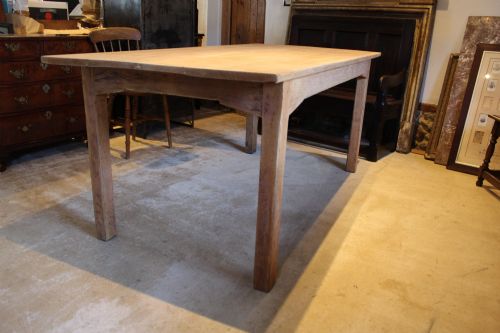
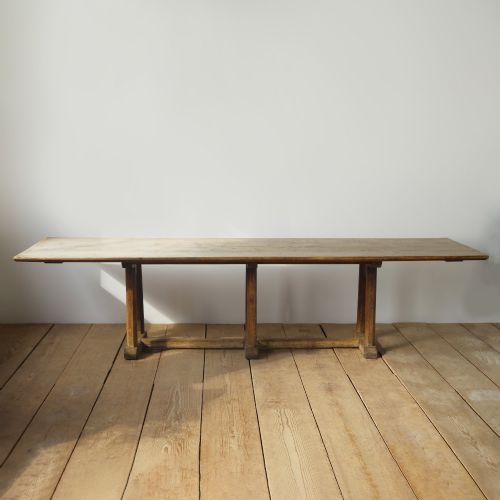
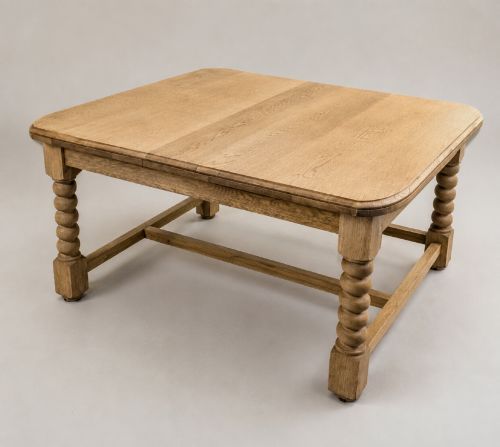
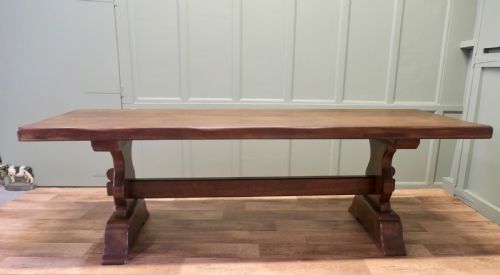
Large Rustic Farmhouse Table
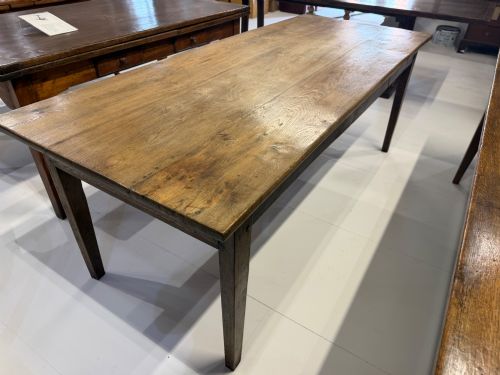
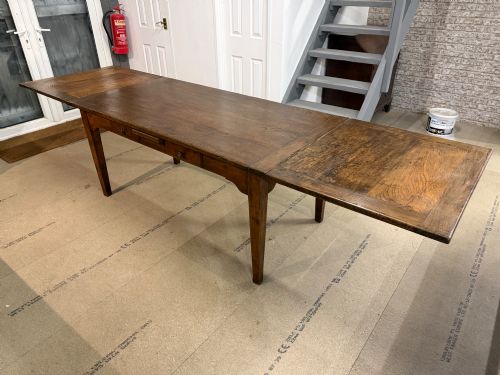
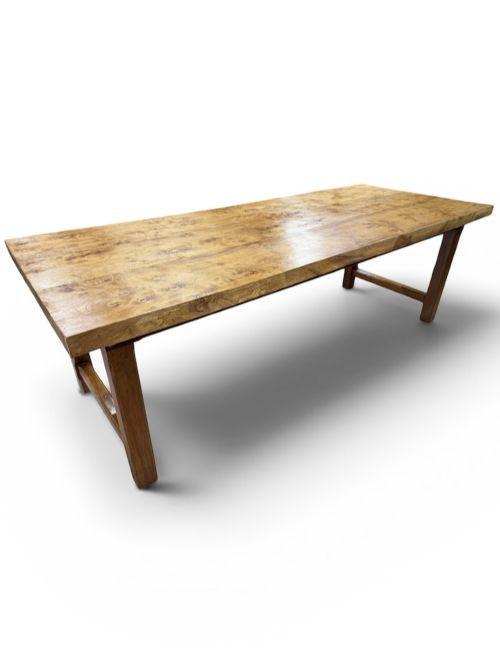
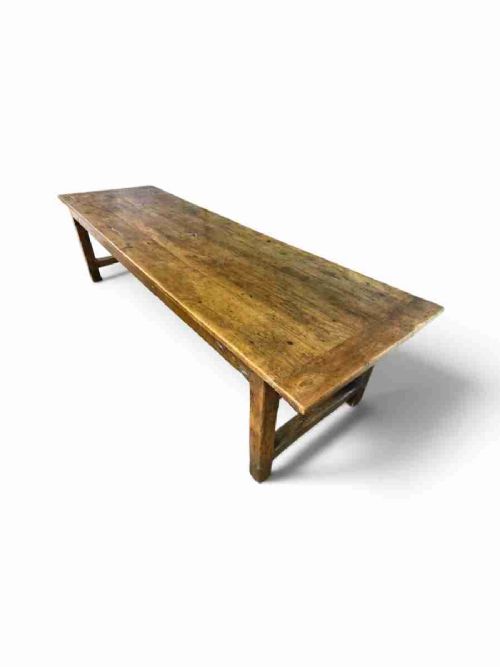
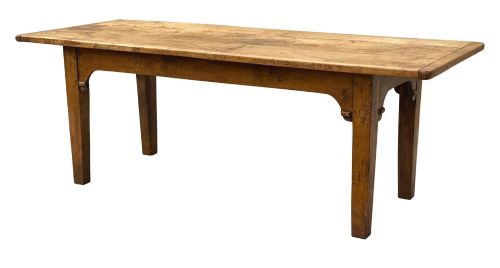
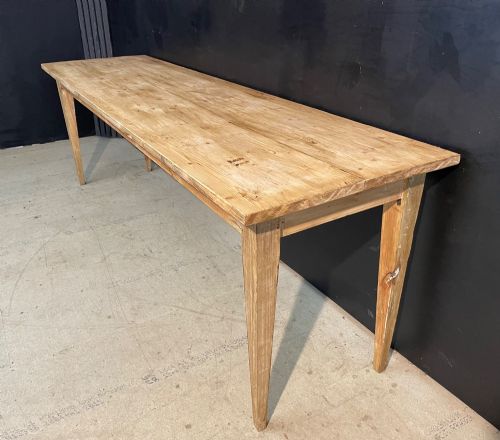
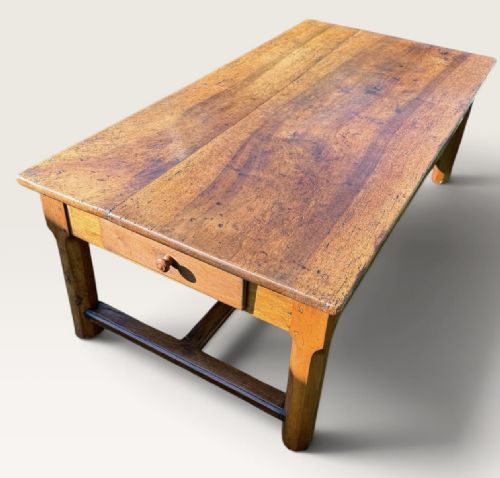
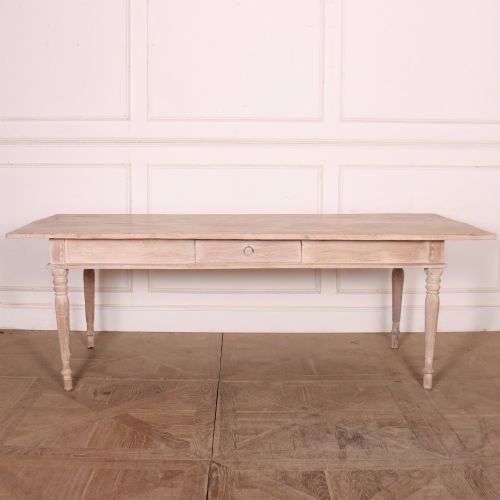
A large rustic farmhouse table grounds a room with generations of utility and solid timber character.
Large Rustic Farmhouse Table
When searching for a large rustic farmhouse table, buyers look at heavy timber furniture designed for domestic labour and communal meals. These pieces originate across the nineteenth and eighteenth centuries, with Victorian examples and French provincial styles appearing frequently alongside English country versions.
The objects span formal dining tables, prep tables, and serving pieces built for utility. Most examples utilise sturdy plank tops and generous proportions to seat multiple people comfortably in a kitchen or dining space.
How they were made
Cabinet makers constructed these tables from solid hardwoods and softwoods such as oak, pine, elm, and cherrywood. Timber boards were joined simply, often utilising pegged joints and substantial stretchers for structural stability.
Surfaces bear the marks of historic preparation, sometimes retaining scrubbed pine finishes, natural wax treatments, or remnants of early paint. Construction focused on practical strength to withstand daily kitchen work.
Scullery tables frequently retain traces of flour and pastry dough tucked deep inside ancient drawer joints.
What varies in quality
Quality rests in the choice of timber and the integrity of the original construction. Tables built from dense oak or ancient elm command attention through their weight and the depth of grain developed over centuries.
Proportion and surface patination dictate the visual success of a piece. Untouched timber surfaces showing natural ageing outrank heavily altered examples that have lost their historical texture.
The Large Rustic Farmhouse Table Glossary
- Refectory table
- A long narrow dining table traditionally used in monasteries and large halls. These forms translate well into domestic kitchens due to their generous length and sturdy legs.
- Harvest table
- A narrow wooden table designed to be easily moved and used during seasonal gatherings. They typically feature lightweight pine or fruitwood construction.
- Scullery table
- A utilitarian work table originating from the service rooms of large houses. They often include drawers for storing small implements.
- French provincial
- A regional style characterised by simple, elegant lines adapted from urban fashions for rural homes. These pieces often utilise cherrywood or local fruitwoods.
- Patina
- The surface sheen and colour acquired by wood through age, wear, and polishing. It serves as an indicator of genuine age.
Large Rustic Farmhouse Table: Frequently Asked Questions
How do I clean a wooden farmhouse table?
Wipe surfaces using a damp cloth without harsh chemical detergents. Apply a natural beeswax periodically to nourish the dry timber.
Avoid placing hot dishes directly onto old wood to prevent ring marks. Gentle maintenance preserves the historic surface texture.
What wood types are most durable?
Hardwoods like oak, elm, and cherrywood offer exceptional strength for heavy daily use. Pine provides a lighter alternative that develops a soft worn finish over decades.
Each timber reacts differently to household humidity and temperature changes. Solid construction matters more than the specific species chosen.
Can I seat eight people comfortably?
Many nineteenth-century examples exceed two metres in length to accommodate larger gatherings. Measure the clearance between table legs to ensure chairs slide underneath properly.
Refectory styles often provide better legroom than traditional four-legged designs. Check the exact dimensions listed for each individual piece.
How do I identify a French provincial table?
French provincial models frequently feature regional fruitwoods like cherrywood or pear wood. Their lines tend to be slightly softer than utilitarian English kitchen tables.
Construction details and timber choice usually point to their continental origins. Look for subtle shaping on the aprons and legs.