



Large Gilt Chandelier
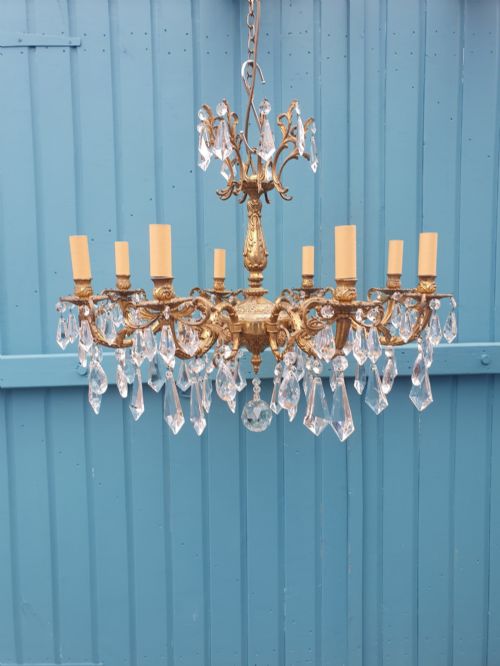
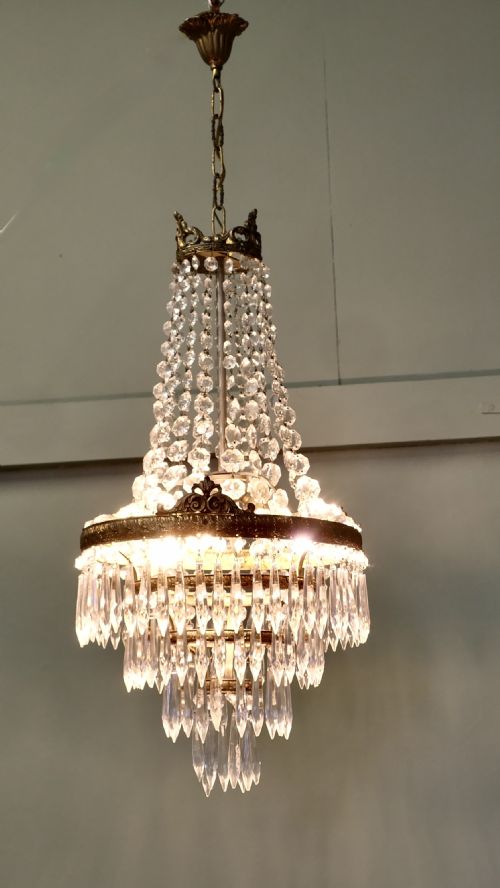
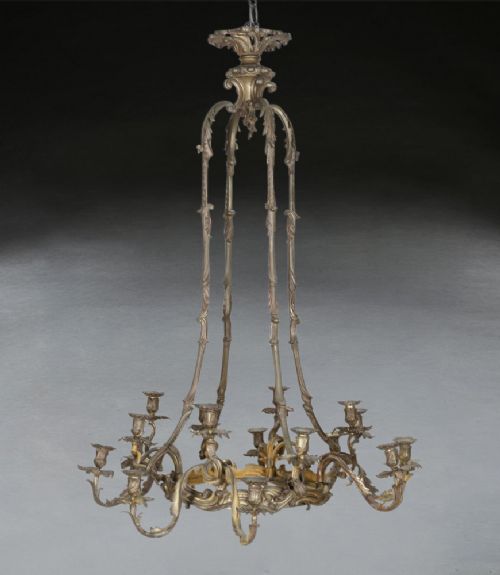
A large gilt chandelier commands a room with multi-tiered candle power and shimmering drops, bringing grand proportion and brilliant illumination to high ceilings.
Large Gilt Chandelier
A large gilt chandelier brings together gilded metal frames and dangling glass or crystal elements to create a central ceiling fixture of considerable presence. When searching for a large gilt chandelier, buyers encounter pieces spanning the nineteenth century through the early twentieth century, including Edwardian and Regency periods.
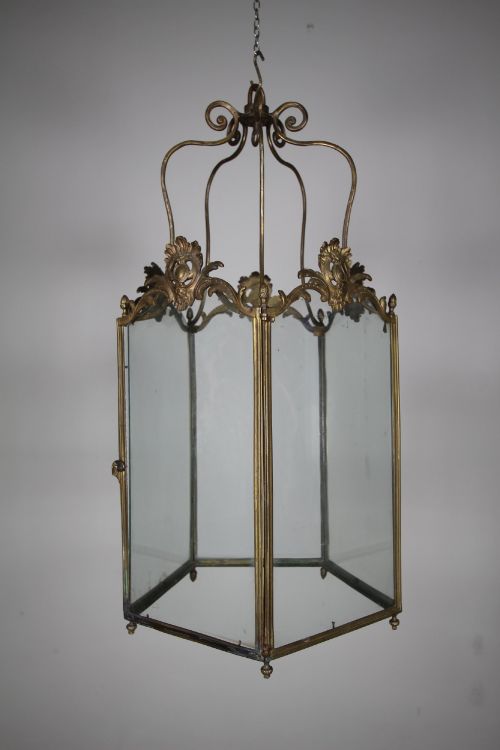
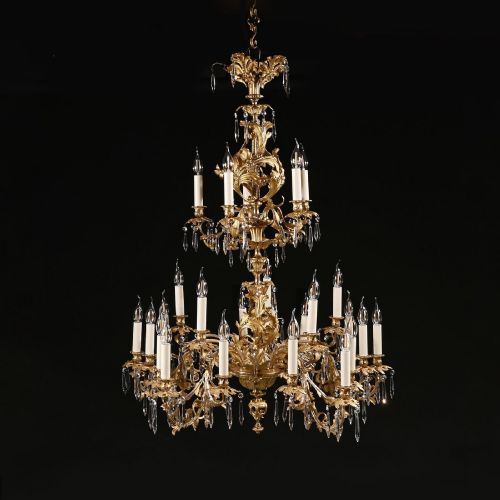
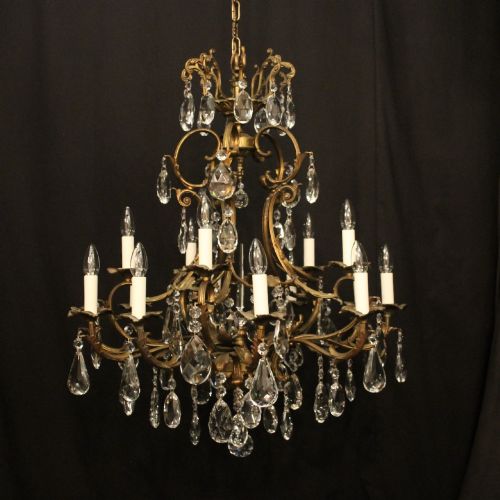
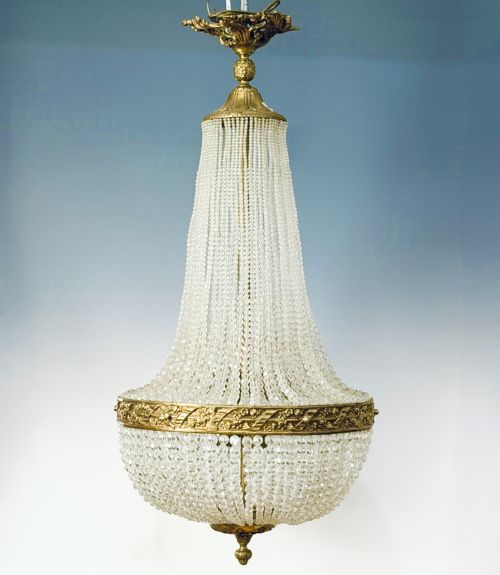
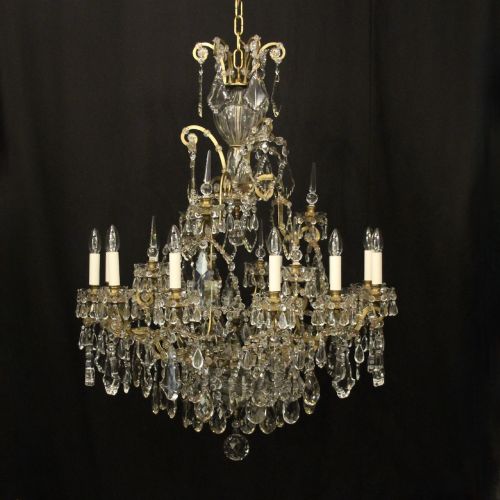
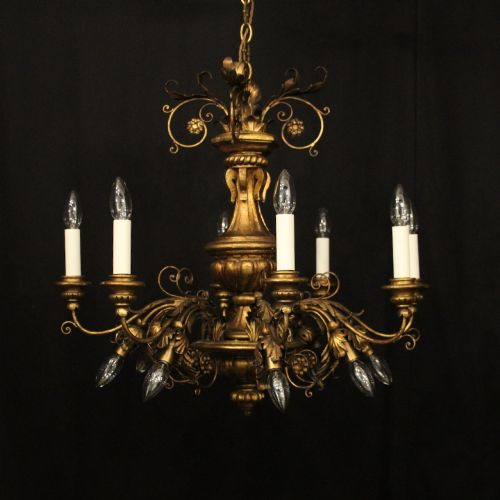
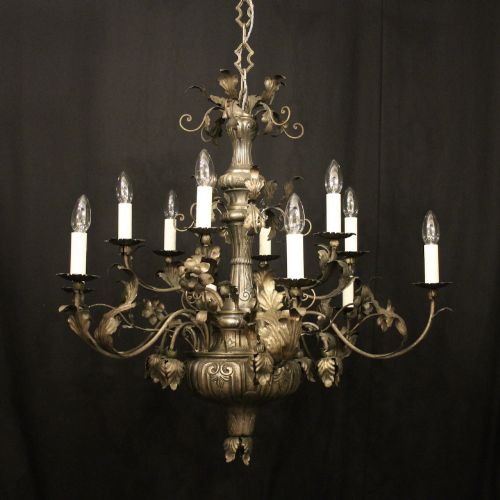
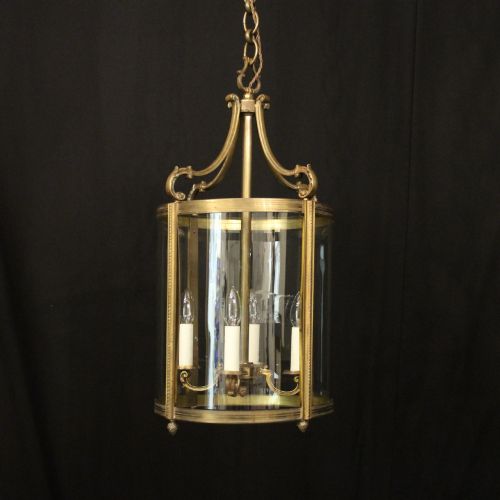
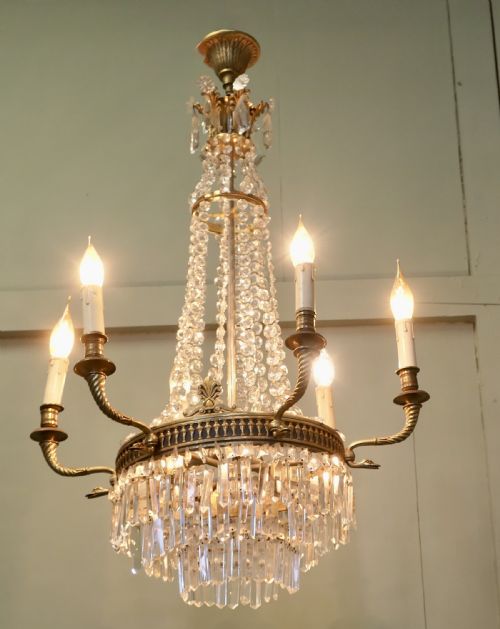
The selections on this page heavily feature French and Italian designs, ranging from French Empire and Louis XV styles to Florentine creations. Common forms include multi-tiered candelabra chandeliers, waterfall styles, and glass-enclosed hall lanterns.
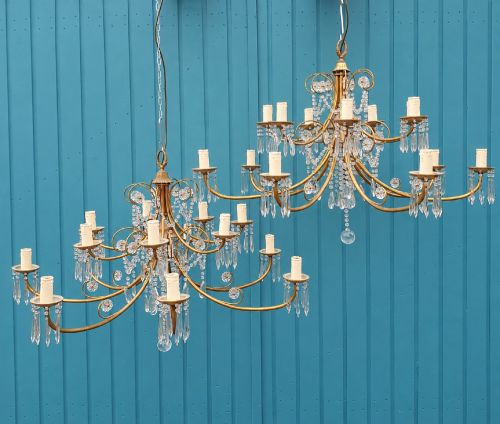
Makers and designers produced these fixtures in configurations holding anywhere from six to twenty-five lights, often arranged across single or double tiers. Smaller variants also appear alongside massive multi-arm assemblies designed for expansive spaces.
Materials and Construction
Makers constructed the structural frames of these pieces using cast bronze, gilt brass, gilt metal, and giltwood. Gilded surfaces were applied to base metals or wood to provide a rich golden finish that reflected candlelight and early electric illumination.
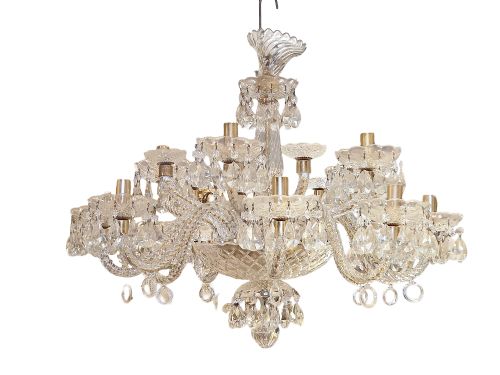
Drop pendants, beads, and lustres formed from cut glass and crystal dress the metal armatures. These optical glass elements refracted light across the room, suspended by wire or pinned directly to the gilt framework.
Large Gilt Chandelier Retail Price Guide 2026
Typical asking prices for large gilt chandelier among the pieces listed under this phrase on Sellingantiques today, from the lower quarter to the upper quarter. They describe what is for sale here now, not the wider market.
Listings span from the nineteenth century through the 1930s, incorporating Edwardian and Regency periods alongside French Empire and Florentine styles.
Assessing the Workmanship
Quality rests in the crispness of the bronze or brass casting and the depth of the gilding applied to the frame. Superior examples display finely chased detailing on the metalwork and substantial, hand-cut crystal drops with sharp facets.
Construction complexity also dictates distinction, separating simple single-tier armatures from intricate multi-tiered tent and waterfall configurations laden with dense beaded draping.
The Large Gilt Chandelier Glossary
- Ormolu
- A method of applying finely ground high-carat gold to a bronze object, creating a rich golden surface often seen on French nineteenth-century frames.
- Waterfall chandelier
- A lighting fixture featuring cascading rows of glass drops or beads that flow outward from a central crown.
- Tent and waterfall
- A specific style where glass beads form an upper conical tent above a lower cascading waterfall of crystal drops.
- Hall lantern
- A ceiling-hung lighting fixture enclosed in glass panels with a gilt metal or bronze frame, originally designed for entrance halls.
- Lustre
- A cut glass pendant or hanging prism suspended from the chandelier arms to enhance light refraction.
Large Gilt Chandelier: Frequently Asked Questions
How do I hang a large chandelier safely?
These heavy metal and crystal fixtures require secure attachment directly into ceiling joists or a rated structural support box to bear the substantial weight of bronze and glass.
Professional installation is essential to handle both the physical load and the rewiring needed for modern electrical voltages.
What rooms suit a large gilt chandelier?
High ceilings in formal living rooms, entrance halls, and dining rooms provide the necessary clearance and spatial balance for fixtures extending past forty inches in drop or span.
Sufficient vertical space allows the multi-tiered arms and hanging crystal drops to hang without overwhelming the room.
How do I date a gilt chandelier?
Stylistic cues such as Empire draping, Florentine beaded openwork, or Arts and Crafts framing point toward specific periods spanning the nineteenth and early twentieth centuries.
Construction methods, wiring types, and casting techniques offer further clues to whether a piece originates from the Regency era or the Edwardian period.
How do I clean crystal drops?
Removing individual cut glass drops allows for gentle washing in warm water with a mild solution to restore the original optical clarity and brilliance.
The gilt frame should be dusted carefully with a soft brush to protect the gilded bronze or brass surface underneath.