
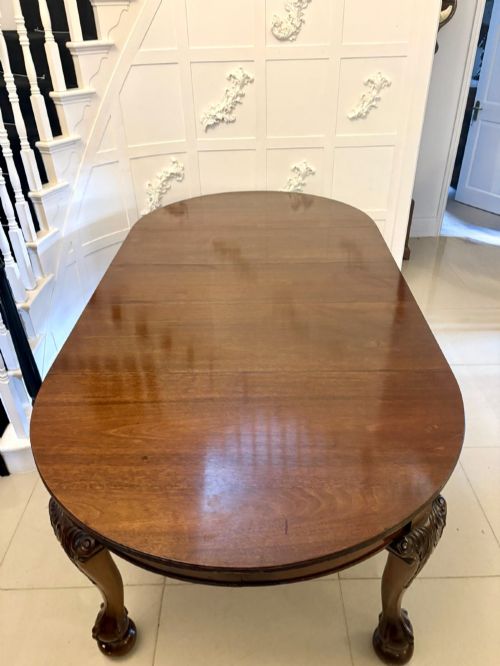
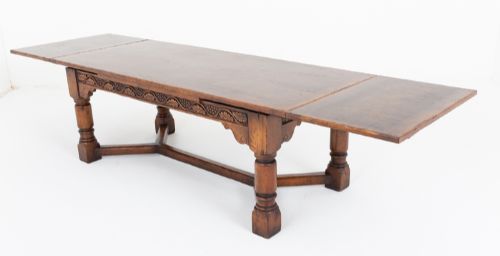
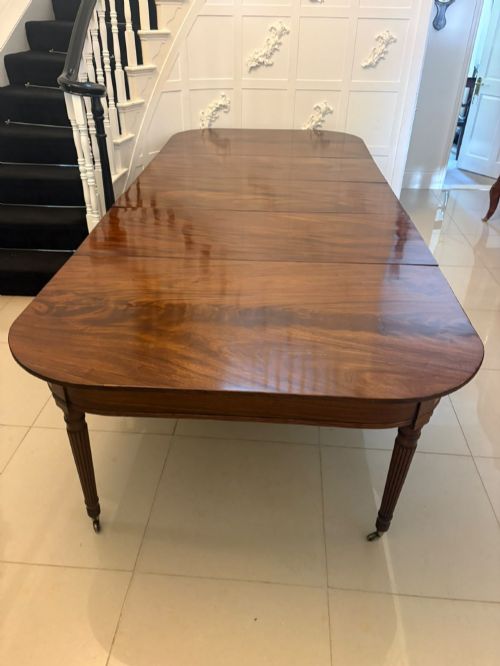
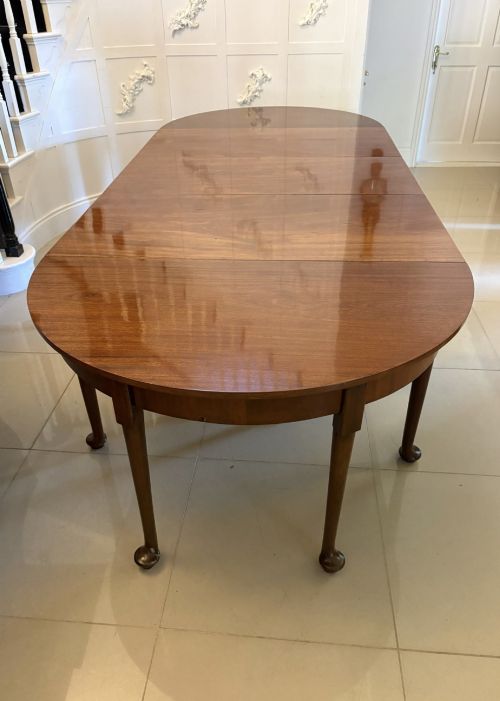
Large Extended Dining Table
A large extended dining table brings families and guests together around substantial timber surfaces crafted for grand feasts across the centuries.
Large Extended Dining Table
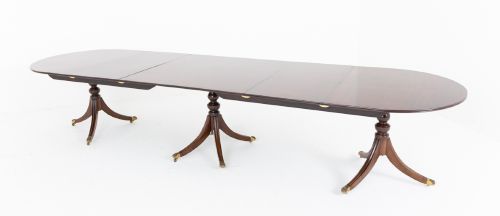
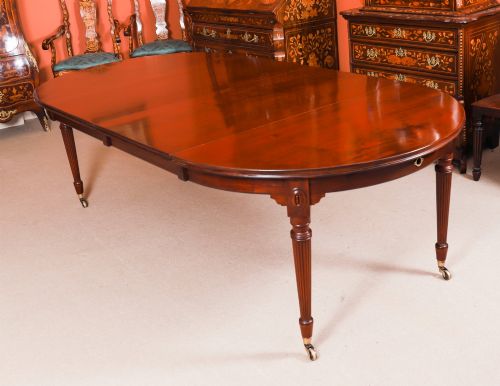
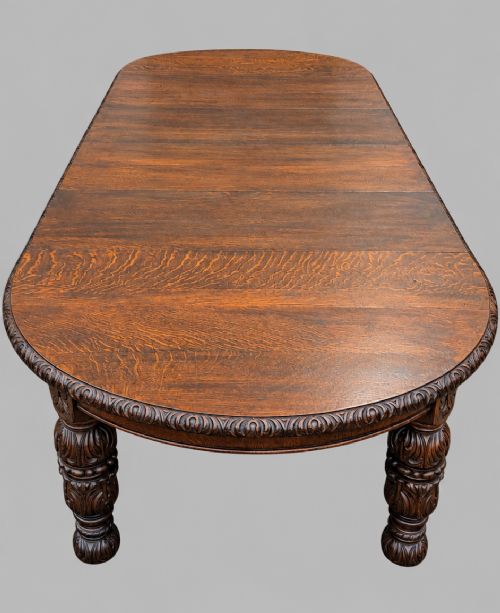
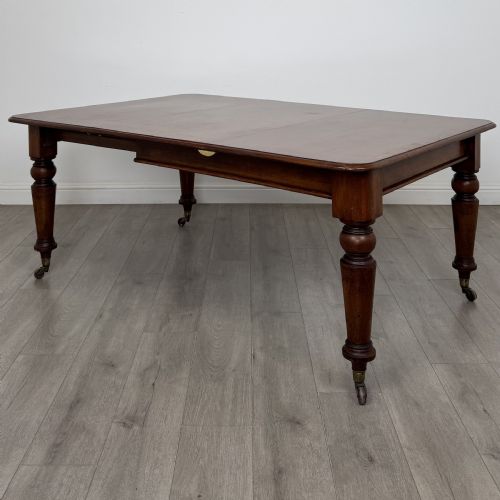
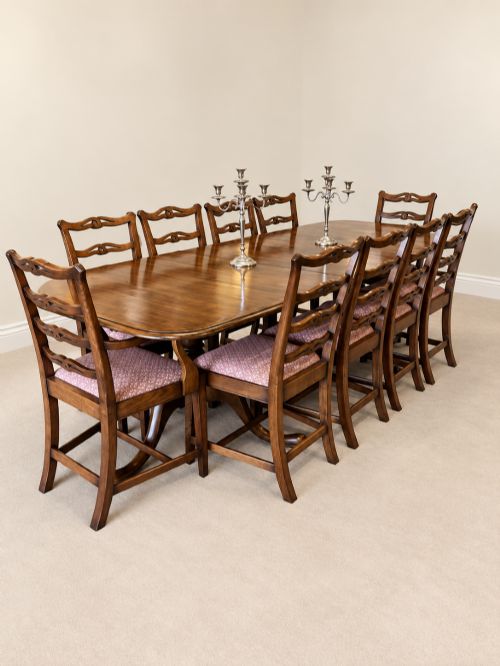
A large extended dining table provides massive proportions designed to seat ten up to twenty-eight people comfortably for dinner parties and banquets. These pieces appear in periods spanning Georgian, Regency, Victorian, Edwardian, and the early twentieth century.
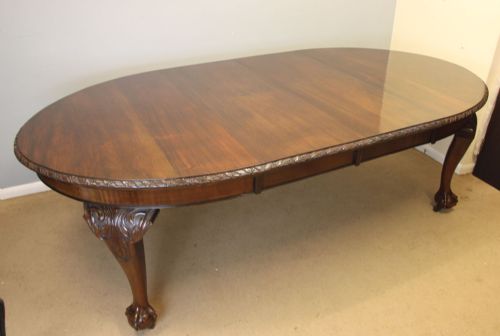
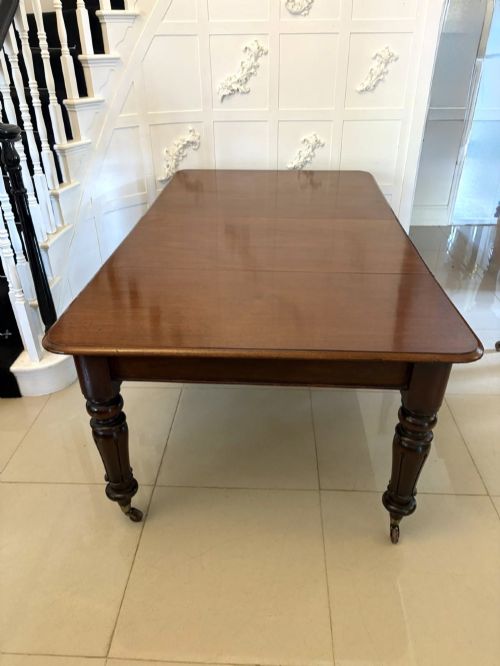
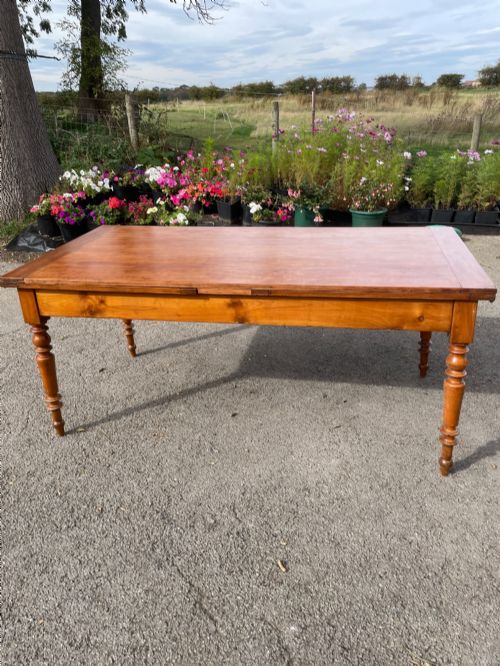
The format relies primarily on solid pillar pedestals or sturdy legs supporting removable leaves that expand the centre surface. Mahogany and oak dominate the construction, often featuring figured grain patterns and inlaid decorative borders.
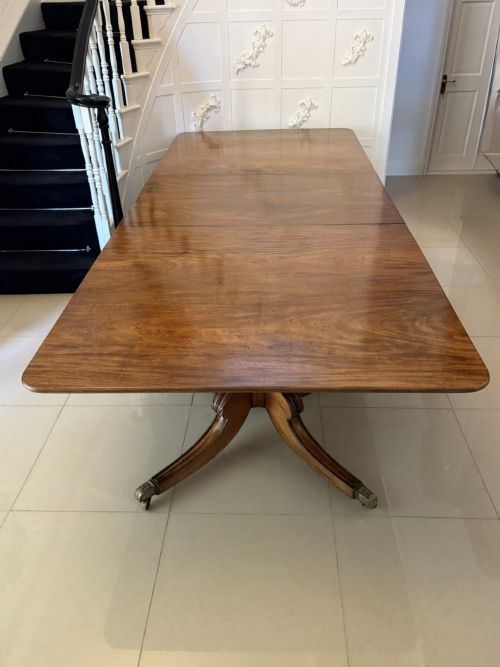
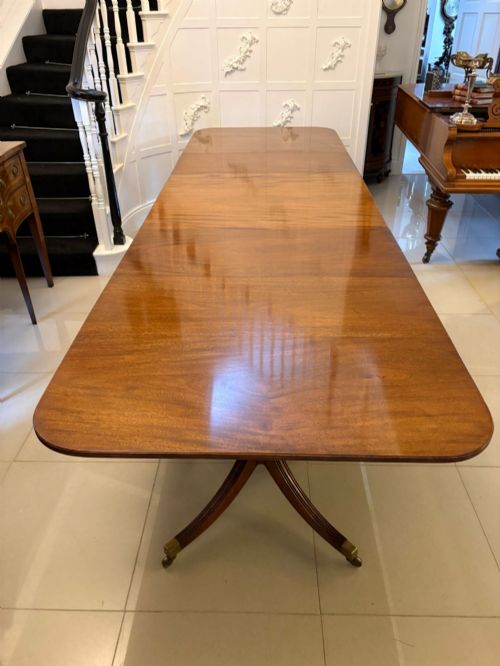
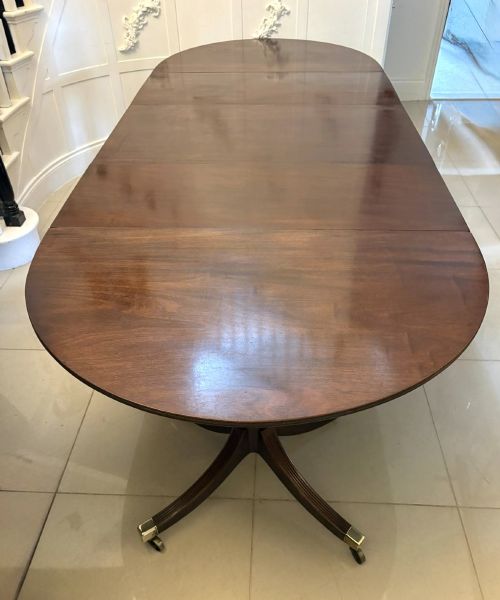
Makers utilised clever internal mechanisms and multiple pillars to support extra-long tops without sagging. Buyers encounter dual pedestal, triple pedestal, and quadruple pedestal configurations alongside simpler double extending oak designs.
How they were made
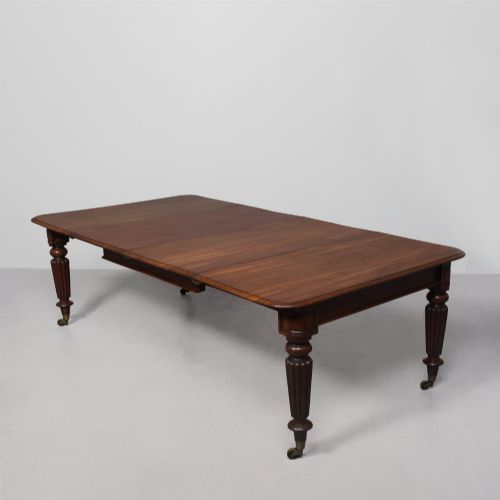
Cabinet makers built these frames using dense timbers like mahogany and oak, frequently selecting figured veneers for the top surfaces to catch the light. Brass castor fittings and mechanical winding systems allowed heavy sections to separate smoothly for leaf insertion.
Pedestal bases featured carved pillars resting on reeded or sabre legs, while simpler formats relied on solid uprights and stretchers. Joinery techniques combined traditional tenons with robust framing to support lengths stretching past five metres.
Listings feature mahogany and oak predominantly, spanning Georgian, Victorian, and Edwardian periods with multi-pillar and extending mechanisms.
What varies in quality
The distinction rests in the timber selection, the harmony of the added leaves with the main top, and the stability of the pillar arrangement. Superior examples exhibit matched figured mahogany grain across every leaf and precise bronze or brass hardware.
Lesser pieces might display mismatched timber tones between the original sections and later additions, or show minor structural fatigue under the weight of extensive spans. The crispness of carved details on the pedestals and legs also separates standard workshop output from exceptional cabinet work.
Gillows·Wylie and Lochead·William and Gibton
The Large Extended Dining Table Glossary
- Pedestal
- A central column support resting on branched feet, used singly or in multiples to hold up long dining surfaces. Multiple pillars distribute weight effectively across extended lengths.
- Leaf
- A removable section of timber inserted into the centre of a table to increase its overall length. Extra leaves allow the furniture to adapt between daily scale and banquet capacity.
- D-End
- A table end shaped in a semicircle resembling the capital letter D, popular in Regency and Georgian dining furniture. These sections often detach to form serving consoles.
- Figured mahogany
- Timber cut to reveal distinctive rippled or flame patterns in the grain. Cabinet makers reserved these choice boards for primary visible surfaces.
Large Extended Dining Table: Frequently Asked Questions
How do I add leaves to the table?
Most antique versions use a mechanical winder or simple alignment pins that allow the ends to pull apart. You then lift the extra timber sections into the centre gap and close the mechanism to secure them.
Ensuring the brass clips underneath engage properly keeps the surface level and prevents gaps from forming between the leaves during dinner.
What rooms suit a massive pedestal table?
These large formats require spacious dining rooms with adequate clearance around all sides for chairs to pull out fully. High ceilings and generous floor plans help balance the heavy visual weight of multi-pillar timbers.
Placing the furniture centrally allows the grain patterns and pedestal bases to be appreciated from every angle in the room.
How do I tell Regency from Victorian styles?
Regency pieces often display cleaner classical lines, brass reeded legs, and D-ends intended to separate into side consoles. Victorian examples lean towards heavier proportions, darker finishes, and robust pillar carvings.
Examining the underside reveals construction shifts from hand-cut joints in earlier eras to machine-assisted manufacturing in the later nineteenth century.
Can I use daily polish on antique mahogany?
Applying a traditional beeswax polish nourishes the timber and preserves the depth of the figured grain over years of use. Avoid modern silicone sprays that build up a hazy film on the surface.
Using felt mats and coasters protects the polished top from heat and moisture during regular family meals.