

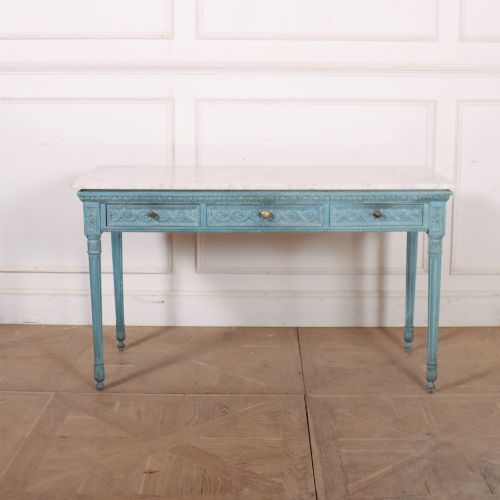
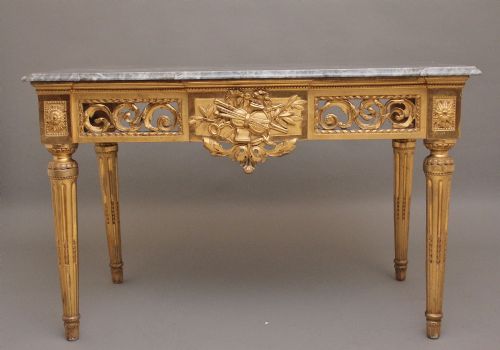
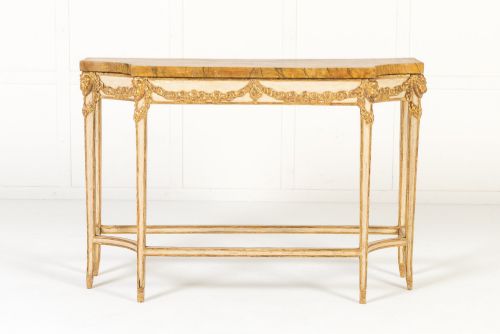
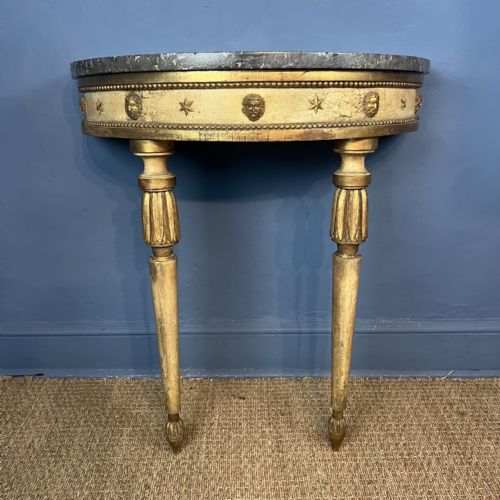

Italian Marble Hall Table
An italian marble hall table brings classical grandeur to an entrance, combining sculptural carved wood with a cool stone surface.
Italian Marble Hall Table
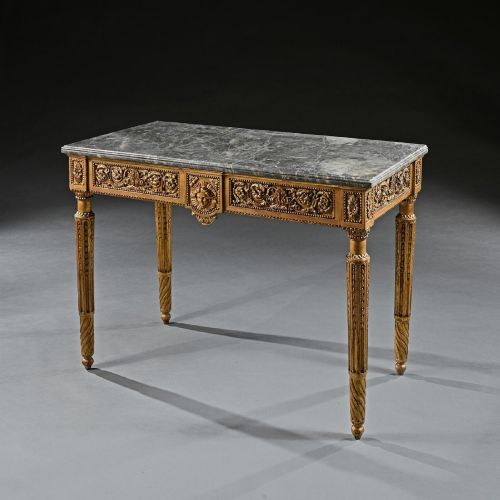
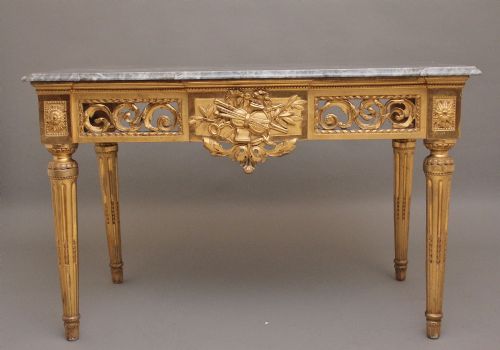
An italian marble hall table provides a striking focal point for an entrance hall, designed primarily as a console table or centre table. These pieces bring together substantial stone surfaces and decorative wooden bases.
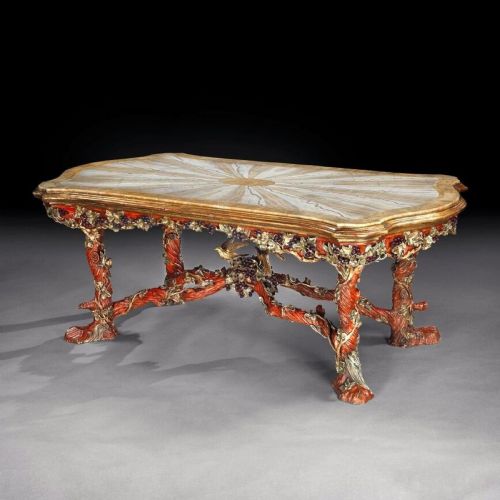
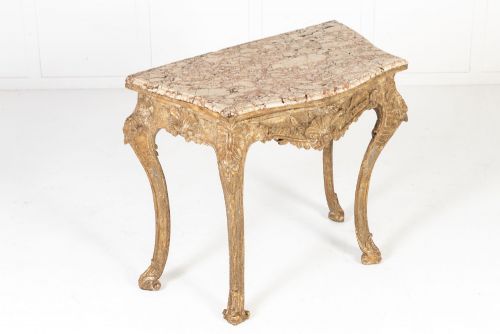
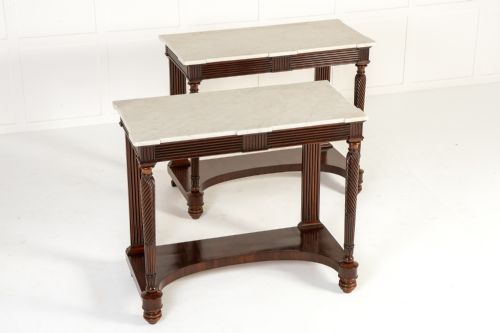
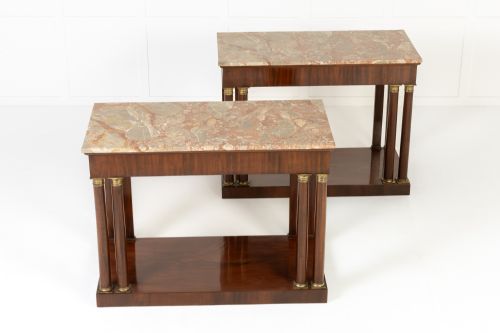
The selection ranges from 18th-century giltwood pieces to 19th-century walnut and mahogany examples, alongside colourful painted finishes. Console tables dominate the offerings, built to sit flush against a wall.
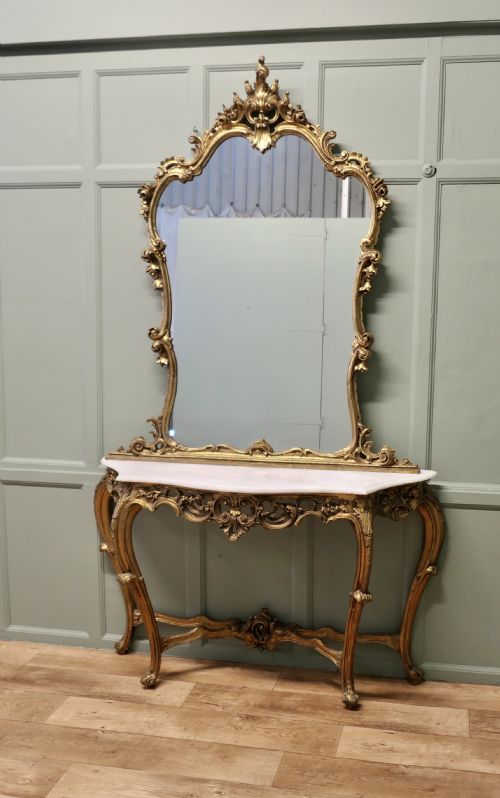
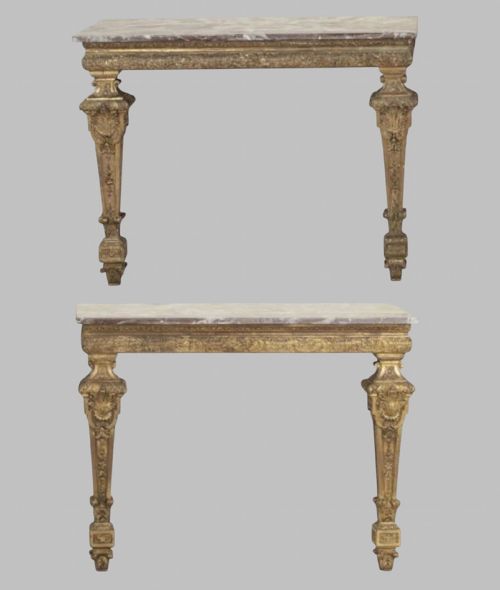
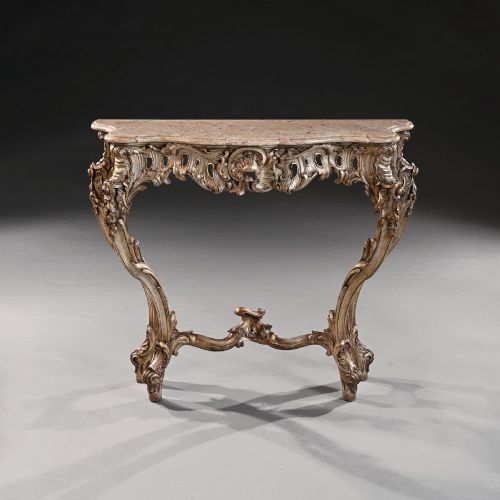
Makers drew on Italian Neoclassical, Baroque, and Rococo styles, resulting in heavily carved frames with shaped marble tops. Buyers frequently encounter ornate giltwood and painted woodwork from the eighteenth and nineteenth centuries.
Construction and Materials
Craftsmen built the structural frames from European woods such as walnut, mahogany, and pine, often applying gesso to prepare the surface for gilding. Gold leaf and silver leaf were meticulously laid over carved wooden details to achieve rich metallic sheens.
Painted finishes frequently involved cream, polychrome, or parcel gilt highlights over wood, reflecting regional tastes from periods like the Regency and Victorian eras. Carvers shaped console supports into lions' paws, putti, and elaborate scrolls.
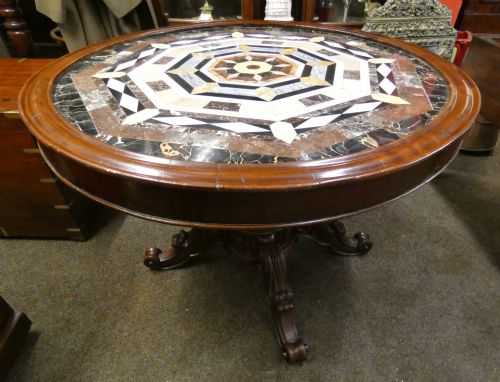
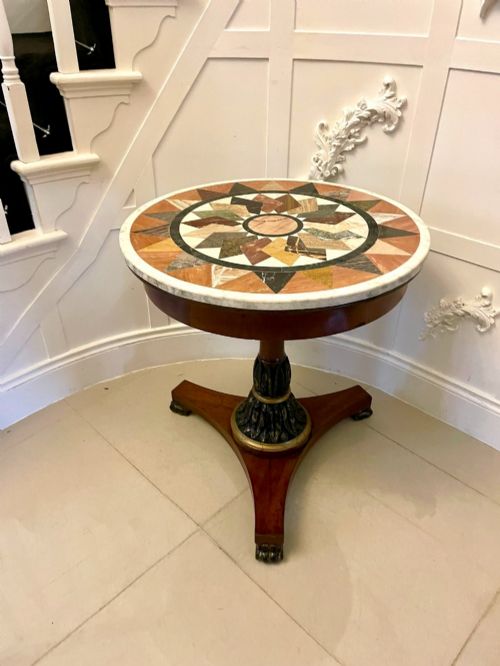
Heavy marble, onyx, breccia, and pink Salome stone tops were shaped to fit serpentine or rectangular frames. Stonemasons polished these mineral slabs to create smooth, durable display surfaces that contrasted with the gilded woodwork below.
Italian Marble Hall Table Retail Price Guide 2026
Typical asking prices for italian marble hall table among the pieces listed under this phrase on Sellingantiques today, from the lower quarter to the upper quarter. They describe what is for sale here now, not the wider market.
Design styles recorded include Italian Baroque, Rococo, and Neoclassical, alongside their 19th-century revival iterations.
Quality and Craftsmanship
The depth and crispness of the wood carving separate standard joinery from exceptional artistry. Tables featuring finely rendered figures, rams' heads, and intricate acanthus leaves display superior hand-carving skills.
The selection and treatment of the stone top dictate much of the piece's visual impact. Specimen marbles, breccia, and unusual pink stones exhibit richer natural patterning than uniform white slabs.
The integrity of the original giltwood, gesso, or polychrome paint layer influences the character of the object. Retaining an undisturbed historical surface adds considerable depth to the appearance of an antique console.
Amleto Bertoni
The Italian Marble Hall Table Glossary
- Console Table
- A table supported by wall brackets or front legs, designed to stand flat against a wall. These form the majority of hall tables.
- Giltwood
- Wood that has been coated with gold leaf or gold paint. It provides a luminous finish characteristic of Baroque and Rococo pieces.
- Breccia Marble
- A composite stone made of broken rock fragments embedded in a fine-grained matrix. It creates a mottled, highly decorative surface.
- Serpentine
- A curved shape that undulates with a convex centre flanked by concave sides. This contour softens the silhouette of heavy stone-topped tables.
- Centre Table
- A freestanding table designed to be viewed from all sides rather than placed against a wall. They often feature circular or multi-sided marble tops.
Italian Marble Hall Table: Frequently Asked Questions
Where should I place an Italian marble hall table?
These tables suit entrance halls, corridors, and reception rooms where their narrow console formats fit well against walls. Their decorative stone tops provide a durable surface for lamps, bowls, and objects.
Freestanding centre tables require more surrounding space to allow movement and visibility from all angles. Placement should account for the weight of the stone top and the stability of the floor.
How do I care for the marble top?
Clean the stone surface with a soft, damp cloth and mild soap, avoiding acidic cleaners that can etch the polish. Promptly wipe up spills to prevent staining on porous marbles.
Treat the wooden or gilded base separately using a dry feather duster. Avoid using commercial furniture polishes that might damage historic gilt or painted finishes.
What styles are common in these tables?
The listings reflect Italian Baroque, Neoclassical, and Rococo traditions, including Revival movements from the nineteenth century. Baroque and Rococo designs feature exuberant carving, curved serpentine lines, and gilded surfaces.
Neoclassical and later pieces often present cleaner architectural lines, sometimes combined with mahogany or walnut construction. Painted finishes offer alternative aesthetics ranging from monochrome cream to polychrome decoration.
How can I tell the age of a console table?
Examine the construction methods and tool marks visible on the underside of the wooden frame. Eighteenth-century and early nineteenth-century pieces often display hand-cut joinery and aged gesso layers beneath the gilding.
Stylistic cues such as ram's head motifs, putti supports, and specific marble varieties help narrow down the period. Comparing the carved details to documented examples from the 1800s and 1900s provides further context.