


Inlay Wood Tables
These inlay wood tables bring together centuries of cabinet-making skill, offering refined surfaces and rich timber grain for daily use.
Inlay Wood Tables
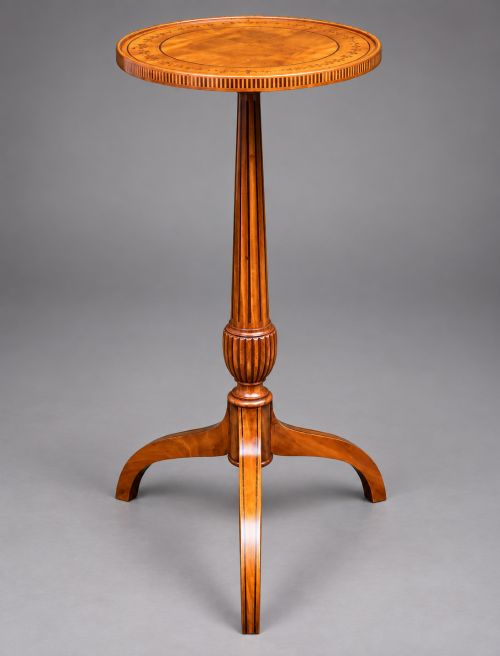
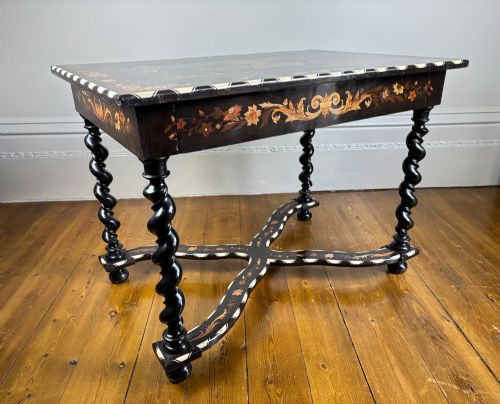
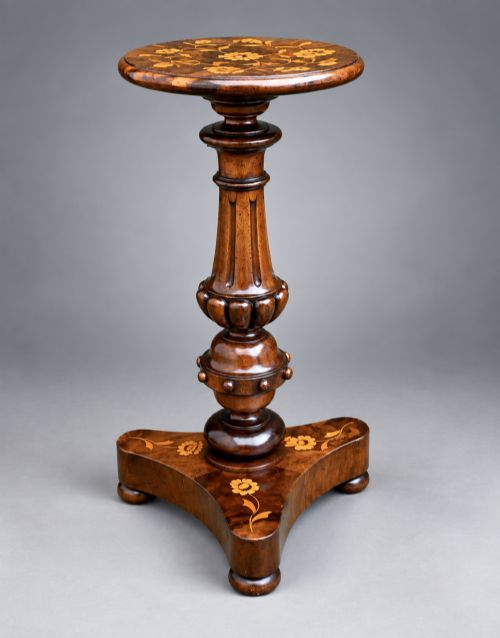
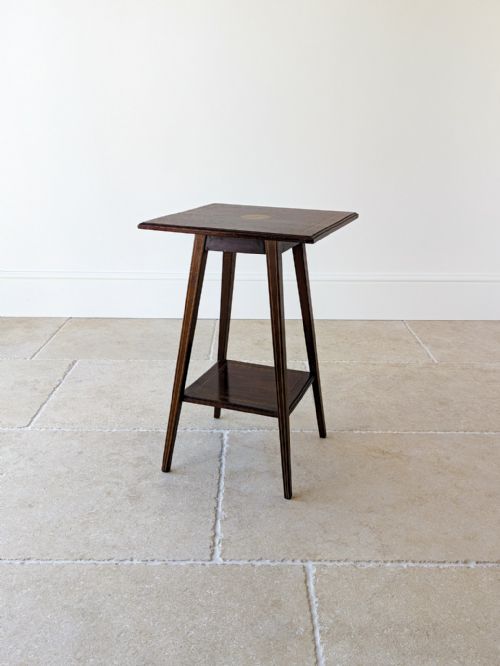
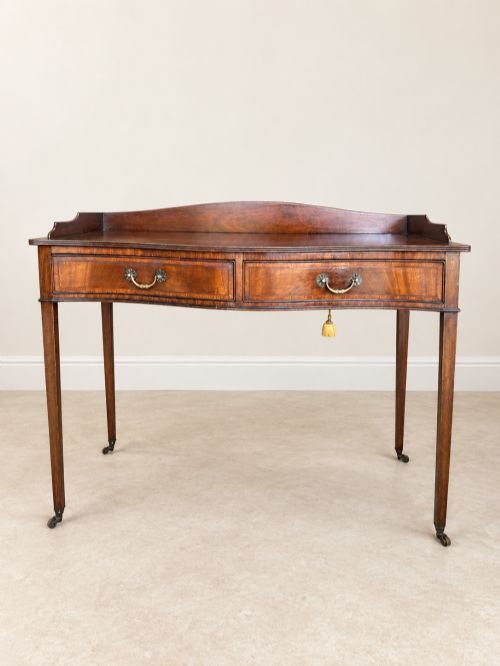
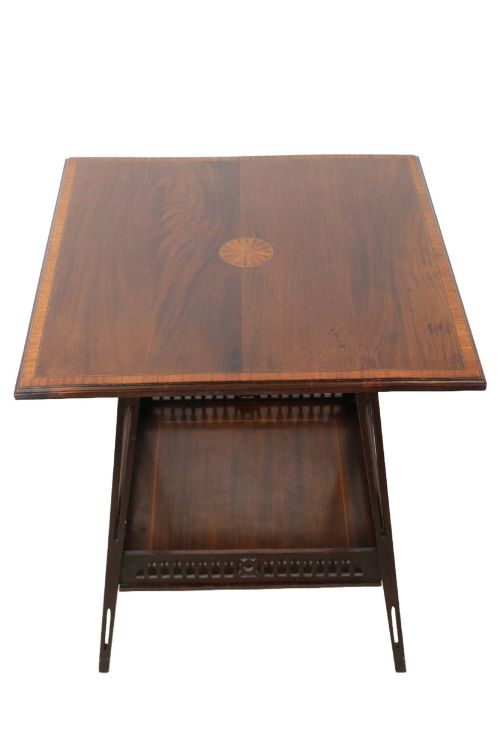
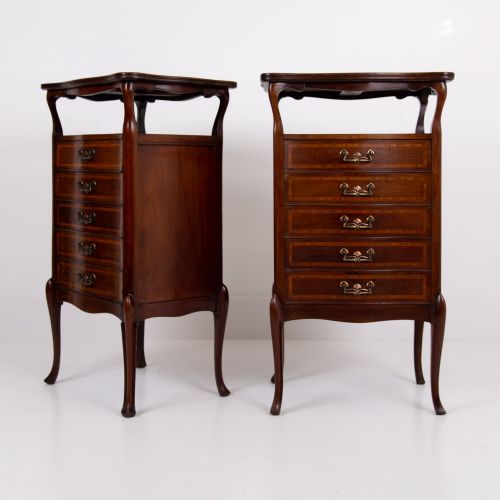
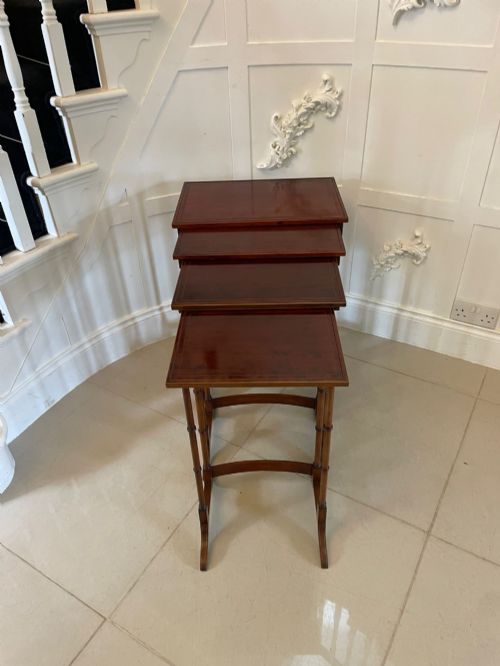
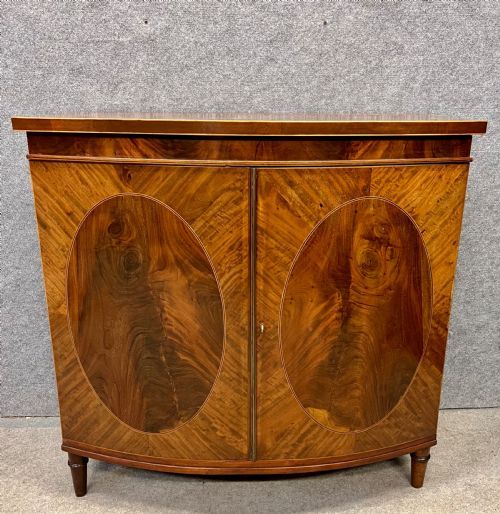
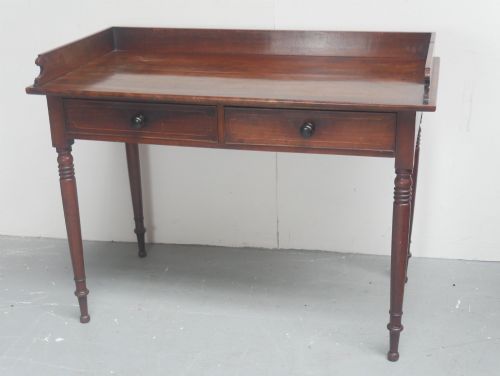
When you search for inlay wood tables, you encounter a diverse group of domestic furniture designed for utility and display across several centuries. The selection spans compact occasional pieces, writing desks, and card tables originating from Georgian, Regency, Edwardian, and later twentieth-century periods.
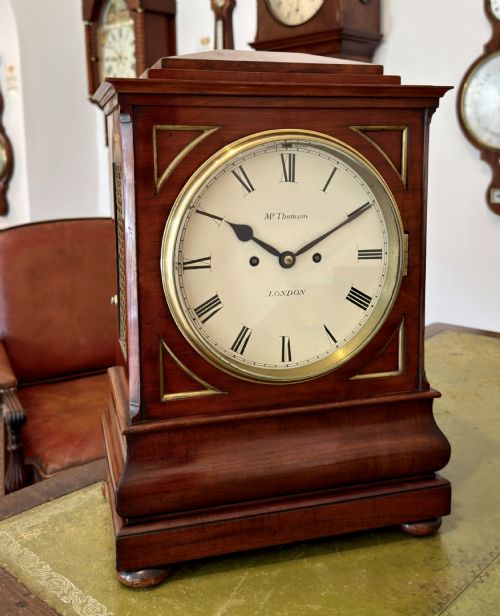
Edwardian mahogany examples and nineteenth-century occasional forms appear most frequently in this selection. These range from simple tray top tables to elaborate card tables and side cabinets decorated with contrasting veneers and stringing.
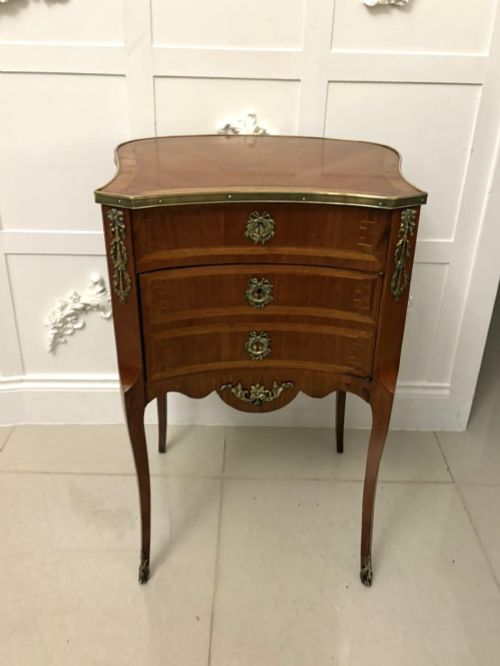
Origins vary from English workshops to French provincial cabinet-makers and Anglo-Indian or Hoshiarpur production centres. Each piece reflects the prevailing taste of its era, combining functional forms with decorative surface work.
How they were made
Cabinet-makers built these structures using solid primary timbers such as mahogany, walnut, and rosewood, often applying thin veneers to stable secondary woods. Surface decoration relied on contrasting woods like satinwood, boxwood, and kingswood, cut precisely and fitted into recessed channels.
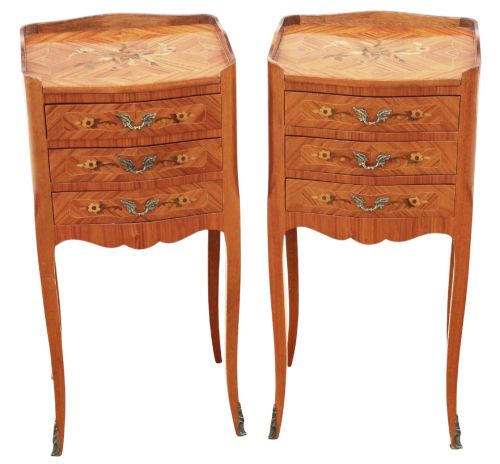
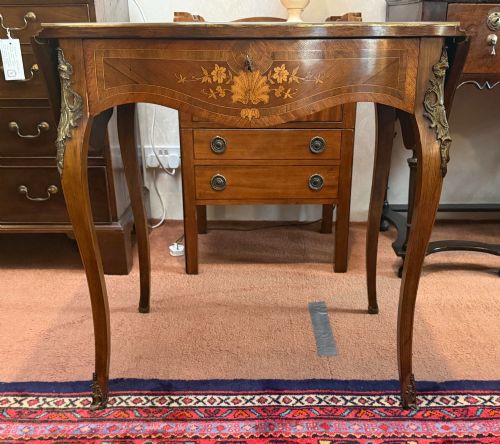
Techniques included marquetry to form pictorial or floral motifs and parquetry for geometric patterns. Brass stringing, ormolu mounts, and mother-of-pearl additions further enhanced the surfaces of higher-grade tables from the Regency and Victorian periods.
The listings span the eighteenth to the twentieth centuries, featuring mahogany, walnut, rosewood, and satinwood across side tables, desks, and cabinets.
What varies in quality
The standard of an inlay wood table depends on the precision of the cabinet-work and the choice of timber. Sharp joints, tight junctions between contrasting veneers, and balanced grain selection distinguish superior pieces from standard workshop output.
Finer examples demonstrate restraint and harmony in their decorative schemes, where brass inlay or marquetry complements rather than overpowers the underlying wood. The integrity of the secondary timbers and the original patination of the surface determine the overall standing of the piece.
Trevor Page & Co·George Bullock
The Inlay Wood Tables Glossary
- Marquetry
- The art of forming decorative patterns on a wooden surface by fitting together veneers of different woods, metals, or shells. This technique creates pictorial or floral designs on table tops and cabinet fronts.
- Parquetry
- A geometric mosaic of wood pieces used for decorative floors and furniture surfaces. It produces repeating patterns such as cubes, chequers, and zigzags.
- Satinwood
- A durable timber with a characteristic golden-yellow sheen, frequently used for contrasting stringing and banding on eighteenth and nineteenth-century furniture. It takes a high polish and brightens darker mahogany surfaces.
- Ormolu
- Gilded bronze used for decorative mounts, feet, and edge guards on fine furniture, particularly pieces influenced by French styles. It adds metallic contrast to polished timber and marquetry.
- Stringing
- A thin, narrow inlay of contrasting wood or light-coloured timber inserted into channels cut into the primary surface. It outlines panels, table edges, and drawer fronts to define proportions.
Inlay Wood Tables: Frequently Asked Questions
How do I care for an inlaid table?
Keep these pieces away from direct sunlight and steady sources of heat to prevent the wood from drying and the tiny veneer pieces from lifting. Apply natural beeswax sparingly and buff gently with a soft cloth to maintain the finish.
Avoid placing damp glasses or hot ceramic items directly on the polished surface. Use protective mats and coasters to safeguard the delicate boxwood or satinwood stringing from staining.
Can I use an antique card table daily?
Most folding card and occasional tables were built for regular domestic use, featuring sturdy pivoting tops and supportive frames. You can open and close them safely provided you check the hinge alignment and handle the mechanism without force.
Ensure the table rests on a level floor so the weight distributes evenly across the legs when extended. Heavy daily use suits robust mahogany or walnut frames better than highly fragile marquetry surfaces.
How do I date an inlaid table?
Examine the timber choices, construction methods inside the drawers, and the style of the inlay work. Georgian and Regency pieces often use oak or deal for secondary framing with hand-cut dovetails, while Edwardian examples utilise machine-sawn elements and distinct satinwood banding.
Stylistic cues such as brass mounts, tapered legs, and specific floral motifs align with the prevailing fashions recorded across the nineteenth and early twentieth centuries.
What is the difference between marquetry and parquetry?
Marquetry involves cutting varied veneers to create pictorial scenes, floral sprays, or curving ornamental arrangements. Artisans assemble these intricate designs on paper before pressing them directly onto the table top.
Parquetry uses geometrical blocks of wood arranged in repeating abstract patterns such as cubes or chequers. This technique provides structured, architectural decoration across flat surfaces.