


Inlaid Wooden Music Stand
An inlaid wooden music stand brings together polished timber and delicate marquetry to hold scores in a traditional sitting room.
Inlaid Wooden Music Stand
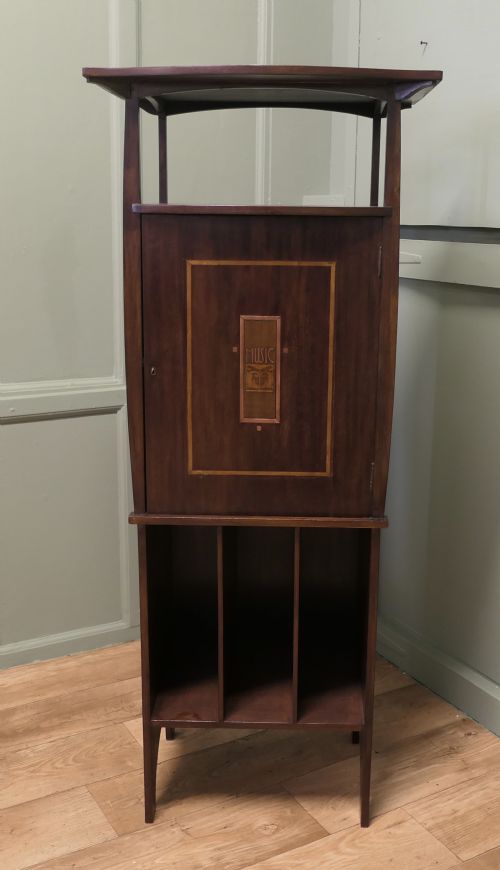
An inlaid wooden music stand encompasses music cabinets, canterburys, reading stands, and sheet racks originating from the Regency, Victorian, and Edwardian periods. These pieces serve to organise scores and books while adding decorative grain and contrast to a room.
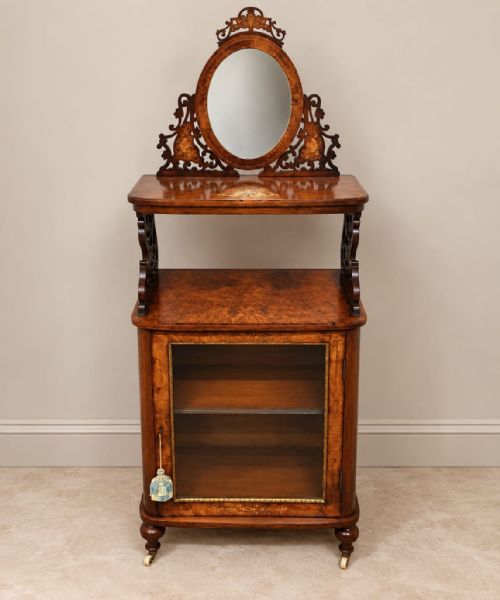
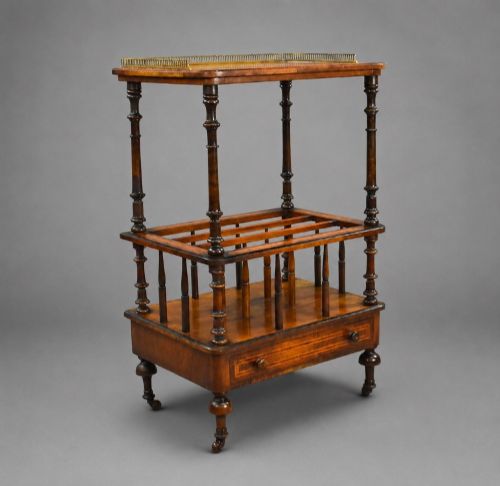
The version most commonly met on this page is the Victorian burr walnut music cabinet or canterbury, often featuring boxwood or satinwood inlay and brass fittings. Such pieces combine enclosed shelving or open dividers with adjustable ledges designed for holding sheet music.
Earlier Regency examples lean towards adjustable mahogany reading stands, whilst Edwardian variations favour lighter mahogany marquetry. Across all eras, the inclusion of wood inlay distinguishes these functional pieces from standard utilitarian furniture.
Materials and Construction
Makers built these pieces primarily using mahogany, walnut, and burr walnut as foundational timbers, chosen for their rich grain and stability. Surface decoration relied upon wood inlay, including boxwood and satinwood, cut precisely to form floral or geometric marquetry patterns.
Metal components such as brass featured in adjustable mechanisms and handles, while occasional pieces incorporated glass panels or fretwork. Joinery methods of the nineteenth and early twentieth centuries ensured sturdy frames capable of supporting heavy bound music volumes.
Many a Victorian parlour recitals relied on these stands to keep errant sheet music from sliding onto the hearthrug mid-aria.
Distinction in Craft
The quality of an inlaid wooden music stand rests upon the crispness of the marquetry and the choice of timber figure. Burr walnut and contrasting satinwood inlay indicate higher ambition in the workshop compared to plain mahogany surfaces.
Engineering of adjustable mechanisms and the finesse of fretwork or turning separate standard production items from finer cabinet work. Proportion and the integration of brass fittings complete the distinction between ordinary utility and considered design.
GM Elwood for JS Henry
The Inlaid Wooden Music Stand Glossary
- Canterbury
- A low piece of furniture fitted with upright partitions for holding sheet music, magazines, or folios, often mounted on castors. They frequently include a single drawer beneath the main compartment.
- Marquetry
- Decorative veneer work arranged in pictorial or geometric patterns using various coloured woods. Craftsmen applied these contrasting pieces to the exterior surfaces of cabinets and stands.
- Burr Walnut
- Timber taken from the gnarled growth of a walnut tree, yielding complex, swirling grain patterns. It commands attention for its rich visual texture on Victorian cabinet doors and tops.
- Satinwood
- A durable, yellowish timber native to India and Sri Lanka, utilised extensively for contrasting inlay and stringing lines. Its lustrous finish brightens darker woods like mahogany and walnut.
- Lyre-Shaped
- Formed in the silhouette of a classical lyre, a common ornamental motif found on the upright supports of music stands and reading desks. This shape nods to classical musical iconography.
Inlaid Wooden Music Stand: Frequently Asked Questions
How do I date an inlaid music stand?
Dating relies on observing the primary timber, the style of inlay, and structural hardware. Regency pieces lean toward lean mahogany and brass detailing, whereas Victorian examples favour rich burr walnut and heavier proportions.
Edwardian items often display lighter mahogany frames with refined marquetry panels. Comparing these traits against known period styles narrows the decade of manufacture.
Were these stands made for instruments or sheet music?
These stands and cabinets were manufactured primarily to hold paper scores, song sheets, and bound musical folios for parlour recitals. Adjustable ledges allowed musicians to prop open heavy scores at a convenient reading angle.
Some reading stands also accommodated books and newspapers for general study rather than strictly musical performance.
How should I care for inlaid wood furniture?
Protect the timber and delicate inlay by keeping pieces away from direct sunlight and steady heat sources. Excessive temperature fluctuations cause wood to dry and veneers to lift.
Apply a traditional beeswax polish sparingly and buff with a soft cloth to maintain the lustre of the walnut or mahogany without sealing the grain.