





Inlaid Wood Coffer
An inlaid wood coffer is a robust storage piece that brings centuries of detailed marquetry and sturdy timber directly into a modern room.
Inlaid Wood Coffer
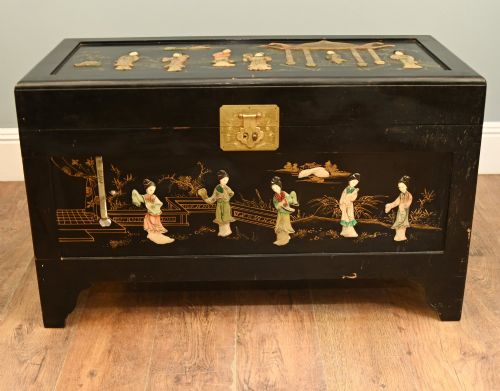
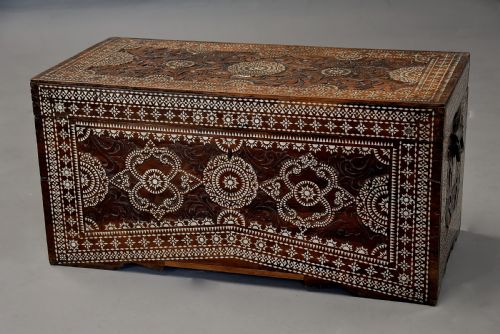
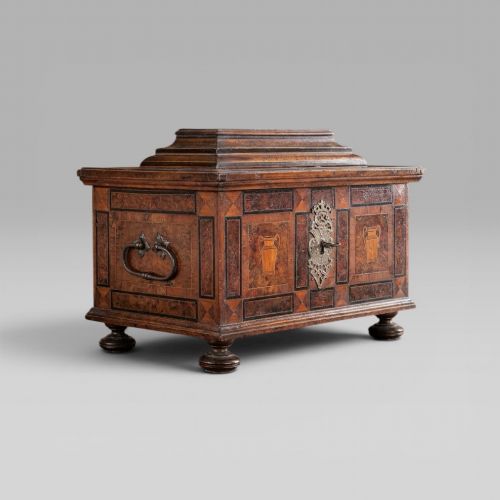
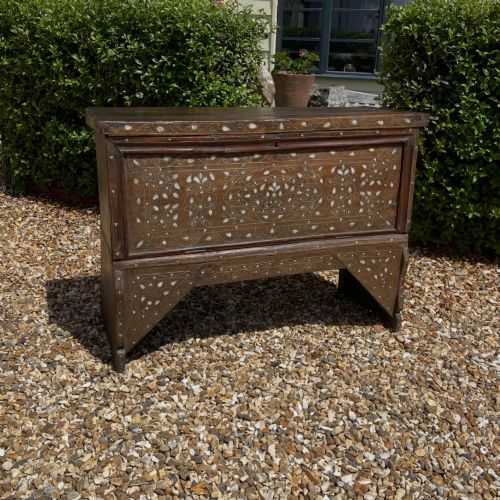
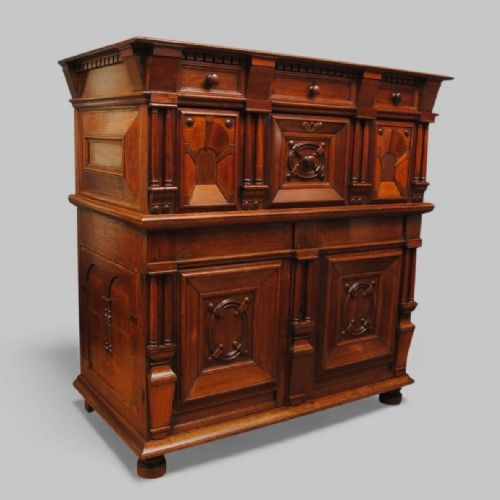
An inlaid wood coffer functions primarily as a secure chest or storage box, employing decorative surface patterns across timber panels. These pieces span centuries of cabinetmaking traditions, appearing in forms ranging from heavy seventeenth-century oak and walnut constructions to nineteenth-century mahogany and fruitwood examples.
The versions most commonly met on this page include seventeenth-century continental and oak coffers, alongside nineteenth-century hardwood trunks embellished with mother-of-pearl or brass. Buyers also encounter smaller caskets, travelling cabinets, and box chests that share the same fundamental surface ornamentation and timber construction.
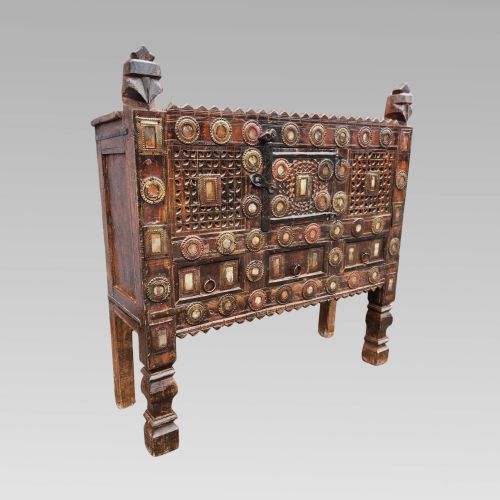
Originating across diverse regions from Europe to the Middle East and Asia, these coffers reflect local timber supplies and regional woodworking styles. Whether built as heavy dowry chests or travelling cabinets, each piece serves as both functional storage and a display of decorative technique.
How they were made
The construction relies on solid timbers such as oak, walnut, mahogany, cedarwood, and fruitwood, often joined with traditional framing methods. These foundational woods provide the structural integrity needed for large storage chests and heavy coffers.
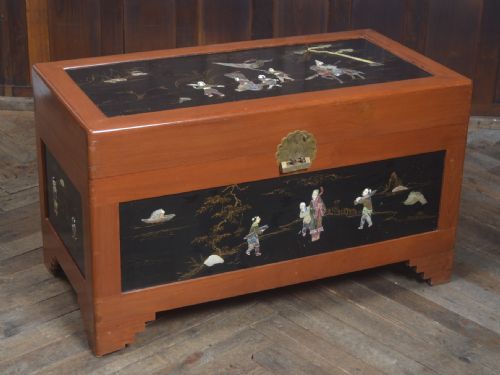
Surface decoration is achieved through marquetry, parquetry, and contrasting stringing, alongside inlay work utilising mother-of-pearl, brass, boxwood, and ebony. Artisans meticulously fit these materials into recessed channels within the timber ground to create intricate geometric or figurative patterns.
Inlaid Wood Coffer Retail Price Guide 2026
Typical asking prices for inlaid wood coffer among the pieces listed under this phrase on Sellingantiques today, from the lower quarter to the upper quarter. They describe what is for sale here now, not the wider market.
Listings feature timbers such as oak, walnut, mahogany, camphor wood, teak, cedarwood, and fruitwood, paired with brass, iron, and mother-of-pearl.
What varies in quality
The sophistication of the timber selection and the precision of the inlay set the finest examples apart from standard utility boxes. Grain alignment, timber maturity, and the complexity of the contrasting wood or shell insertions dictate the visual depth of the surface.
The integrity of the structural joinery and the survival of the original hardware, such as iron hinges, brass mounts, and locks, heavily influence the standing of any given piece. Well-preserved internal fittings and minimal disturbance to the primary wood surfaces elevate a coffer within its period category.
The Inlaid Wood Coffer Glossary
- Marquetry
- The art of applying pieces of veneer to a structure to form decorative patterns and pictures. It differs from inlay by covering the entire surface rather than being set into carved cavities.
- Coffer
- A large strongbox or chest used for storing valuables, documents, or textiles. These pieces often feature sturdy timber construction and secure locking mechanisms.
- Parquetry
- A geometric mosaic of wood pieces used for decorative floors and surface veneers. This technique creates repeating patterns like cubes, stripes, and chevrons.
- Stringing
- A narrow strip of contrasting wood or light-coloured material embedded in the surface of furniture. It typically outlines panels, drawers, or table tops to create a defined border.
- Burr wood
- Timber taken from a tree growth where the grain has grown in a deformed manner, resulting in swirling, highly decorative patterns. Cabinetmakers prize this material for prominent veneer panels.
Inlaid Wood Coffer: Frequently Asked Questions
What is an inlaid wood coffer used for?
These pieces served historically to store valuable household goods, textiles, and important documents securely. Today, they function effectively as living room coffee tables, blanket storage at the foot of a bed, or standalone decorative focal points.
Their robust construction allows them to handle everyday domestic use while keeping contents dust-free and organised.
How do I date an antique coffer?
Dating relies heavily on examining the primary timber species, construction joints like dovetails or pegged mortise and tenon, and the style of the inlay. Seventeenth-century pieces typically feature heavy oak or walnut with geometric carving and simpler contrasting stringing.
Later nineteenth-century examples often incorporate exotic hardwoods, elaborate mother-of-pearl work, or softer fruitwoods, reflecting the prevailing taste and manufacturing capabilities of their specific decades.
Are these chests suitable for modern homes?
Their enduring scale and practical storage capacity make them exceptionally adaptable for contemporary interiors. They fit naturally into hallways, living rooms, and bedrooms, offering concealed storage without sacrificing decorative appeal.
Maintaining stable indoor humidity levels protects the dry timber and prevents the delicate inlay work from lifting over time.
What is the difference between a coffer and a trunk?
A coffer traditionally denotes a heavily constructed wooden chest, often reinforced with iron or brass, used for storing high-value possessions. A trunk generally implies a piece designed more specifically for travel, possessing lighter framing or specialised carrying handles.
In historical listings, however, the terms frequently overlap depending on regional terminology and the exact proportions of the object.