


Inlaid Mahogany Wall Mirror
These inlaid mahogany wall mirrors bring warmth and historic character to any room, offering classic wood tones and decorative detail that collectors prize.
Inlaid Mahogany Wall Mirror
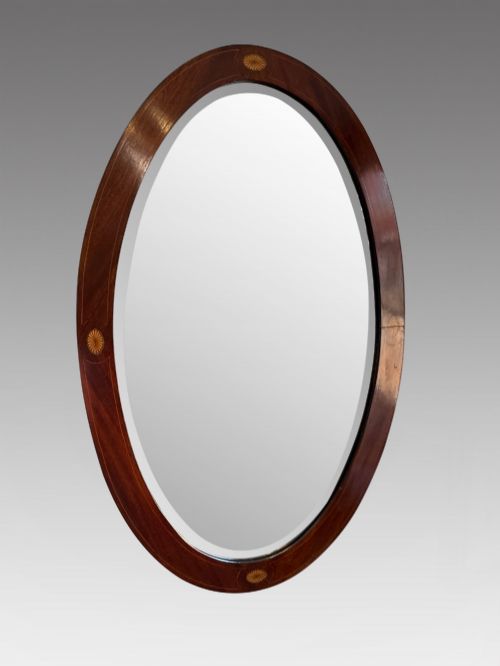
An inlaid mahogany wall mirror combines rich timber frames with decorative lighter wood detailing, serving both a practical reflective purpose and a decorative function in domestic interiors. When searching for an inlaid mahogany wall mirror, buyers encounter a range of forms spanning several distinct periods.
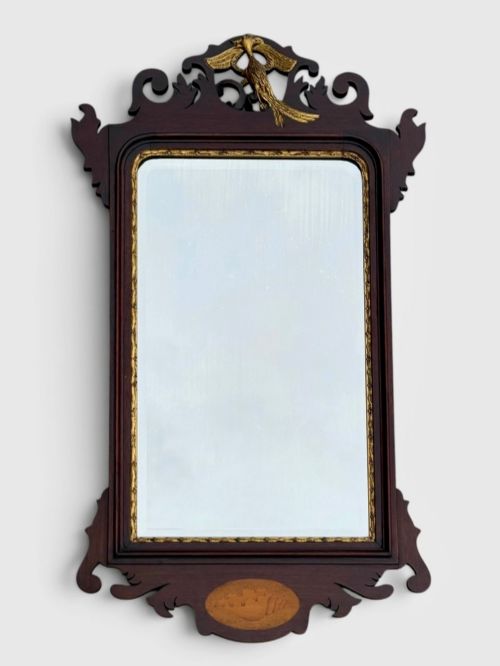
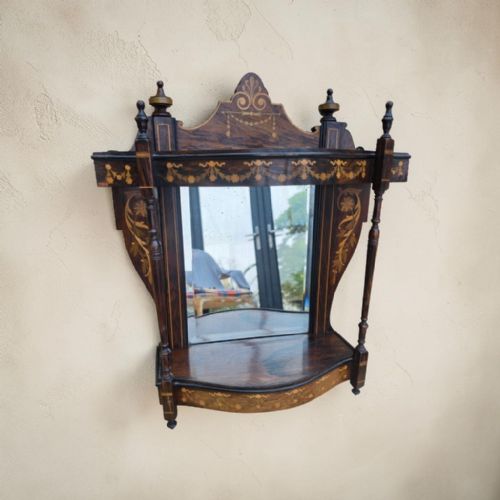
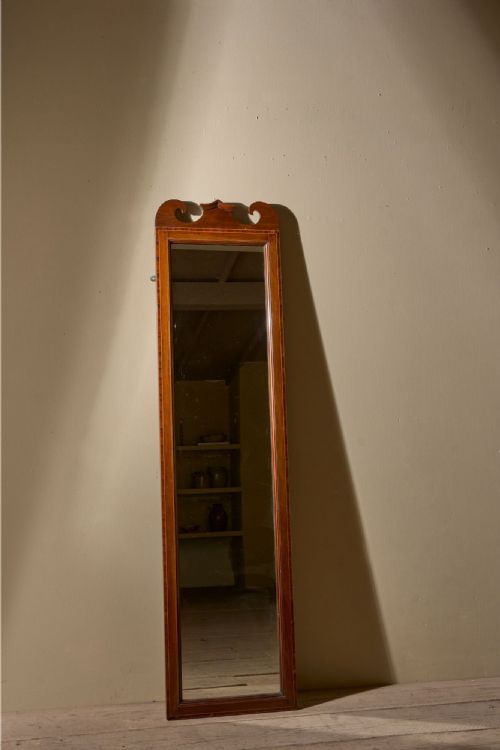
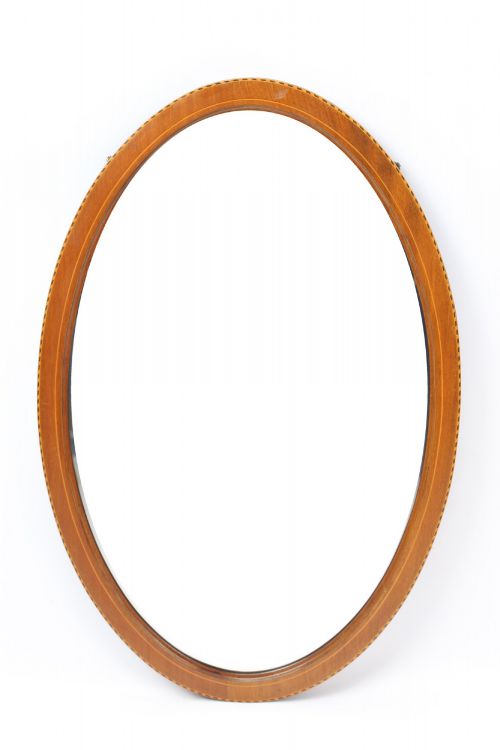
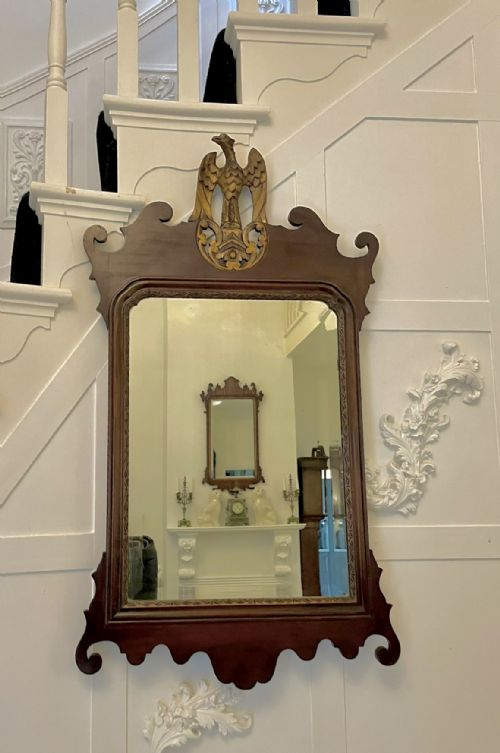
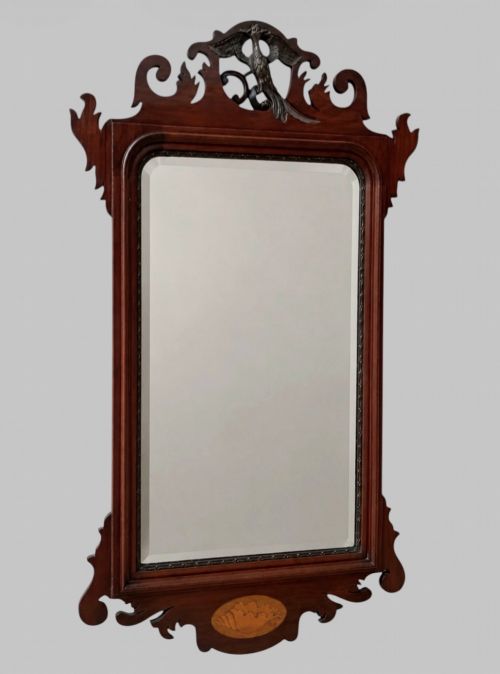
The selections available here lean heavily toward Edwardian oval hanging mirrors and nineteenth-century fretwork designs, alongside revival styles from the Georgian and Chippendale periods. These pieces appear as tall pier mirrors, overmantels, and smaller wall-hanging items.
Originating largely from the nineteenth and early twentieth centuries, these mirrors demonstrate how period makers adapted traditional woodwork techniques. They range from simple domestic looking-glasses to elaborate Dutch marquetry and gilded hybrid forms.
How They Were Made
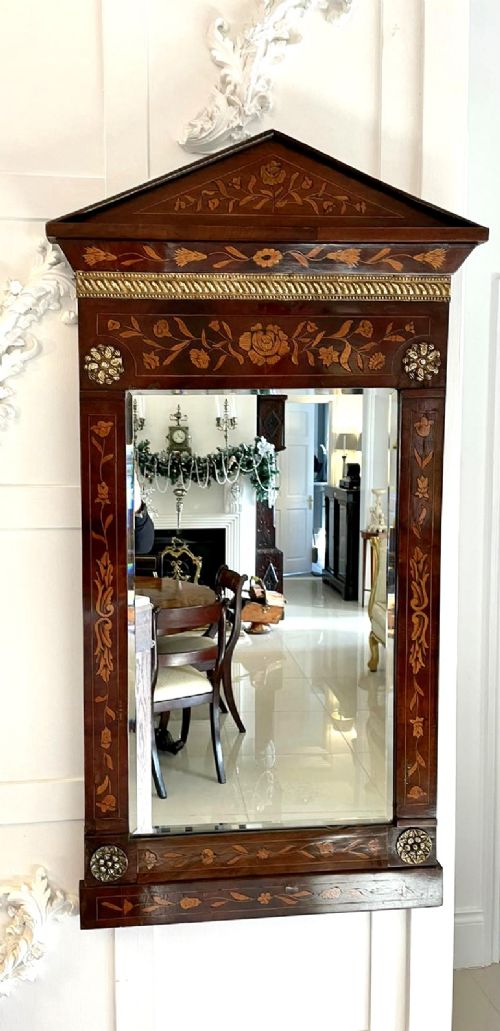
Makers constructed these frames using solid mahogany, frequently embellishing the timber with fine contrasting stringing and marquetry panels. Satinwood, boxwood, and ebony inlays provide crisp linear definition against the deep reddish-brown ground of the mahogany.
Many examples incorporate bevelled glass plates set within fretted scrollwork frames, sometimes enhanced with giltwood accents. Craftsmen employed intricate fret-cutting techniques to achieve the characteristic pierced silhouettes seen in Georgian and Chippendale revival pieces.
Listings feature mahogany, satinwood inlay, boxwood inlay, and bevelled glass across Edwardian, Georgian, and nineteenth-century periods.
What Varies in Quality
The standard of a piece rests largely on the crispness of the fretwork and the precision of the inlay work. Finer examples display meticulous attention to botanical or geometric wood inlays that remain tightly seated within the mahogany without gaps.
Proportion and execution distinguish standard domestic mirrors from exceptional exhibition pieces. The depth of the carved ornamentation, the quality of the original glass bevelling, and the integrity of the timber ground determine the standing of each mirror.
The Inlaid Mahogany Wall Mirror Glossary
- Marquetry
- The art of forming decorative patterns by fitting together small pieces of veneer. This technique creates pictorial or floral motifs across the frame.
- Fretwork
- Openwork woodwork created by piercing timber with a saw. It defines the scrolling outlines of Chippendale and Georgian style frames.
- Pier Mirror
- A tall looking-glass designed to hang on the wall between windows. These tall mirrors often match console tables or fill narrow wall spaces.
- Bevelled Glass
- A mirror glass plate with an angled, polished edge. This treatment adds depth and refracts light around the perimeter of the frame.
- Boxwood Inlay
- Pale contrasting wood used for delicate linear stringing. It highlights the edges and panels of Edwardian and nineteenth-century frames.
Inlaid Mahogany Wall Mirror: Frequently Asked Questions
How do I date an inlaid mahogany wall mirror?
Dating relies on examining the timber preparation, the style of the inlay, and the characteristics of the glass plate. Edwardian pieces often feature machine-sawn fretwork and oval formats, whereas nineteenth-century and Georgian examples display hand-cut details and heavier timber construction.
Secondary woods at the back of the frame also offer clues to age. Original fixings and backboards help confirm the period of manufacture when compared against known stylistic benchmarks.
Where should I hang a pier mirror?
Pier mirrors suit narrow wall spaces, particularly the wall space between two windows or above a matching console table. Their tall format draws the eye upward and amplifies natural light within a room.
Ensure the wall fixings match the weight of the mahogany frame and any associated shelving. Secure hanging prevents movement and protects the timber structure over time.
What is the difference between marquetry and inlay?
Inlay involves inserting pieces of contrasting material into a recessed solid wood ground. Marquetry assembles a complete veneer puzzle over the entire surface before application.
Both techniques appear frequently on these frames to create floral sprays and geometric borders. Marquetry is particularly common on Dutch-influenced pieces from the Georgian tradition.
How do I care for antique mahogany frames?
Maintain the timber by keeping the mirror away from direct sunlight and rapid temperature fluctuations. Dust gently with a dry, soft cloth to protect the polished surface and delicate veneer work.
Avoid commercial liquid polishes that build up wax residues. Professional conservation wax applied sparingly preserves the natural sheen of the mahogany and protects the inlay.