


Inlaid Book Table
An inlaid book table brings timberwork and storage together, giving a room a compact revolving surface or a low stand for volumes.
Inlaid Book Table
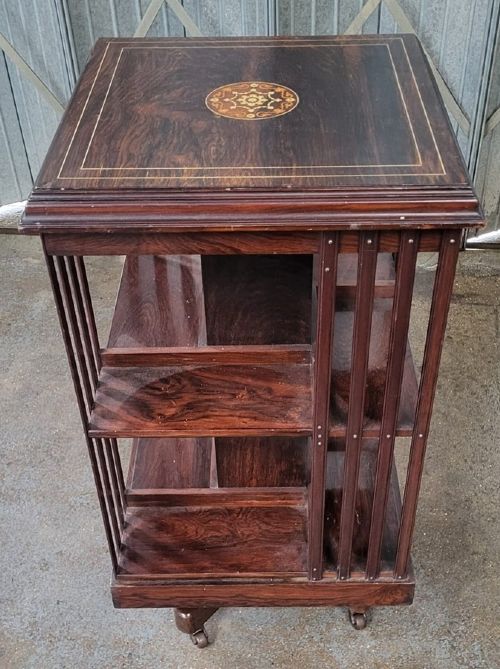
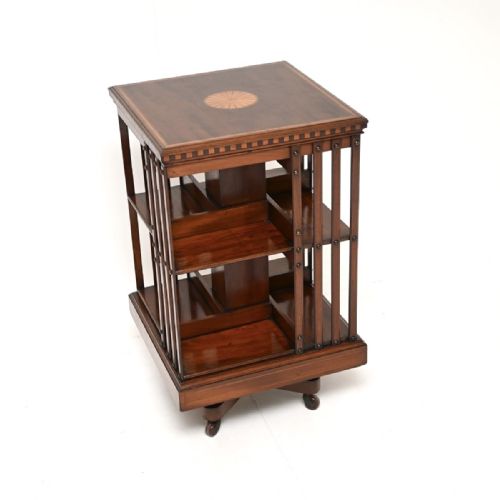
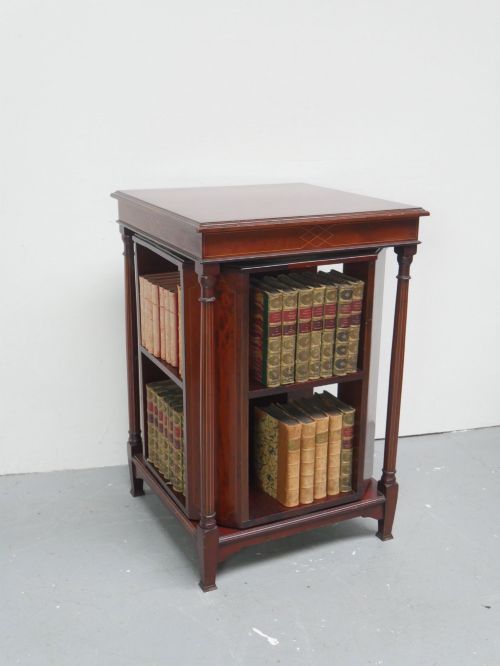
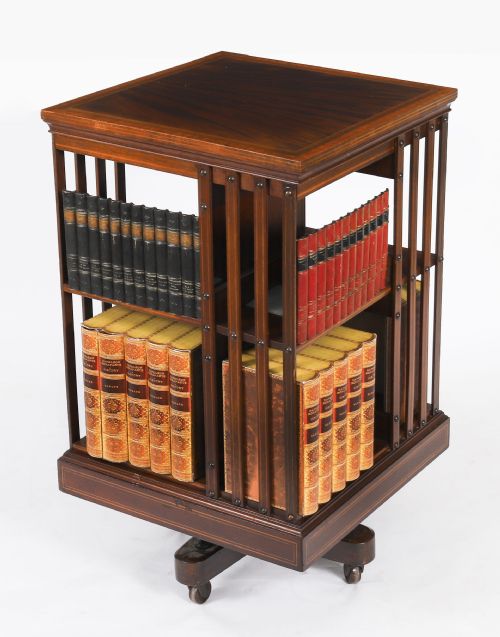
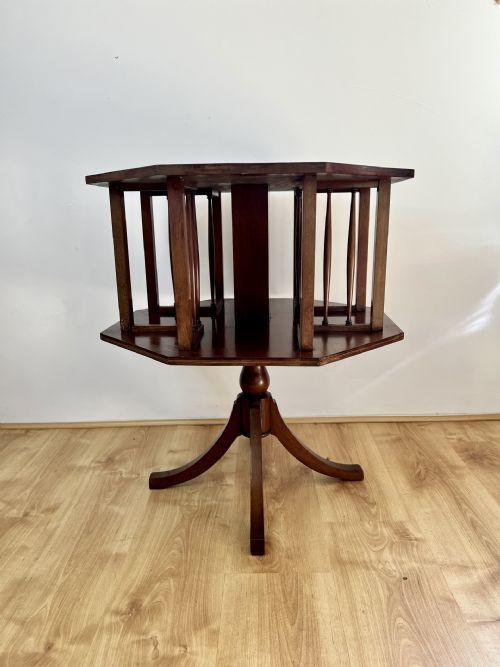
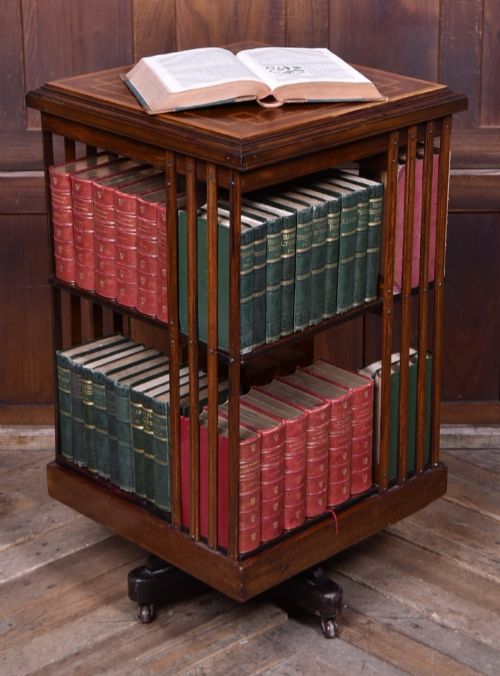
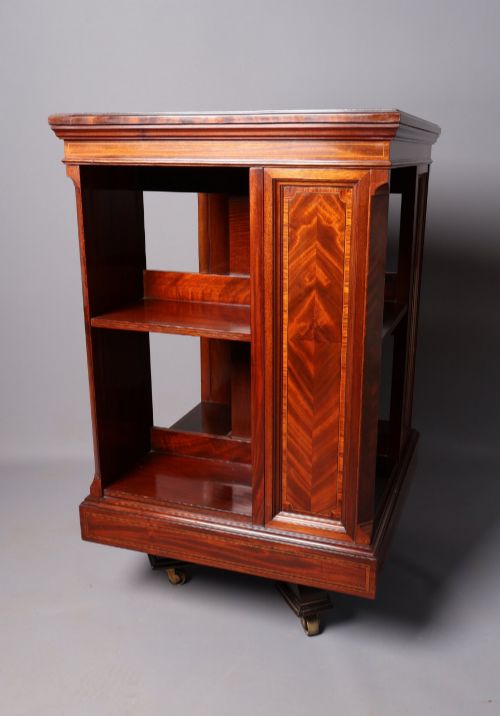
When you search for an inlaid book table, you encounter pieces designed to hold volumes near a chair or desk, most frequently appearing as revolving bookcases from the Edwardian period or the year 1900. These items combine a display platform with partitioned shelf space beneath, often built to sit upon the floor or rest directly on a tabletop.
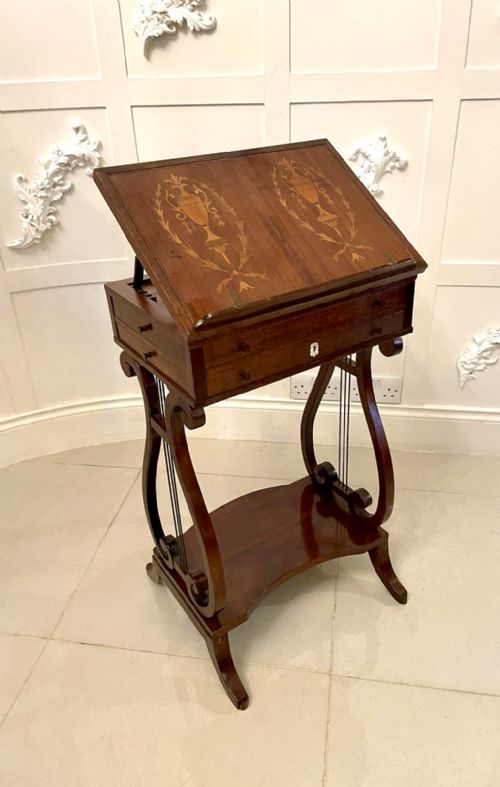
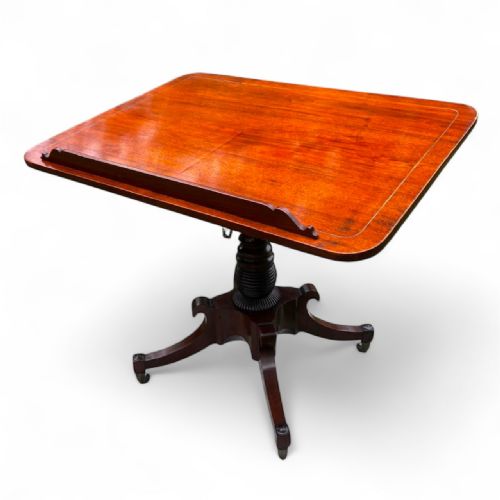
The materials recorded in the evidence range from mahogany and rosewood to satinwood and walnut, intersected with contrasting stringing or marquetry. Alongside revolving stands, the selection includes reading tables, occasional tables, music stands, and bedside cabinets equipped to hold books.
Originating largely across the nineteenth and early twentieth centuries, these pieces draw on styles such as Edwardian Sheraton Revival, Art Nouveau, and Victorian design. Their primary function remains holding a small library within arm's reach while adding patterned wood veneers to an interior.
How they were made
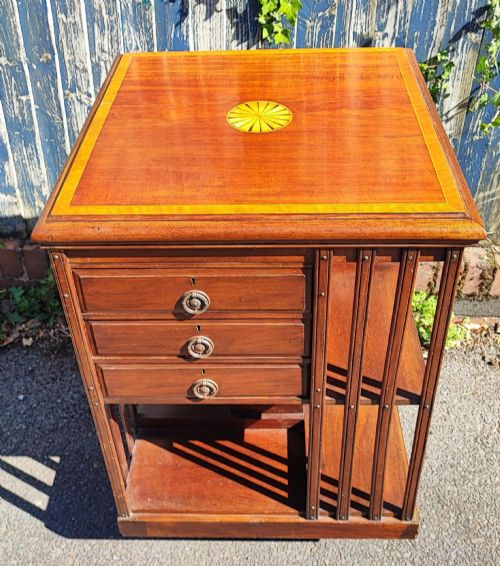
Cabinetmakers constructed these tables using solid timbers and applied veneers, employing mahogany, walnut, rosewood, and satinwood as the primary structural and visual surfaces. Contrasting details relied on boxwood inlay, brass mounts, and marquetry work to define borders and panels.
Revolving models required internal cruciform mechanisms and ball bearings to allow smooth rotation beneath a square or circular top. Joinery techniques included dovetailing for drawers and secure framing to support the weight of books stored in upright compartments.
Mahogany and satinwood dominate the listings on this site, appearing across Edwardian revolving bookcases and nineteenth-century reading tables.
What varies in quality
The standard of timber selection and veneer matching defines the upper tier of these pieces, showing thoughtful grain continuation across panels and borders. Craftsmanship is visible in the crispness of the boxwood stringing and the precision of the marquetry motifs.
Mechanical performance distinguishes the revolving examples, where a steady, balanced spin without lateral wobble indicates careful alignment of the internal pivot mechanism. Secondary woods used for interior partitions and the weight and finish of applied brass elements also mark the grade of the piece.
Edwards and Roberts·Gillows
The Inlaid Book Table Glossary
- Inlay
- A technique where pieces of contrasting wood, metal, or shell are fitted into depressions flush with the surrounding surface. This method creates geometric patterns or pictorial motifs on tabletops and bookcase panels.
- Revolving bookcase
- A freestanding or tabletop storage unit mounted on a concealed central pivot allowing it to spin freely. This design provides access to books from multiple seated positions.
- Marquetry
- Elaborate veneer work forming decorative patterns or scenes using various coloured wood veneers. It differs from simple inlay by covering the entire surface ground.
- Stringing
- Thin lines of contrasting wood or light-colored boxwood embedded in grooves around table edges and drawer fronts. It frames the primary timber and accentuates the geometry of the furniture.
- Cross banding
- A border of veneer laid around the perimeter of a tabletop or shelf with the wood grain running perpendicular to the central panel. This frames the main timber expanse.
Inlaid Book Table: Frequently Asked Questions
How do revolving book tables work?
These tables operate on an internal cross-shaped wooden or metal pivot mechanism concealed beneath the central column. Ball bearings or friction washers allow the upper tiers to spin smoothly in either direction.
This design lets a reader reach different compartments of books from a single seated position without moving the furniture.
What is the difference between a table top and floor model?
Floor models stand on a cruciform base with castors or feet, holding several tiers of books at a height suited for reading from an armchair. Tabletop versions feature a lower profile designed to sit on top of a desk or larger cabinet.
Both types utilise the same revolving mechanism and partitioned shelf arrangement.
Where were these tables used?
They were placed beside armchairs in studies, libraries, and drawing rooms where reference books and novels needed to remain close at hand. Bedside variants also served to hold evening reading material.
Their compact footprints allowed them to fit into corners and beside seating without dominating the floor space.
How do I identify an Edwardian piece?
Edwardian items often feature lighter woods like satinwood, delicate boxwood stringing, and Sheraton Revival proportions dating around 1900. The construction typically shows machine-sawn secondary timbers alongside hand-finished details.
Stylistic influences from this era favour lighter, more graceful silhouettes than heavier Victorian precedents.