






Industrial Scene Artwork
Industrial scene artwork captures the grit of urban factories, docks, and railways through the honest eyes of painters working across the nineteenth and twentieth centuries.
Industrial Scene Artwork
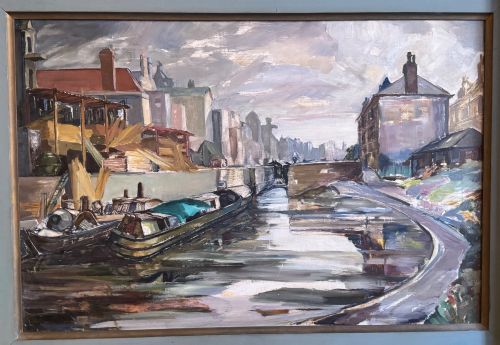
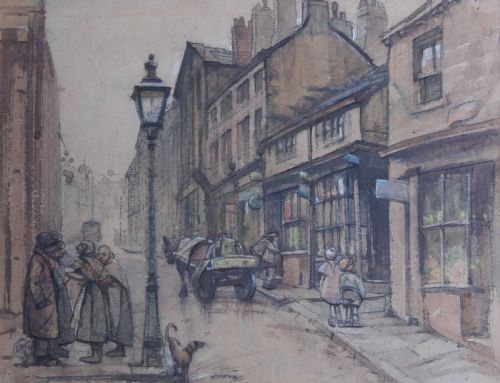
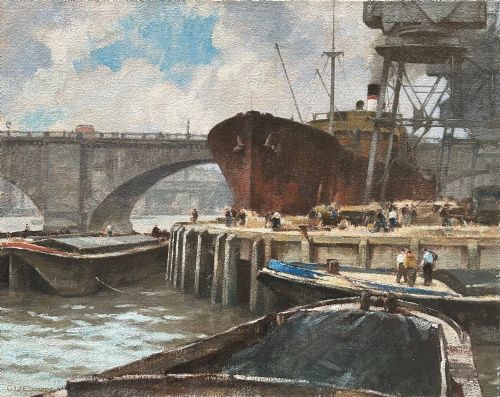
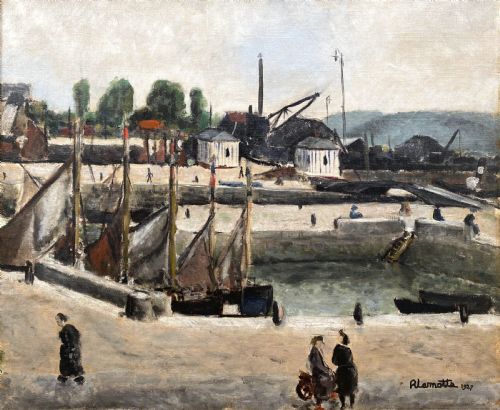
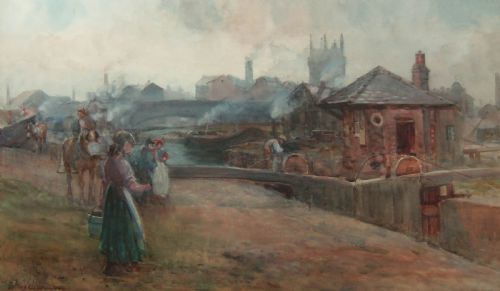
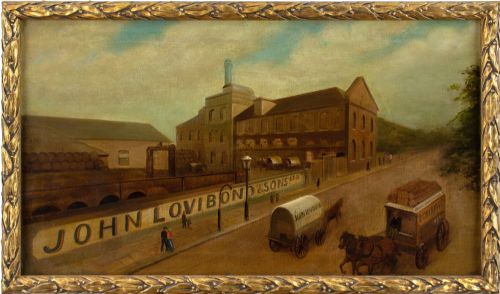
Industrial scene artwork covers a varied terrain of paintings and watercolours depicting timber yards, canals, breweries, and docks. Buyers encountering this selection will find works spanning the nineteenth century through the mid-twentieth century, capturing the physical graft of urban and industrial life.
The material record on this page leans heavily towards oil on canvas, oil on board, and watercolour on paper. Common subjects range from London bridges and northern mills to French canals and maritime ports, reflecting a widespread artistic fascination with mechanised labour and urban environments.
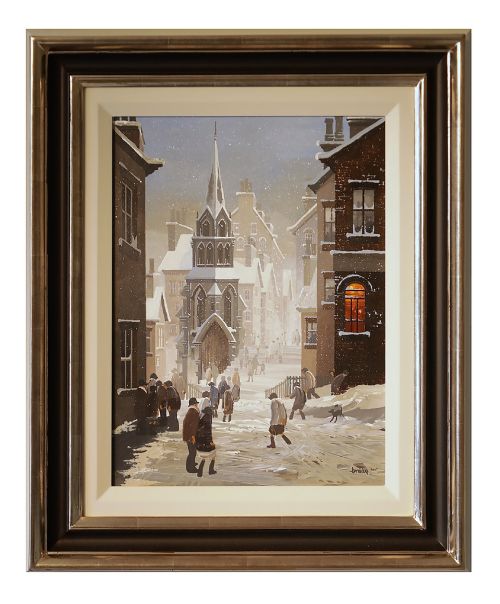
Many of these pieces arrive in period wood frames that complement their visual weight and historical context. The artistic approaches shift from traditional English school realism to constructivist factory views and impressionist river landscapes.
How they were made
Artists working on canvas or board utilised oil paints to build up rich, textured surfaces capable of rendering the smoke, iron, and water of industrial settings. The heavy body of oil paint suited subjects like canal barges, timber yards, and dismantling railway stations.
Watercolour paintings on paper allowed for swift topographical recording, capturing the atmospheric haze of docks and townscapes with translucent washes. Painters balanced fine brushwork with broad strokes to delineate architectural forms and human figures against industrial backdrops.
Industrial Scene Artwork Retail Price Guide 2026
Typical asking prices for industrial scene artwork among the pieces listed under this phrase on Sellingantiques today, from the lower quarter to the upper quarter. They describe what is for sale here now, not the wider market.
Materials documented across the pieces include paper, canvas, oil on canvas, wood frame, watercolour, oil, wood, and glass.
What varies in quality
The strength of a composition rests on how effectively the artist balances heavy industrial architecture with atmospheric light and movement. Works that capture the specific machinery and human scale of a working site hold greater visual conviction.
Handling of medium is another differentiator, seen in the confident application of oil pigments or the controlled fluidity of watercolour washes. The preservation of the original surface and framing adds tangible historical depth to the piece.
Evelyn Harris·Cuthbert Crossley·Cyril Walduck Edwards·Brian Shields Braaq·Arthur Netherwood·Herbert John Finn·Henry J Neave·George Harcourt Sephton
The Industrial Scene Artwork Glossary
- Watercolour
- A painting method where fine pigment is suspended in a water-based solution, typically applied to paper. It allows for transparent washes and rapid execution.
- Oil on Canvas
- A painting technique using pigments bound in a drying oil, applied to stretched fabric. This combination provides durability and a wide textural range.
- Constructivism
- An artistic style originating in the twentieth century that emphasises geometric abstraction and industrial forms. It translates factory machinery into structured compositions.
- Topographical
- Pertaining to the accurate representation of actual places and landscapes. Topographical watercolours record specific docks, canals, and streets from observation.
Industrial Scene Artwork: Frequently Asked Questions
What periods do these industrial artworks cover?
The selection spans from the nineteenth century through the mid-twentieth century, including works from the 1900s, 1920s, 1930s, and 1950s.
This range allows collectors to trace how artistic interpretations of labour and machinery evolved alongside industrial development.
What mediums are used in these paintings?
Pieces are executed in oil on canvas, oil on board, and watercolour on paper.
Many retain their original wood frames, preserving the complete historical object.
Where do these industrial scenes usually take place?
Subjects include London locations such as Regent's Canal and Cannon Street Station, alongside northern mill towns and French ports.
Artists recorded both specific urban infrastructure and broader river landscapes.
How do I care for an oil or watercolour painting?
Keep works out of direct sunlight and away from damp environments to protect the canvas, paper, and pigments.
Display oil paintings and watercolours on stable interior walls with moderate temperature control.