




Industrial Ceiling Light Fixture
An industrial ceiling light fixture brings robust task illumination and utilitarian character to a room, spanning Edwardian origins to the nineteen-thirties.
Industrial Ceiling Light Fixture
An industrial ceiling light fixture provides practical overhead illumination, drawing on styles from the nineteenth century through the nineteen-thirties. Buyers encounter various forms on this page, including pendant lights, chandeliers, and ceiling lights.
Most items date from the early twentieth century, including nineteen-ten, nineteen-twenty, and nineteen-thirty. Edwardian and Art Deco influences appear frequently across the collection.
How they were made
Construction relies heavily on robust metals like steel, brass, copper, cast iron, and wrought iron. These materials form the structural galleries, frames, and lanterns designed to withstand demanding environments.
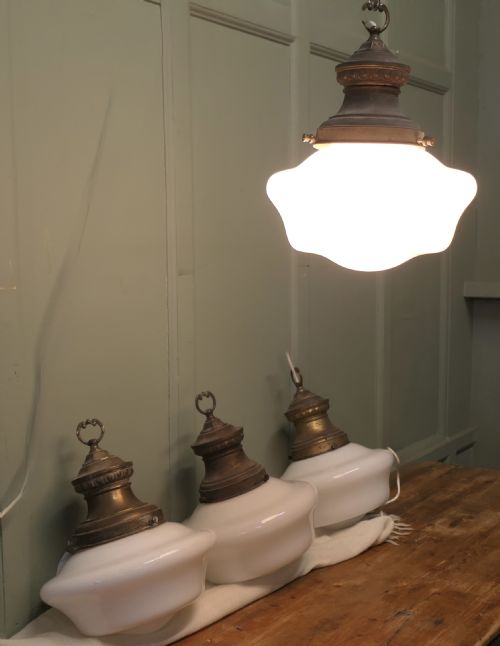
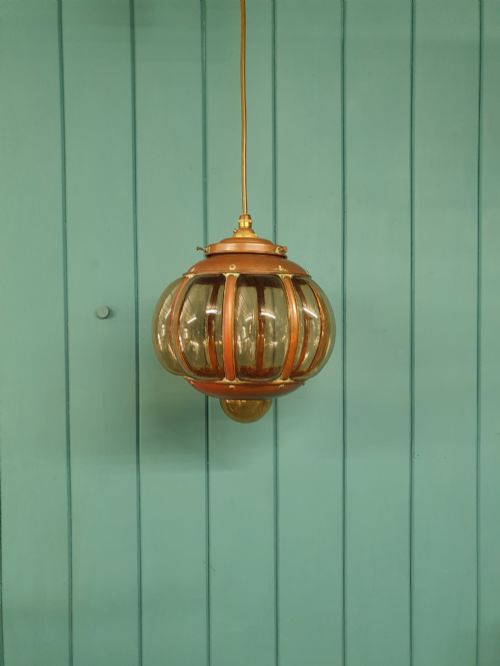
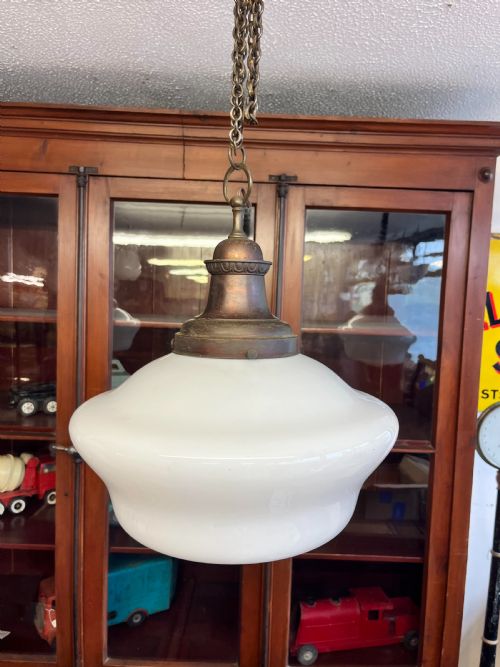
Shades utilise specialised glass techniques, featuring opaline glass, smoked glass, mirrored glass, and prismatic or Holophane glass. Vitreous enamel provides a durable, glossy coloured finish on metal shades.
A sturdy cast iron ceiling light dubbed the witches hat emerged from Crowe Hall in Bath.
What varies in quality
Quality separates through the integrity of original metal components and the optical complexity of the glass shades. Cast iron frames and double prismatic shades demonstrate superior manufacturing effort compared to simpler utilitarian variants.
The preservation of original finishes on enamel and metal surfaces dictates the character of each piece. Superior examples retain their original factory patination and authentic galleries without unnecessary modern replacements.
The Industrial Ceiling Light Fixture Glossary
- Opaline glass
- A milky, translucent glass that softens illumination and creates an even glow. It appears frequently in period pendant lights.
- Gallery
- The metal collar or fixture at the top of a lampshade that secures it to the suspension wiring. Chrome and brass are common materials for this component.
- Vitreous enamel
- A fused glass coating applied to metal surfaces at high temperatures. This finish provides a hard, glossy protection against corrosion in factories.
- Witches hat
- A descriptive term for a wide, conical shade profile resembling a pointed hat. This shape directs light broadly downward across a workspace.
Industrial Ceiling Light Fixture: Frequently Asked Questions
Where should I hang an industrial ceiling light?
These fixtures suit high-ceilinged spaces, kitchens, hallways, and dining areas where direct task lighting is beneficial. Their robust construction handles active household environments well.
Consider the scale of the room and the drop length of the pendant when positioning the light over furniture or open floor space.
How do I identify a Holophane shade?
Holophane shades feature distinct exterior ribs or prisms designed to refract and scatter light evenly. Look for clear or pressed glass bearing characteristic optical patterns.
These pieces were engineered specifically for factories and municipal buildings to maximise illumination from early electric bulbs.
What is opaline glass?
Opaline glass is a semi-translucent material that diffuses harsh bulb glare into a soft, milky glow. It became popular in Edwardian and early twentieth-century lighting.
Chapel pendants and factory lights often utilised this glass to create comfortable ambient illumination.
Are these lights suitable for modern wiring?
Period fixtures can be installed safely with contemporary electrical systems by a qualified professional. The original metal galleries and shades house modern lamp holders.
Buyers should inspect the internal fittings to ensure they meet current safety standards before installation.