


Industrial Art Deco Light
These industrial art deco light designs combine robust utilitarian forms with sleek geometric style, bringing robust character and striking illumination into any room.
Industrial Art Deco Light
An industrial art deco light bridges the gap between factory utility and streamlined elegance, drawing buyers who want both character and function in their interiors. The selections span the decades from 1920 to 1940, encompassing periods of rapid technological and stylistic shift.
The most common forms encountered on this page are desk lamps and pendant lights, alongside ceiling lights, table lamps, and exterior wall lights. These objects emerge from styles including Art Deco, Industrial, Bauhaus, and Mid-Century Modern.
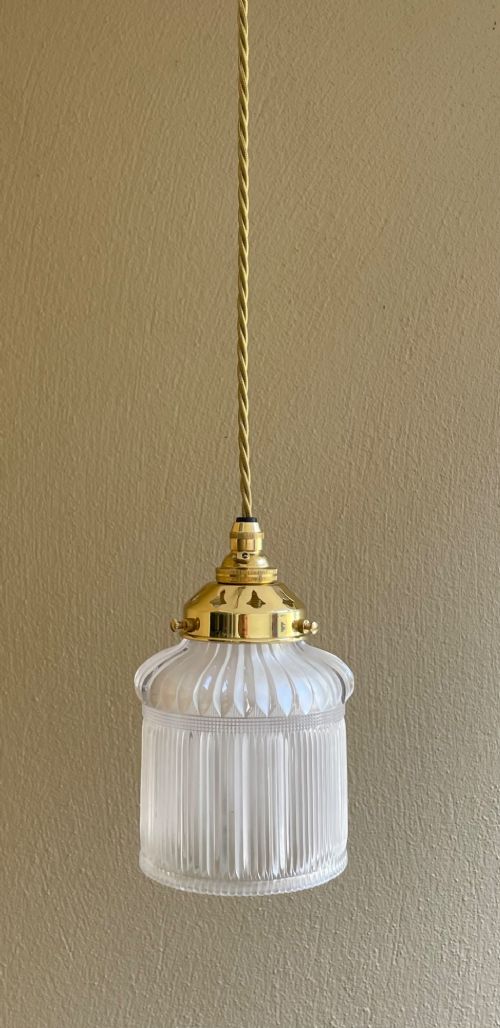
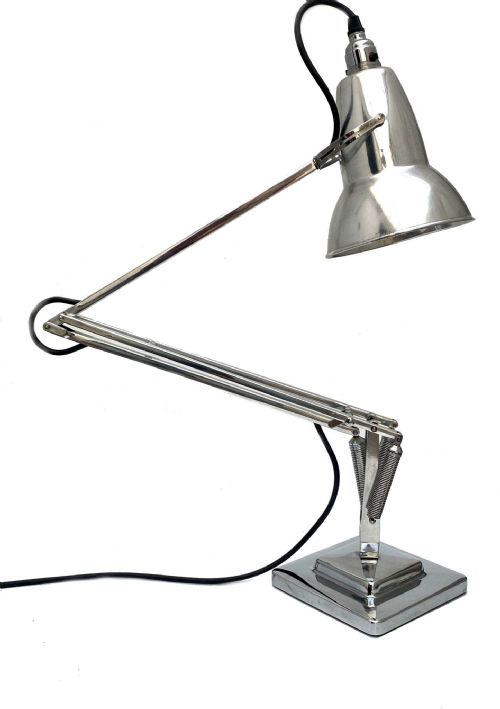
Pendant lighting options range from large mirrored glass fixtures to Holophane styles with chrome galleries. Meanwhile, desk lighting offers adjustable armatures and distinctive shell or blue glass shades suited for practical workspaces.
Materials and Construction
The construction of an industrial art deco light relies heavily on durable metals such as brass, chrome, steel, copper, and cast iron. These materials provide the structural integrity required for heavy-duty factory use while supporting sleek geometric plating.
Glass plays an equally vital role, utilising plain glass, mercury glass, and blue glass to diffuse illumination effectively. Manufacturers combined these metal housings and glass shades with adjustable mechanical joints to create functional task and ambient lighting.
Some desk lamps come equipped with blue glass shades, injecting a splash of unexpected colour into the otherwise grey world of heavy industry.
Assessing Quality and Design
The distinction between tiers of quality rests on the precision of the mechanical adjustments and the purity of the metal finishes. Pieces featuring branded mechanisms or specialised components demonstrate superior manufacturing intent.
Refinement in the glass components, such as mercury mirrored finishes or prismatic Holophane mouldings, separates standard utilitarian objects from sophisticated decorative examples.
Herbert Terry·Pirouette·Wilhelm Wagenfeld·Hawkins
The Industrial Art Deco Light Glossary
- Holophane
- A type of glass reflector featuring prismatic ribs designed to diffuse and direct light efficiently. It remains a hallmark of functional factory illumination.
- Mercury Glass
- Double-walled blown glass coated on the inside with a silvering liquid to create a mirrored appearance. This technique gives pendants an opaque, reflective sheen.
- Anglepoise
- A balanced-arm lamp design utilising springs or tension joints to maintain position. It represents a pinnacle of adjustable task lighting engineering.
- Bauhaus
- A German art school style emphasising functionalism, simple geometric forms, and industrial materials. Objects from this tradition strip away ornamentation in favour of pure utility.
Industrial Art Deco Light: Frequently Asked Questions
What defines an industrial art deco light?
These fixtures combine heavy-duty utilitarian construction with the streamlined geometric ornamentation characteristic of the interwar period. They bridge the gap between harsh factory environments and domestic elegance.
The materials typically involve exposed metals paired with functional glass shades, spanning production years from 1920 through to 1940.
Where were pendant lights used originally?
Pendant lights were primarily engineered for commercial factories, warehouses, and municipal buildings requiring reliable overhead illumination. Their durable metal galleries and robust glass protected the bulbs from workplace debris.
Over time, these functional fixtures transitioned into domestic spaces to provide strong task or ambient lighting over tables and workspaces.
How do I choose a desk lamp?
Selecting a desk lamp depends on whether you require fixed directional illumination or an adjustable arm mechanism for precision work. Models featuring articulated joints allow you to direct the beam exactly where needed across a surface.
Consider the shade material as well, since glass components diffuse light softly while metal reflectors concentrate the beam downward.
How do I tell different periods apart?
Differentiating periods relies on observing the shift from heavy, functional cast elements toward smoother chrome plating and modernist machine-age silhouettes. Pieces produced closer to 1920 often showcase traditional industrial brass and iron, while later 1930 and 1940 designs embrace streamlined chrome and polished steel.
Stylistic influences like Bauhaus also indicate specific design philosophies prioritising stripped-down utility during the early decades.