



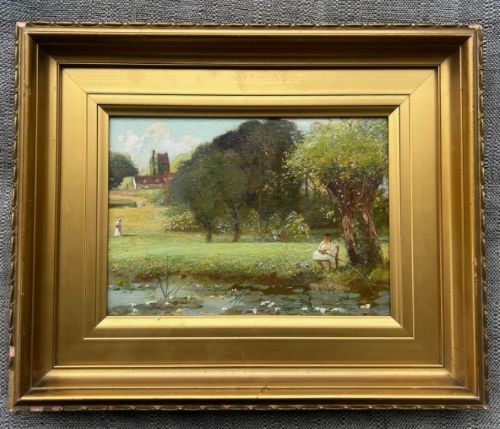


Impressionist Panel Painting
Impressionist panel painting brings immediate atmosphere and loose brushwork into a room.
Impressionist Panel Painting
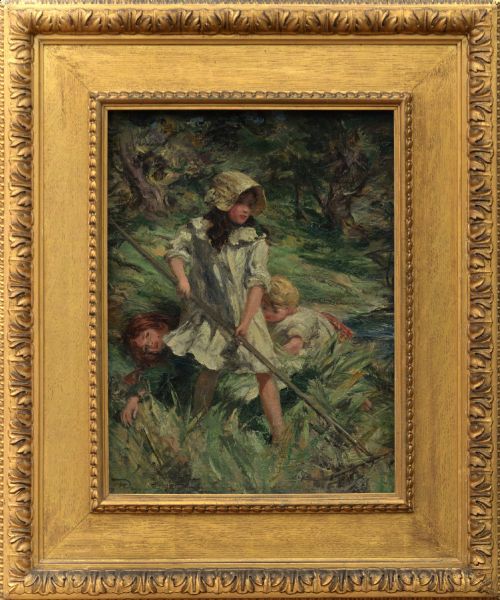
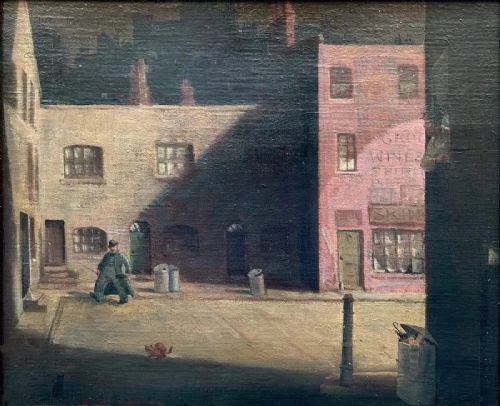
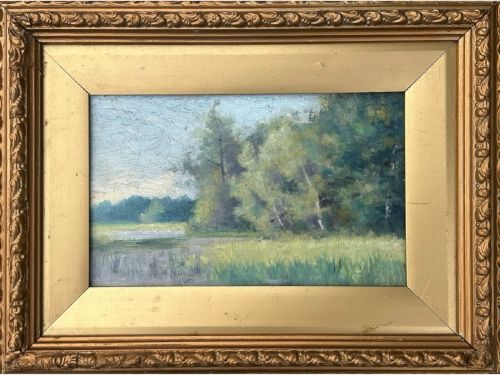
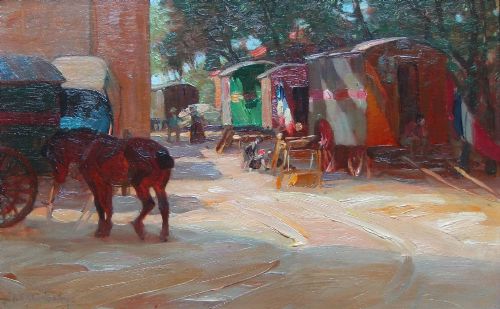
An impressionist panel painting captures fleeting light and everyday subjects directly onto a rigid support rather than woven fabric. Buyers seeking these works encounter landscape, figures and still life executed with visible, expressive brushstrokes.
The pieces on this page span from the late Victorian and Edwardian eras through the 1920s, 1930s and 1940s. British and French artists dominate the selection, alongside Swedish and broader European examples working within impressionist and post-impressionist circles.
Supports range from prepared wood boards and mahogany panels to card and canvas board. Smaller formats predominate, reflecting the portable nature of painting outdoors on location.
Materials and technique
Artists applied oil paint directly to wood panels, sometimes over a thin layer of gesso ground to prepare the surface. The absorbent or semi-rigid nature of wood allowed painters to work rapidly with loaded brushes, scraping and layering pigment.
Plein air execution dictated compact wooden supports that fit easily into portable box easels. The grain of the wood occasionally shows through thin passages of paint, contributing to the tactile quality of the finished image.
Impressionist Panel Painting Retail Price Guide 2026
Typical asking prices for impressionist panel painting among the pieces listed under this phrase on Sellingantiques today, from the lower quarter to the upper quarter. They describe what is for sale here now, not the wider market.
Several panels double as impromptu diaries, featuring handwritten notes about the weather and local farmhouses on the reverse.
Evaluating quality
Quality rests on the confidence and economy of the brushwork. A superior panel reveals a sure hand that captures light and movement with minimal strokes, whereas weaker examples rely on laboured blending and static outlines.
The relationship between the subject and the boundaries of the panel matters greatly. Strong compositions make complete artistic sense within a restricted wooden format, maintaining balance and tonal harmony.
Robert Duddingstone Herdman·Paul Ehrenberg·Florence Adelina Hess·Paul Élie Gernez·Hubert Wellington·Edouard Julien·Sir David Murray·Kershaw Schofield·William Greaves·Owen Bowen·Joseph Vickers de Ville·Henri Joseph Harpignies
The Impressionist Panel Painting Glossary
- Panel painting
- A painting executed on a rigid flat support such as wood rather than stretched canvas. This format was favoured for outdoor sketching and smaller cabinet works.
- Plein air
- Painting outdoors in direct natural light to capture immediate atmospheric effects. Practitioners often used portable wooden panels for this method.
- Impressionism
- A late nineteenth-century movement characterised by relatively small, thin yet visible brush strokes and an emphasis on accurate depiction of light. Artists aimed to record visual reality through transient optical impressions.
- Post-Impressionism
- A predominantly French art movement that developed from impressionism while rejecting its limitations. Practitioners extended impressionist use of vivid colours and thick application while imposing personal structure.
- Gesso
- A white paint mixture consisting of a binder mixed with chalk, gypsum or pigment. It was applied to wooden panels to create a smooth, stable surface for oil painting.
Impressionist Panel Painting: Frequently Asked Questions
What is an impressionist panel painting?
An impressionist panel painting is a small artwork created with oil paint on a rigid wooden support. Artists used this portable format to capture spontaneous outdoor scenes and everyday life.
These pieces emphasise loose brushwork and natural light over rigid academic detail. They offer a direct connection to the working methods of artists from the late nineteenth and early twentieth centuries.
How were these paintings displayed originally?
Many panel paintings were fitted into decorative gilt or wooden frames designed to complement the domestic interiors of the period. Smaller works often sat on mantelpieces or hung in intimate drawing rooms.
Framing choices varied widely depending on whether the piece was intended for exhibition or private studio study. Original frames help preserve the edges of the wooden support.
How do I hang a panel painting?
Panel paintings require stable indoor conditions away from direct sunlight and excessive humidity. Wood expands and contracts with environmental changes, so steady room temperatures protect the support.
Standard picture wire and secure wall hooks suit most framed wooden panels. Ensure the hanging hardware matches the weight of the specific frame and panel combination.