



Icicle Drop Pendant
An icicle drop pendant brings delicate refraction and historical character to a room, offering the sparkling presence of early twentieth-century lighting.
Icicle Drop Pendant
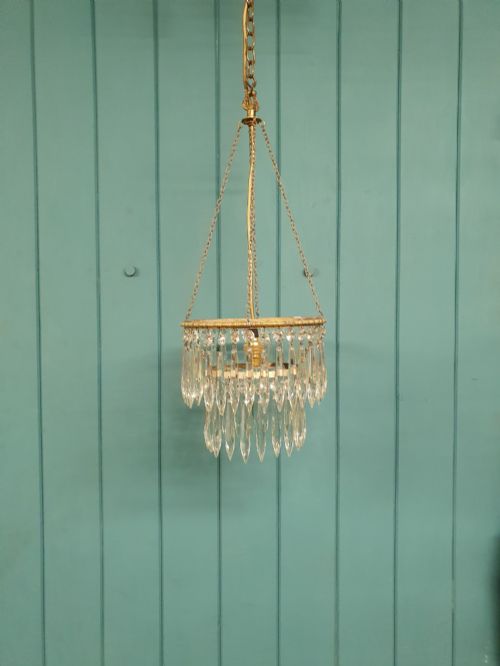
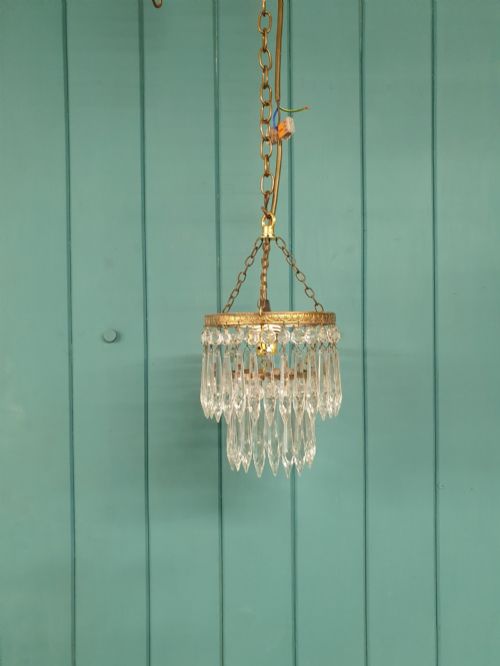
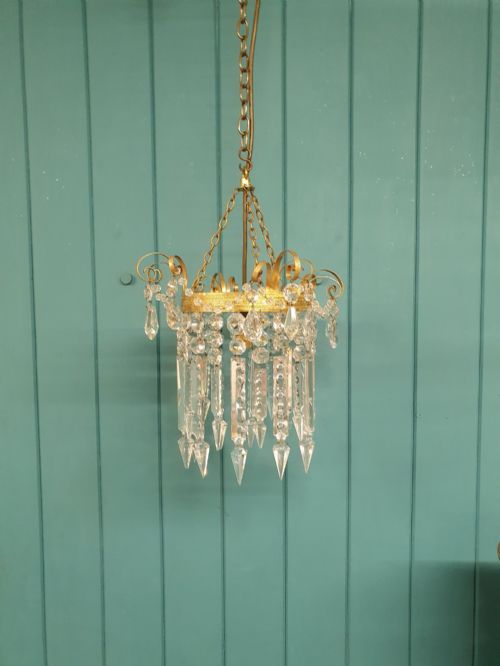
When you search for an icicle drop pendant, you are looking at small chandeliers, ceiling lights, and pendant lights that feature distinctive spike or drop elements in cut glass and crystal. These pieces predominantly date from the Edwardian era and the early twentieth century, spanning the 1920s and 1930s. The selection on this page focuses heavily on Edwardian spike chandeliers and small French-influenced waterfall or ceiling light designs.
The most common formats include single-light fixtures and matched pairs measuring anywhere from six to thirteen inches in size. They typically combine a brass or gilt brass frame with numerous suspended glass spikes that create a brilliant play of light. Styles range from straightforward Edwardian forms to French Chateau influences, all sharing the characteristic hanging drop motif.
Materials and construction
These fixtures are constructed using brass or gilt brass for the primary frame and mount structure, providing a sturdy metallic support for the glass elements. The defining components are shaped from cut glass, crystal glass, and clear crystal, formed into pointed spikes or drops that hang securely from the body. Metal finials and decorative mounts frequently complete the assembly, fastened carefully to the brass frameworks.
The manufacturing relies on traditional metalworking for the frames alongside precision cutting and faceting for the glass drops to maximise light refraction. Individual drops are suspended using small wire loops or pins attached to the brass tiers, creating cascading waterfall or chandelier configurations that diffuse illumination evenly across a space.
Icicle Drop Pendant Retail Price Guide 2026
Typical asking prices for icicle drop pendant among the pieces listed under this phrase on Sellingantiques today, from the lower quarter to the upper quarter. They describe what is for sale here now, not the wider market.
Even the smallest spike chandeliers manage to house numerous tiny glass icicles, ensuring maximum sparkle for minimal ceiling space.
Distinctions in quality
Quality in these pendants is evident in the depth of hand-cutting and clarity found within the crystal and cut glass spikes. Finer examples display crisp, sharp facets that refract light brilliantly, whereas simpler pieces use smoother, plain glass drops with less optical definition.
The choice and finishing of the metal frame also set pieces apart, distinguishing solid brass or gilt brass work with detailed finials from more utilitarian iron or basic metal structures. Furthermore, matched pairs demonstrate a high degree of consistency in the size, shape, and glass composition of each individual hanging drop.
The Icicle Drop Pendant Glossary
- Spike chandelier
- A small hanging light fixture featuring elongated, pointed drops of glass arranged around a central frame. These fixtures are characteristic of early twentieth-century lighting design.
- Cut glass
- Glass that has been shaped and faceted on a wheel to create decorative patterns that catch and scatter light. The precision of these cuts defines the visual brilliance of the piece.
- Gilt brass
- Brass that has been treated with a thin layer of gold or gold-coloured wash to enhance its appearance and provide a warm metallic finish. This finish was common in decorative French and Edwardian lighting.
- Waterfall chandelier
- A lighting form where glass drops cascade in overlapping tiers to resemble falling water. This style creates a dense cluster of sparkling elements.
- Edwardian period
- The historical era spanning the reign of King Edward VII, noted for lighter, more refined decorative arts than the preceding Victorian epoch. Pieces from this time often feature delicate brass framing and clear crystal.
Icicle Drop Pendant: Frequently Asked Questions
What is an icicle drop pendant?
An icicle drop pendant is a compact antique lighting fixture, typically a small chandelier or ceiling light, adorned with pointed glass or crystal drops. These pieces catch and refract light through their hanging spikes.
Originating mostly from the early twentieth century, they are designed to provide both illumination and decorative sparkle in smaller spaces or hallways.
How were these pendants used originally?
In period homes, these small chandeliers and pendant lights served as decorative illumination for entrance halls, boudoirs, and smaller reception rooms. Their compact size allowed them to hang safely in spaces with lower ceilings.
The suspended glass drops were intended to multiply the light from early electric bulbs or gas lighting by scattering the beam across the walls.
How do I style one in a modern home?
You can hang an icicle drop pendant in a hallway, powder room, or above a bedside table to introduce period character and reflective texture. Their diminutive scale makes them versatile enough to fit into cozy architectural corners.
Pairing a single fixture or a matched pair with neutral ceilings allows the brass frame and cut glass drops to stand out as focal points.
How can I tell an Edwardian pendant from a later one?
Edwardian pendants typically exhibit specific brass framing techniques and distinct cut glass crystal formulations popular during the early 1900s. They often share stylistic traits with Victorian predecessors but lean towards lighter, airier designs.
Pendants from the 1920s and 1930s can display slightly more streamlined French Chateau influences or simpler waterfall tiered arrangements.