





Hung Crystal Lamp
These hung crystal lamp fixtures bring together glittering glass prisms and metal frames to catch and scatter light across a room.
Hung Crystal Lamp
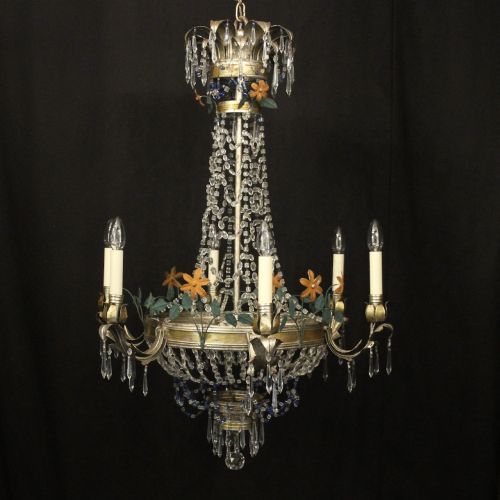
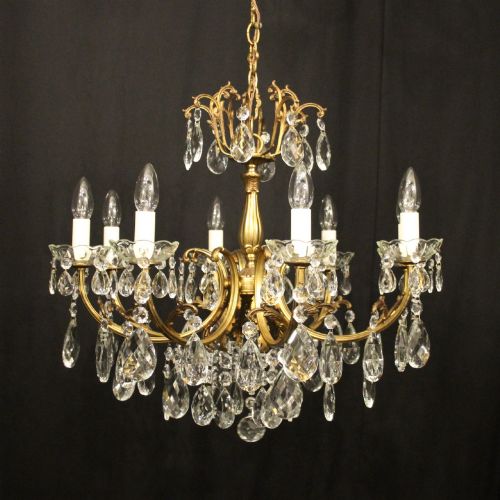
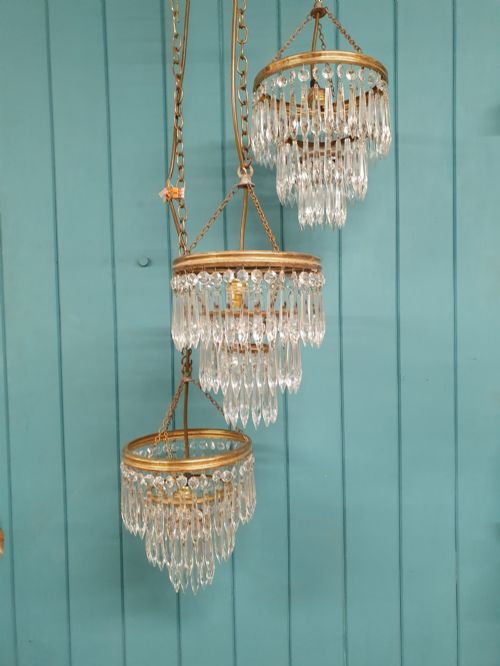
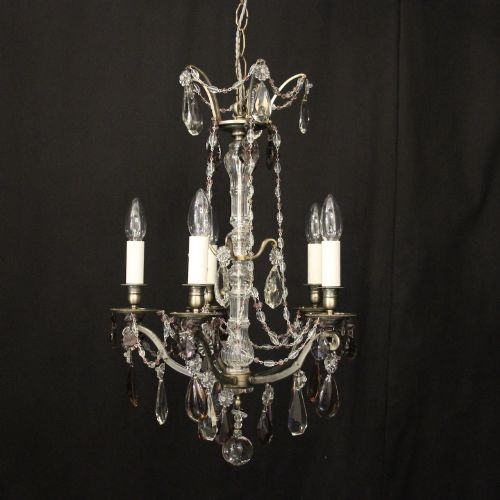
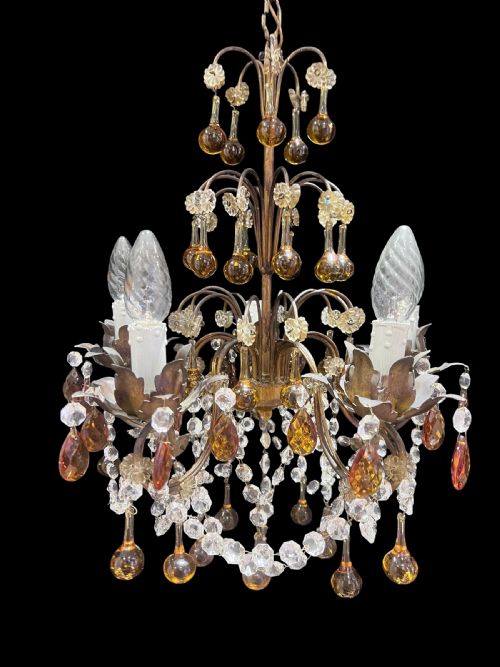
A hung crystal lamp sits overhead as a chandelier, pendant light, or ceiling light, distributing illumination downward through suspended glass elements. You will frequently encounter French and Italian examples from the early twentieth century featuring elaborate drop crystals, tents, and waterfalls.
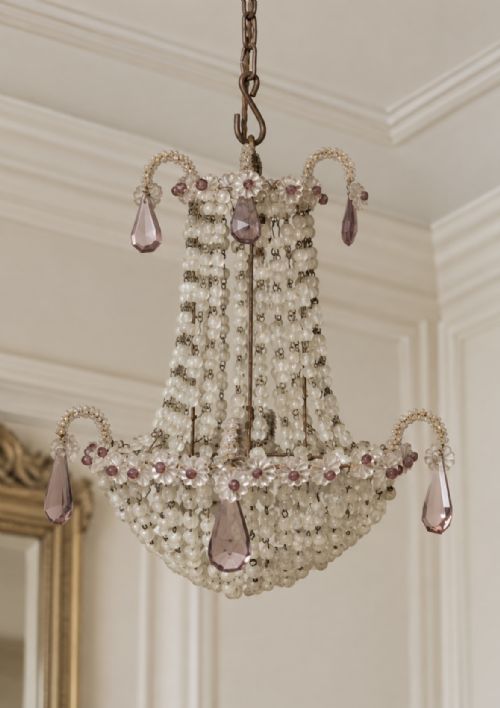
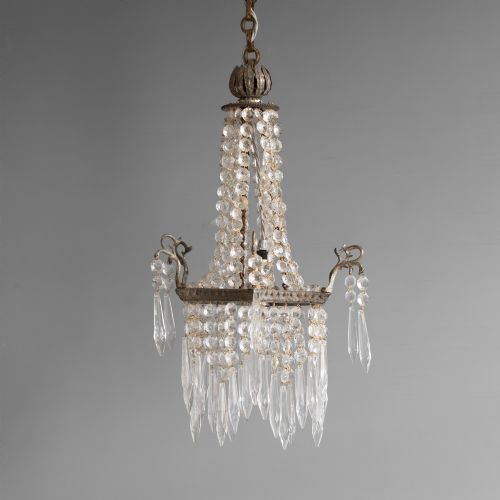
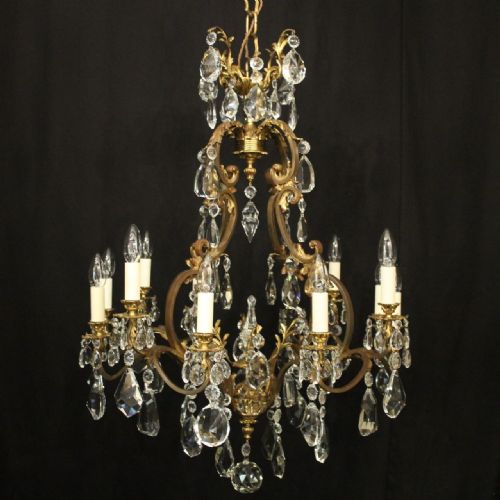
The selection ranges from intimate single-light pendants and small spike chandeliers to multi-light brass and bronze fixtures spanning Edwardian and later periods. English and continental workshops dominate the forms, utilising cut glass, bead arrangements, and coloured crystals to create visual depth.
Evaluating quality and execution
Quality rests in the crispness of the metal casting and the precision of the glass cutting, which determines how sharply each prism refracts light. Heavier bronze frames and hand-cut crystal drops indicate superior manufacture compared to lighter stamped metal and moulded glass.
The integration of the frame with the glass architecture dictates the overall harmony of the piece, from modest spike configurations up to extensive ballroom chandeliers carrying dozens of lights.
Hung Crystal Lamp Retail Price Guide 2026
Typical asking prices for hung crystal lamp among the pieces listed under this phrase on Sellingantiques today, from the lower quarter to the upper quarter. They describe what is for sale here now, not the wider market.
Listings feature early twentieth-century and Edwardian lighting forms, including French and Italian chandeliers constructed from cut glass, crystal, and gilded brass.
The Hung Crystal Lamp Glossary
- Tent and waterfall
- A configuration where upper strings of beads form a tent shape above a cascading waterfall of glass drops. This arrangement directs the eye downward toward the central tier of lights.
- Spike chandelier
- A compact hanging light featuring upward-pointing glass spikes or spears arranged around a central axis. These smaller fixtures suit lower ceilings.
- Prism
- A cut glass pendant designed to refract light into spectral colours. Prisms hang freely to catch illumination from internal bulbs.
- Bag chandelier
- A lighting form where glass drops gather in a bag or basket shape beneath the frame. This style originates from eighteenth-century designs continuing into the twentieth century.
- Gilt bronze
- Bronze metal coated with a thin layer of gold or gold-coloured alloy. It provides a durable, warm metallic finish for the supporting frame.
Hung Crystal Lamp: Frequently Asked Questions
How do I hang a crystal chandelier?
Suspension requires securing the fixture to a structural ceiling joist using an appropriate ceiling hook and metal chain rated for the weight of the piece. Professional electrical installation ensures the internal wiring safely connects to your mains supply.
Once anchored, adjust the hanging height so the bottom of the light clears walkways while remaining a focal point within the room.
How do I clean a hung crystal lamp?
Cleaning involves wiping individual glass drops with a mild solution of warm water and professional glass cleaner using a soft cloth. Take care to support each crystal so the connecting wire pins do not bend or snap during the process.
Allow all components to dry completely before turning the power back on to protect the electrical lampholders.
What rooms suit a glass pendant light?
Pendant lights and small chandeliers fit well in hallways, bedrooms, and dining spaces where direct overhead illumination creates a warm atmosphere. Their reflective glass surfaces bounce natural daylight around the room even when unlit.
Choose smaller spike or pod designs for confined spaces and larger multi-light configurations for principal rooms.
How do I date an antique crystal lamp?
Dating relies upon examining the wiring methods, metal alloys, and cutting styles present in the frame and glass drops. Early twentieth-century pieces often display hand-wired connections and cast bronze or brass frames characteristic of Edwardian and 1920s manufacturing.
Subsequent modifications like rewiring are common to bring older fixtures up to modern safety standards while retaining original glass elements.