


Hung Crystal Chandelier
A hung crystal chandelier brings theatrical refraction into a room, scattering light through decades of cut drops and metal frames.
Hung Crystal Chandelier
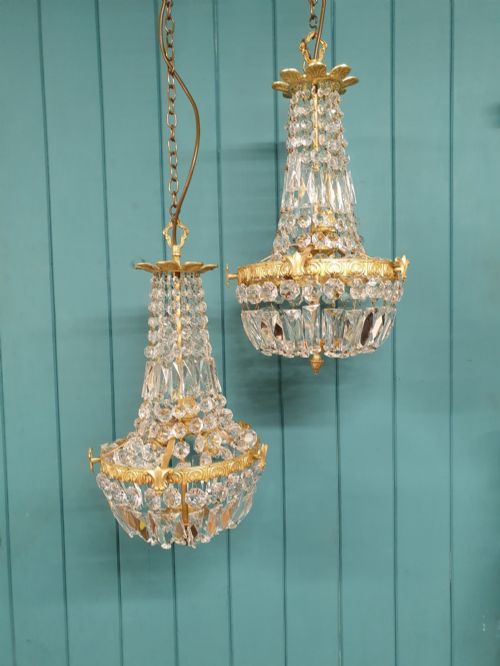
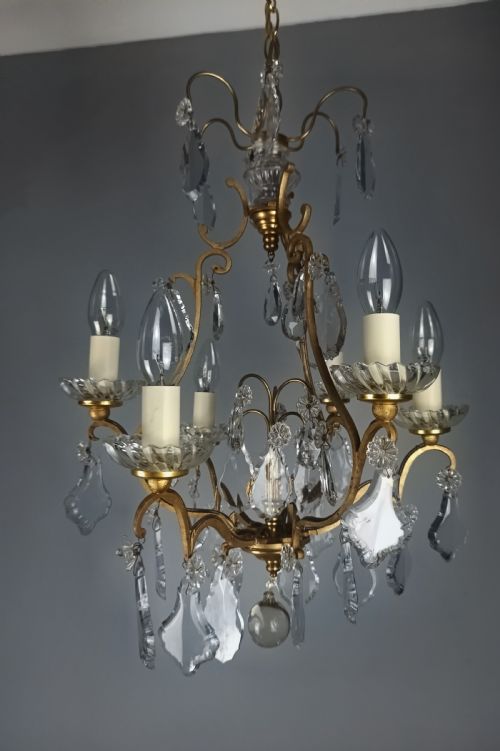
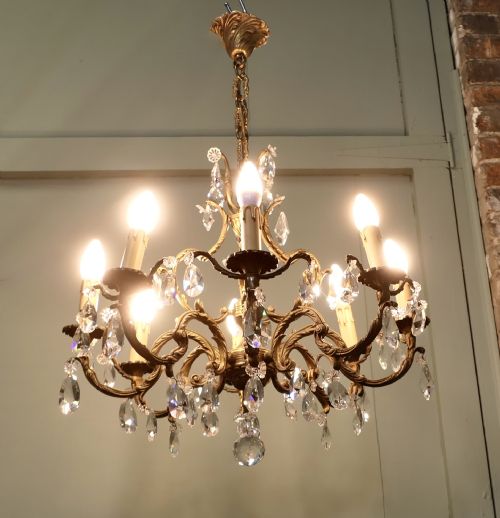
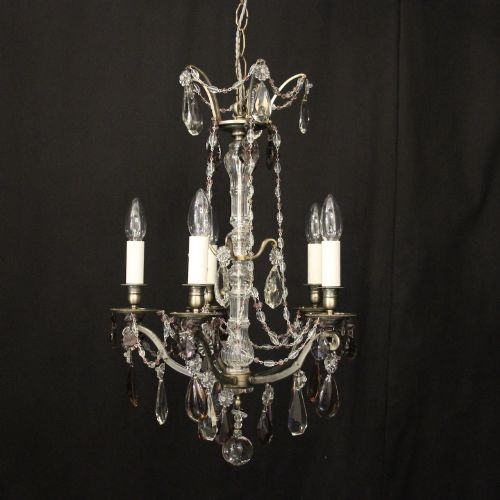
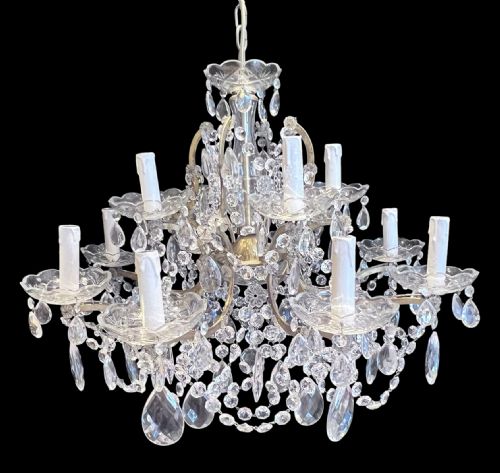
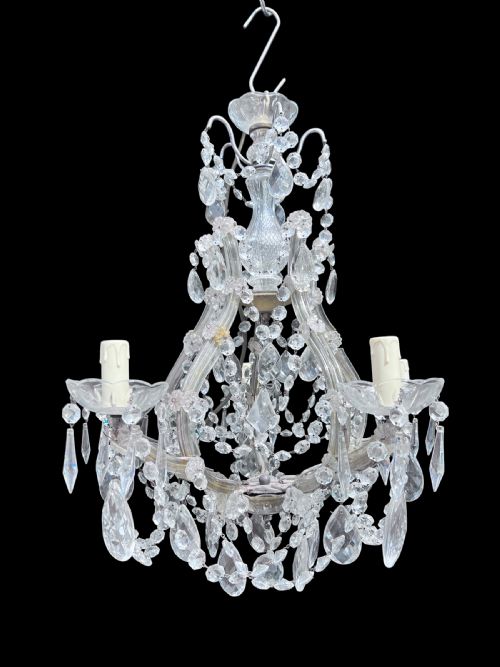
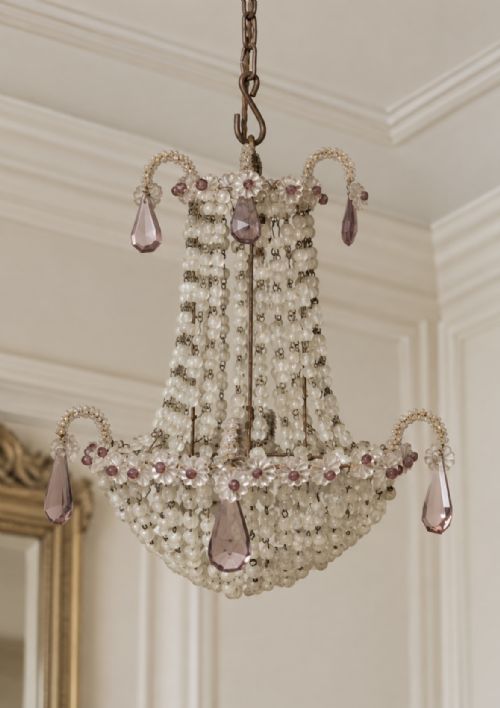
A hung crystal chandelier is a ceiling-mounted lighting fixture dominated by glass prisms, drops, and beaded swags. Buyers searching for a hung crystal chandelier encounter heavy representation from the early twentieth century alongside nineteenth-century examples.
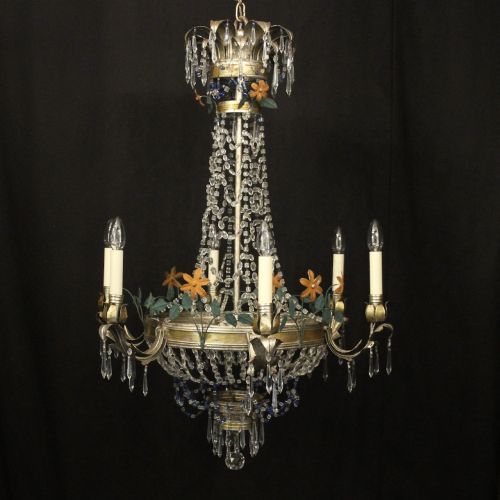
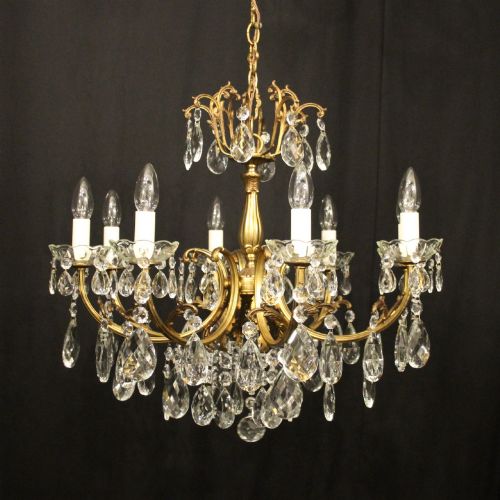
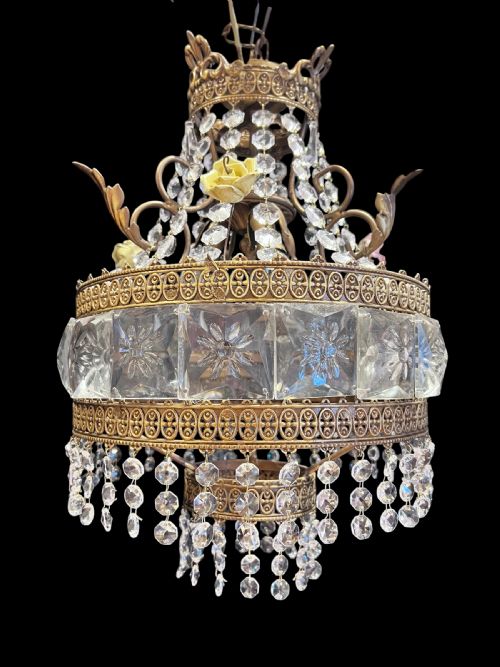
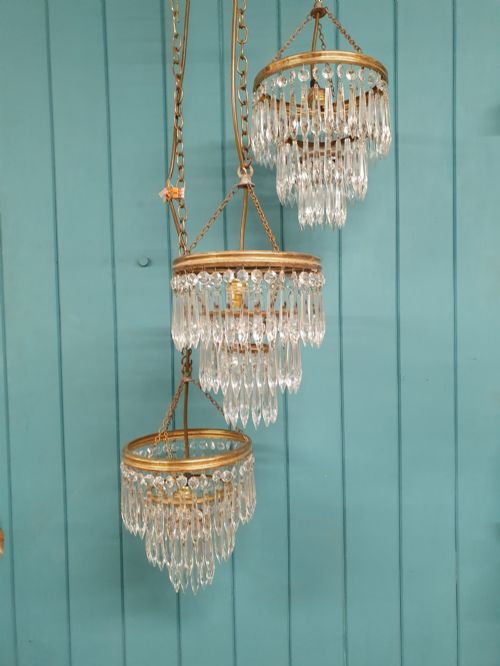
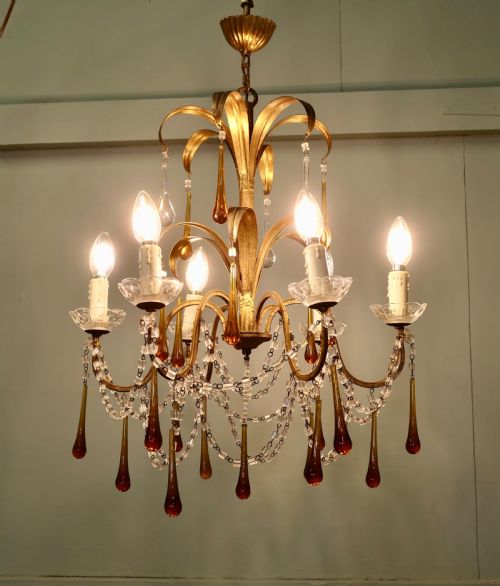
The inventory leans heavily towards French and Italian designs, ranging from compact tent configurations to multi-armed birdcage and waterfall forms. Brass, gilt bronze, and cut glass dominate the visible construction across these domestic centrepieces.
How they were made
Frames rely on cast brass, gilt metal, and forged iron to support the downward weight of glass elements. Metal components are often silver-gilded or patinated before being strung with drops.
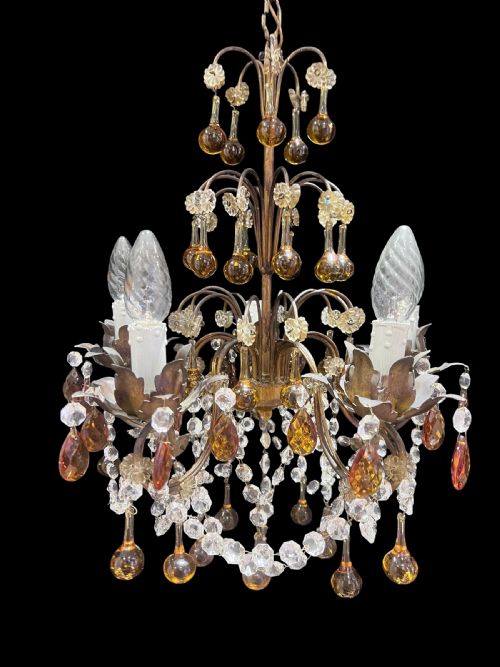
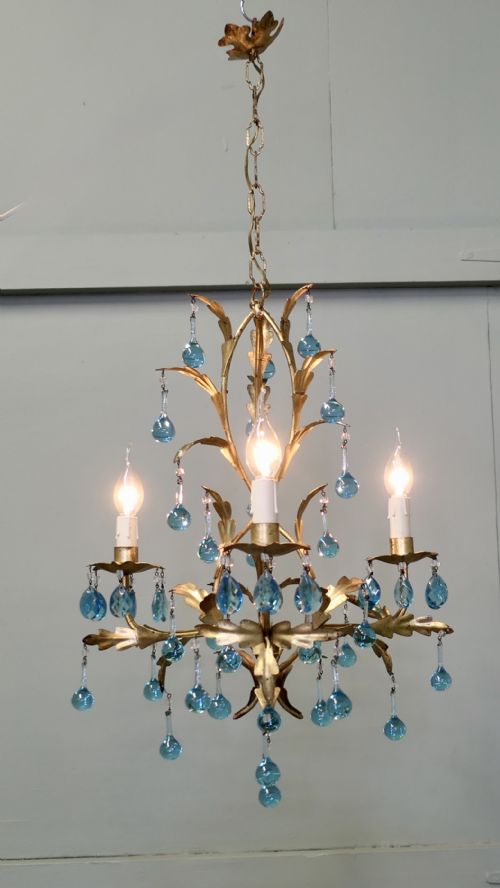
Crystals and glass pendants are hand-cut or moulded, then wired onto the brass skeletons using delicate metal pins. Coloured glass elements incorporate mineral oxides to achieve amber, mauve, turquoise, and blue hues.
Hung Crystal Chandelier Retail Price Guide 2026
Typical asking prices for hung crystal chandelier among the pieces listed under this phrase on Sellingantiques today, from the lower quarter to the upper quarter. They describe what is for sale here now, not the wider market.
Several early pieces come accessorised with glass grapes, apples, and pears dangling from the iron branches.
What varies in quality
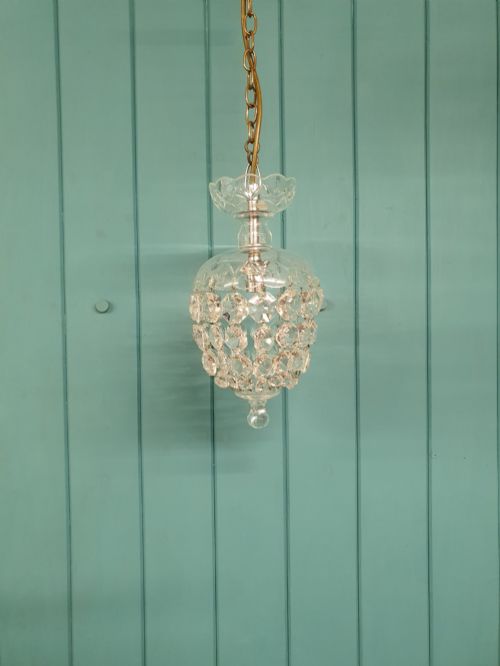
Quality rests in the precision of the glass cutting and the density of the metal armature. Superior pieces utilise heavy, hand-polished cut crystal that refracts light cleanly rather than dull, pressed glass.
Construction methods also separate tiers, with integrated cast bronze and substantial brass frames holding firm against sagging over decades. Inferior examples rely on thin stamped metal and loose wirework that compromises the drape of the drops.
The Hung Crystal Chandelier Glossary
- Tent and waterfall
- A chandelier style where strings of beads form an upper conical tent above a cascading lower shower of crystals. This configuration creates dense layers of refraction.
- Lustre
- A cut glass pendant or drop hung from the arms and crown of a lighting fixture. These elements catch and multiply ambient light.
- Birdcage
- A metal skeletal frame shaped like an avian enclosure, densely hung with vertical crystal strands and central lights. The design originated in eighteenth-century lighting formats.
- Toleware
- Painted tin or sheet metal shaped into floral or structural components. It introduces colourful, opaque decorative elements to the metalwork.
Hung Crystal Chandelier: Frequently Asked Questions
How do I hang a heavy antique chandelier?
Installation requires securing the fixture directly to a ceiling joist using an appropriate steel hook and electrical box capable of supporting the combined weight of metal and glass.
Wiring should be assessed by a professional to ensure the internal paths handle modern loads safely.
How do I clean a crystal chandelier?
Maintenance involves spraying the glass with a specialised non-drip cleaner while placing a towel underneath to catch runoff. Individual drops can also be removed, washed by hand in warm soapy water, and dried before rehanging.
Harsh chemicals must be kept away from the gilt or bronze metal frames to preserve the original finish.
How do I date an antique chandelier?
Dating relies on examining the casting techniques of the metal frame, the hand-cut facets of the glass drops, and the style of the electrical wiring or candle tubes. Turn-of-the-century pieces often display heavier bronze casting and distinct pin-wiring methods.
Comparative analysis of frame shapes like birdcages or tents further narrows the production era.
Are these chandeliers suitable for low ceilings?
Most antique hung crystal chandeliers are designed for rooms with generous vertical clearance, though compact flush-mount dome tops and smaller tent models exist. Measuring the drop length against the room dimensions prevents obstruction.
Shorter multi-arm fixtures or single-tier pendants fit tighter spaces better than large waterfall configurations.