




Hepplewhite Style Drawers
Hepplewhite style drawers bring together the elegance of eighteenth-century case furniture and the distinctive craftsmanship of revival periods.
Hepplewhite Style Drawers
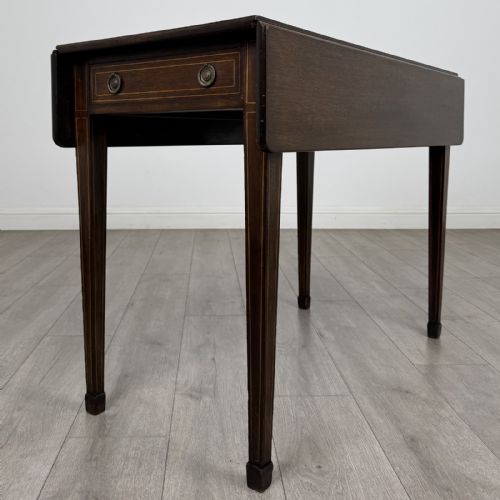
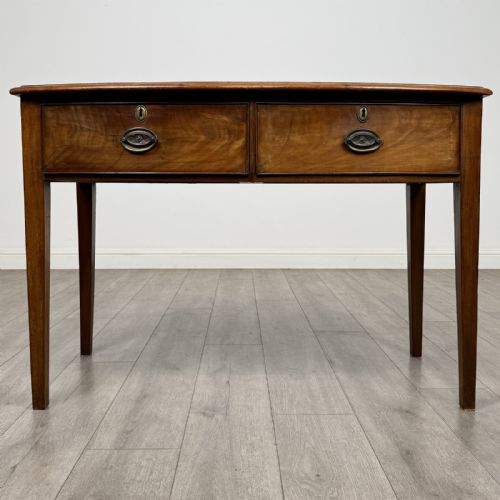
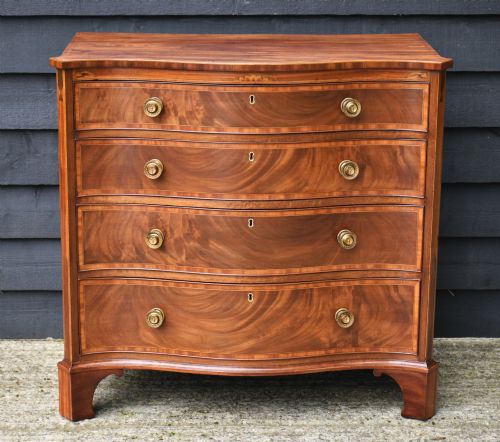
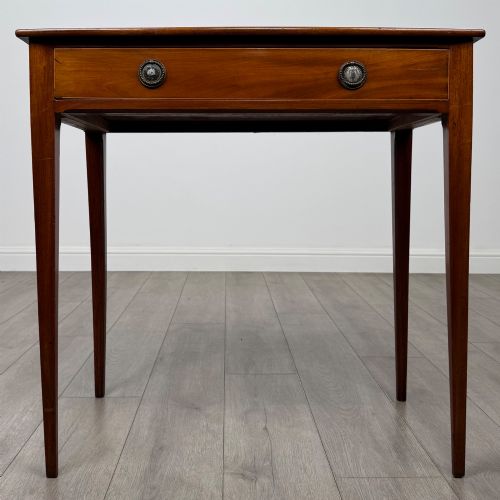
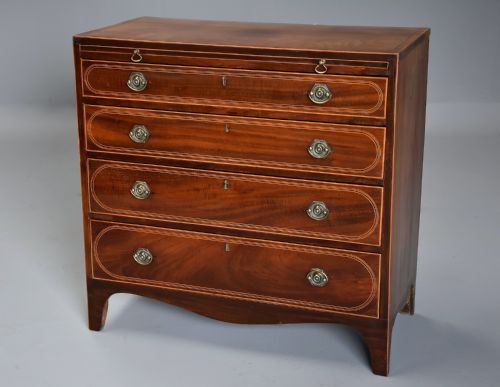
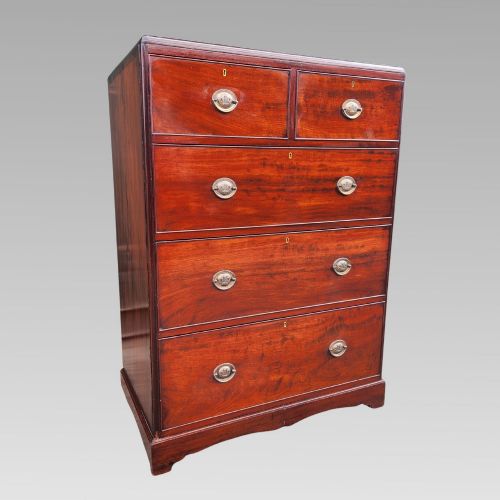
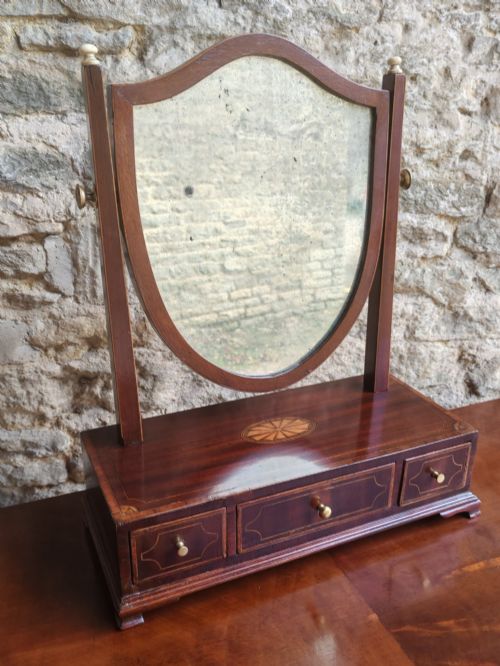
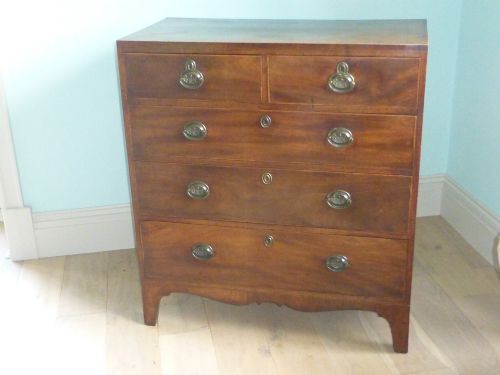
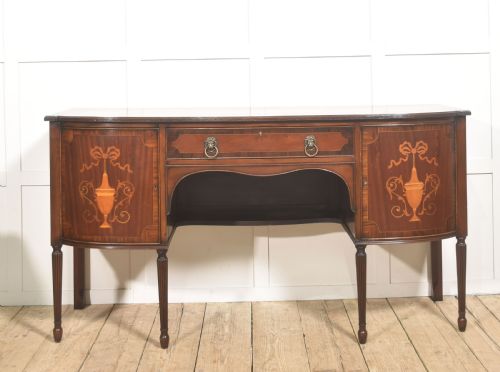
Hepplewhite style drawers encompass chests of drawers, dressing mirrors, and sideboards shaped by the aesthetic principles of the Georgian era and later revivals. Buyers searching for hepplewhite style drawers often encounter mahogany chests featuring serpentine fronts, shield-shaped mirrors, and delicate inlay work. The selection spans the eighteenth century, the Victorian period, and Edwardian interpretations.
Forms range from compact toilet mirrors to substantial serpentine commodes and sideboards. Pieces emerge from Georgian origins alongside later nineteenth-century revivals, reflecting the enduring influence of cabinet-making traditions.
How they were made
Makers utilised solid and veneered mahogany as the primary timber, complemented by satinwood and boxwood inlay to create contrasting borders and decorative motifs. Brass hardware, including drop handles and swing brackets, provides functional accents on drawers and mirror frames.
Construction techniques involve precise dovetailing for drawer boxes and curved serpentine fronts that require skilled manipulation of timber. Inlaid stringing and panel details define the surface ornamentation across both eighteenth-century originals and later revival pieces.
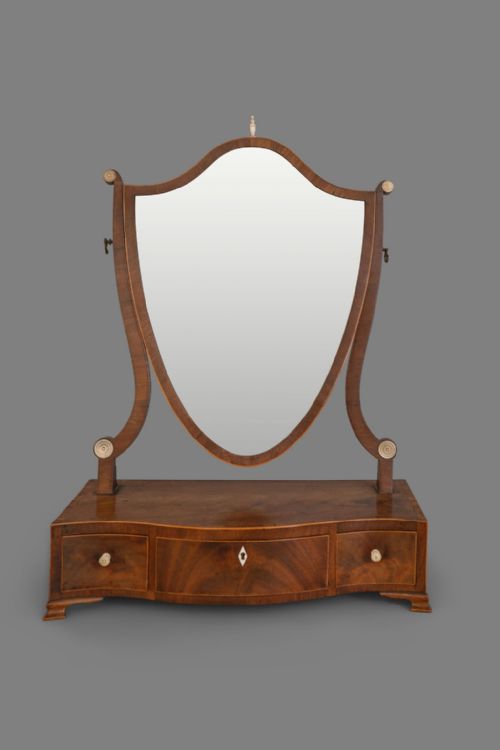
A tiny bone escutcheon on a serpentine drawer keeps watch over generations of lost house keys.
What varies in quality
The sophistication of the timber figure and the crispness of the inlay distinguish finer examples from simpler workshops. Flame mahogany veneers and intricate boxwood stringing demonstrate a higher level of cabinet-making skill.
Proportion and the execution of curved serpentine lines determine the visual balance of a piece. The integration of brass fittings and the stability of mirror frames reflect the original maker's attention to detail.
Druce & Co
The Hepplewhite Style Drawers Glossary
- Serpentine front
- A furniture front curving outward in the centre and inward at the sides. This contoured shape demands advanced woodworking skill to execute properly.
- Shield-shaped mirror
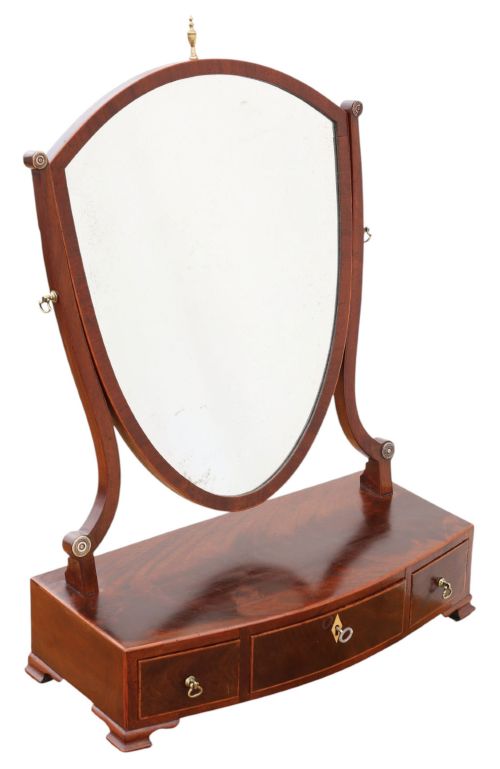
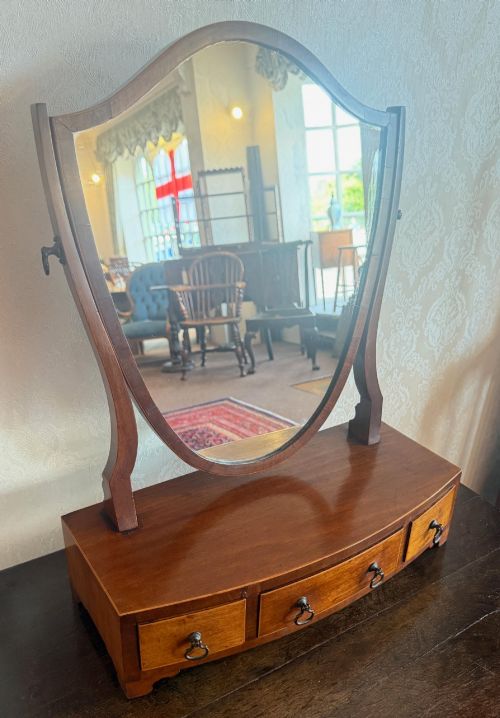
- A dressing mirror framed in the outline of a heraldic shield, typically supported by scrolling uprights on a small box base. It is frequently associated with dressing tables.
- Stringing
- Thin lines of contrasting wood inlay used to outline drawers, panels, or tabletops. It provides a delicate border against darker primary timbers.
- Caddy top
- A moulded tabletop design with a raised or stepped edge, reminiscent of tea caddy lids. It appears on Georgian case pieces.
Hepplewhite Style Drawers: Frequently Asked Questions
What is a shield dressing mirror?
A shield dressing mirror is a tabletop glass set into a frame shaped like a heraldic shield. These mirrors pivot between upright supports mounted on a small base containing small drawers.
They function as dressing table accessories and appear in both eighteenth-century workshops and Edwardian revival settings.
Are these drawers suitable for daily use?
These pieces function well in contemporary homes when handled with care. Solid mahogany construction and traditional joinery provide robust storage for everyday items.
Keep antique timber away from direct heat sources and excessive moisture to protect the polished surfaces and delicate inlay work.
How do I care for inlaid mahogany?
Maintain the wood with appropriate wax polish applied sparingly and buffed with a soft cloth. Avoid modern spray polishes that can build up a residue over time.
Protect surfaces from direct sunlight to prevent the mahogany and satinwood inlay from fading unevenly.