

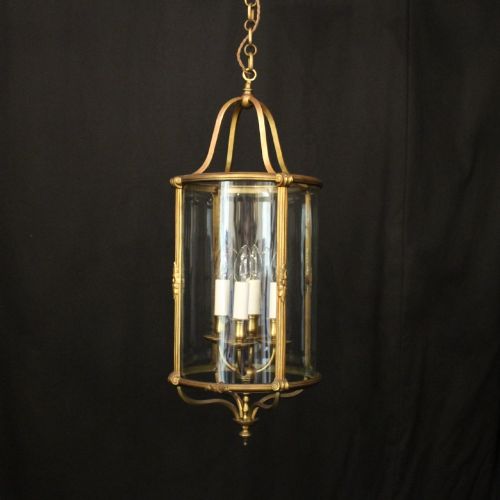
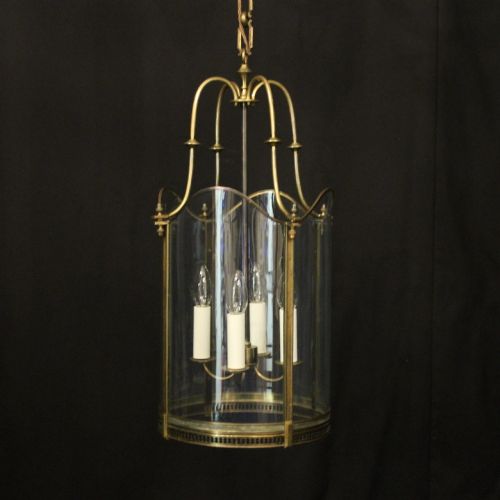


Hanging Candle Lantern
A hanging candle lantern brings warmth and architectural presence to a hallway or entrance, offering period illumination through glass and metal.
Hanging Candle Lantern
A hanging candle lantern is designed for overhead illumination in entrance halls, corridors, and reception spaces. The pieces gathered under this phrase include hall lanterns, pendant lights, and ceiling lights originating from the Victorian and Edwardian eras through to the early twentieth century.
Most examples originate from French workshops, embracing styles such as French Empire, French Neoclassical, and Arts and Crafts. Buyers encounter round forms, convex glass panels, and multi-light configurations suspended by chains or rods.
Materials span brass, gilt brass, wrought iron, and steel paired with clear or bevelled glass panes. Earlier specimens reflect forms once lit by candles before later conversions to electricity.
How they were made
Metalworkers constructed the frames using cast brass, forged wrought iron, or steel, applying gilding or polish to achieve distinct finishes. Structural stability relied on soldered joints and mechanical fixings that secured the metal armature around the glazing.
Glazing involved fitting flat or convex glass panels into metal channels, often incorporating bevelled edges to catch and refract light. Artisans shaped metal elements by hand, resulting in substantial frames designed to support the weight of multiple lights and glass.
Hanging Candle Lantern Retail Price Guide 2026
Typical asking prices for hanging candle lantern among the pieces listed under this phrase on Sellingantiques today, from the lower quarter to the upper quarter. They describe what is for sale here now, not the wider market.
The selection includes French Chateau and Arts and Crafts styles alongside Georgian Revival interpretations.
What varies in quality
Quality rests in the weight of the metal framework, the crispness of cast decorative details like acanthus leaves or neoclassical mounts, and the thickness of the glass panels. Superior examples feature heavy gauge brass, steel or bronze with intact gilding and precise joints.
The sophistication of the silhouette and the integrity of the original glazing panels separate standard production pieces from finer architectural commissions. Hand-forged wrought iron work or finely chased gilt bronze denotes a higher tier of craftsmanship.
The Hanging Candle Lantern Glossary
- Convex glass
- Curved glass panels that project outward to diffuse light across a wider angle. This treatment appears frequently on round hall lanterns.
- Bevelled glass
- Glass panes with angled edges ground and polished to create a decorative framing effect. These edges refract light as it passes through.
- Gilt brass
- Brass coated with a thin layer of gold leaf or gilt wash to provide a rich metallic lustre. It offers the appearance of solid gold while utilising a durable base metal.
- Hall lantern
- An enclosed ceiling-hung light fixture specifically proportioned for narrow entrance spaces and corridors. They provide directional downward illumination.
Hanging Candle Lantern: Frequently Asked Questions
Where do you hang a hall lantern?
These fixtures suit entrance halls, high-ceilinged corridors, and stairwells where overhead suspension draws the eye upward. Their enclosed design protects the light source from drafts in transitional spaces.
Ensure adequate clearance beneath the fixture so movement through the hallway remains unobstructed. Positioning depends on the scale of the lantern and the height of the ceiling.
Are these lanterns wired for electricity?
Many period lanterns have been adapted for modern electrical use while retaining their historic metal and glass frames. Some retain evidence of their original candle or early gas configuration within the internal structure.
Buyers should inspect the internal wiring to confirm it meets current standards before installation. Rewired examples integrate electrical fittings discreetly into the historical armature.
How do I identify a French antique lantern?
French pieces often display distinct stylistic markers such as Empire or Neoclassical mounts, chased brass detailing, and convex glass profiles. Workshops from the early twentieth century frequently utilised polished or gilded brass.
Construction techniques, such as specific casting methods and heavy frame weights, point toward continental manufacturing traditions from the Victorian period onward.
What metal finishes are common?
Common finishes include polished brass, gilt bronze, black wrought iron, and steel. Each metal responds differently to age, developing patinas that reflect its material composition.
Gilt surfaces retain a warm metallic tone, while iron and steel exhibit darker, industrial qualities characteristic of Arts and Crafts or late nineteenth-century design.