





Haberdashery Shop Drawers
Haberdashery shop drawers are commercial fixtures built to organise ribbons, buttons and textiles, offering generous compartmental storage for any modern home.
Haberdashery Shop Drawers
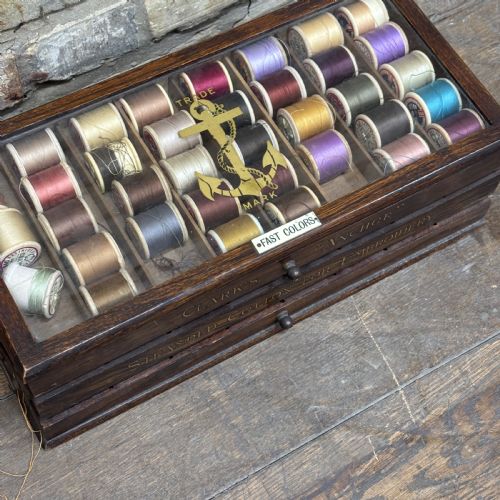
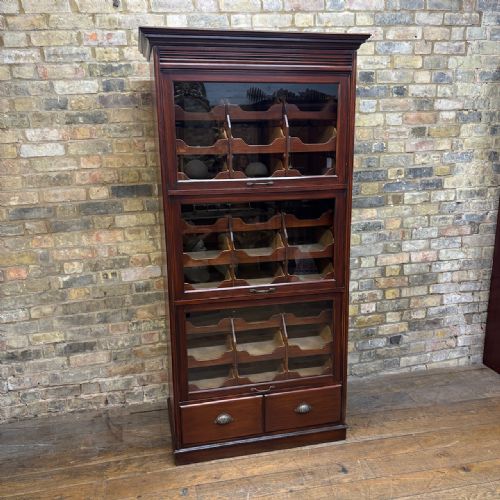
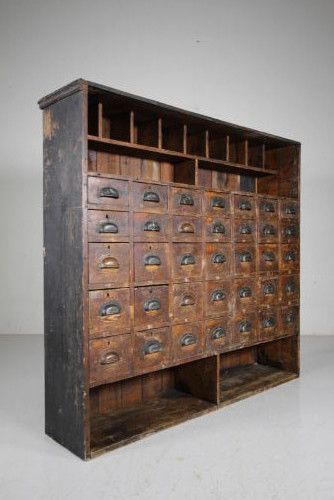
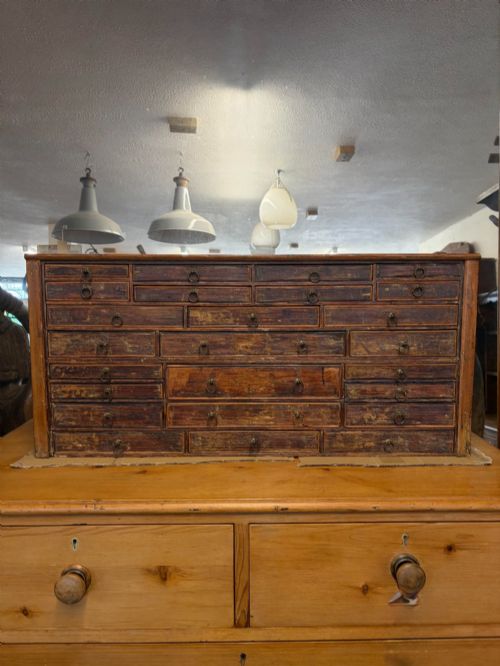
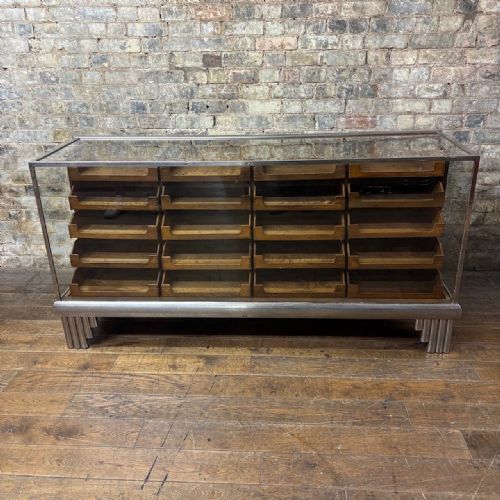
Haberdashery shop drawers comprise banks of small, uniform compartments originally used in retail drapery and clothing trades to sort delicate wares. These banks of drawers and shop counters appear in numerous configurations, often featuring glass panels to display contents or dozens of pull-out trays.
Victorian and Edwardian examples dominate the selection, alongside pieces from the 1920s and 1930s reflecting industrial commercial utility. Buyers encounter freestanding banks of drawers, long counters, and specialised cabinets originating from English, French, and Hungarian workshops.
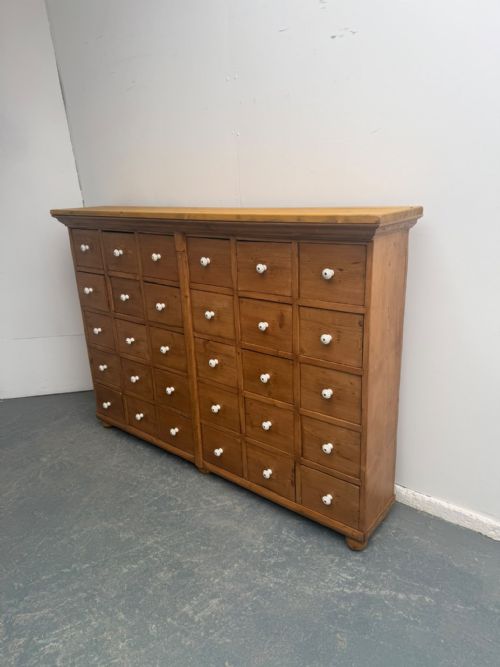
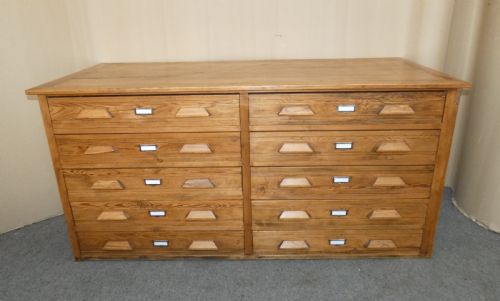
The primary forms include banks of twenty-five or more small drawers, larger chests of drapers drawers, and shop fittings constructed for daily commercial endurance. These practical pieces transition easily into domestic settings for organising craft materials, collections or clothing.
Materials and construction methods
Makers relied heavily on solid pine, oak, walnut, and fruitwood to build these commercial units, pairing them with iron, brass, and chrome hardware. Painted finishes in white, cream, and green appear frequently alongside polished wood surfaces and bleached oak.
Construction prioritized utility and durability, resulting in sturdy cabinetry designed to withstand heavy daily retail use. Glass panels, metal label holders, and specialised drawer configurations ensured shop assistants could locate items swiftly.
Haberdashery Shop Drawers Retail Price Guide 2026
Typical asking prices for haberdashery shop drawers among the pieces listed under this phrase on Sellingantiques today, from the lower quarter to the upper quarter. They describe what is for sale here now, not the wider market.
The inventory includes substantial Hungarian pine shop fittings alongside English and French drapers counters spanning multiple decades.
Assessing quality in shop drawers
Quality rests in the scale of the piece, the complexity of the drawer matrix, and the preservation of original factory paint or polished timber finishes. Multi-drawer configurations with original glass fronts and brass hardware sit firmly at the upper end of the range.
The integrity of the structural joinery and the survival of makers' details, such as specialised branding or original signage, distinguish standard utility pieces from finer architectural shop fittings. Timber selection also dictates the tier, with dense fruitwood and figured walnut commanding particular attention over standard pine.
Dudley & Co·Luxmore's of Ilfracombe
The Haberdashery Shop Drawers Glossary
- Bank of drawers
- A large cabinetry unit containing multiple rows of smaller drawers designed for high-capacity sorting and storage. These fixtures form the core of commercial haberdashery furniture.
- Shop fitting
- Custom furniture and permanent fixtures built specifically for retail environments. These pieces prioritize robust construction to handle continuous public interaction.
- Drapers counter
- A long table or cabinet surface used in fabric shops for measuring and cutting textiles. They often incorporate banks of drawers beneath the main work surface.
- Graduated drawers
- A series of drawers within a single chest that decrease in depth from bottom to top. This arrangement provides varied storage capacities within one cabinet footprint.
- Campaign chest
- A portable storage unit built in sections with recessed brass handles for ease of transport. Nineteenth-century examples sometimes found secondary use in retail settings.
Haberdashery Shop Drawers: Frequently Asked Questions
What are haberdashery shop drawers?
Haberdashery shop drawers are large multi-drawer cabinets and counters originally built for retail drapery shops to organise small sewing items, threads, and textiles. They provide exceptional compartmentalised storage through numerous uniform drawers.
Today, these commercial pieces serve as striking domestic furniture for storing craft supplies, stationery, or clothing in studies and bedrooms.
How do I date an antique bank of drawers?
Dating relies on identifying timber choices, construction techniques, and hardware styles associated with specific periods like the Victorian era, Edwardian period, or the 1930s. Stylistic markers such as Art Deco influences or industrial chrome fittings help narrow down the decade.
Makers' marks, original shop labels, and painted finishes also provide concrete evidence of a piece's manufacturing period.
Where were haberdashery cabinets used?
These cabinets stood in high street drapers, haberdasheries, and specialist mercery shops where merchants needed to display and store hundreds of small items neatly. Shop assistants used the shallow drawers to keep ribbons, buttons, and lace sorted by size and colour.
They occupied prominent positions behind or beneath the main sales counters to ensure quick retrieval during customer transactions.
How do I maintain painted shop furniture?
Maintaining original painted surfaces requires gentle dusting with a dry cloth and avoiding harsh chemical cleaning products that might lift historic paint layers. Keeping the furniture away from direct sunlight preserves the tone of the finish.
Waxing unpainted timber surfaces periodically helps maintain the moisture balance of woods like oak, pine, and walnut.