

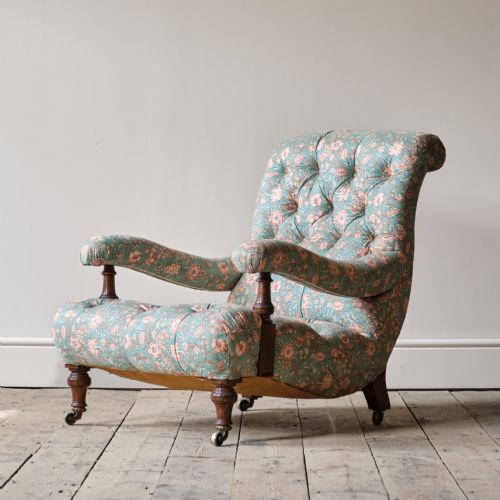
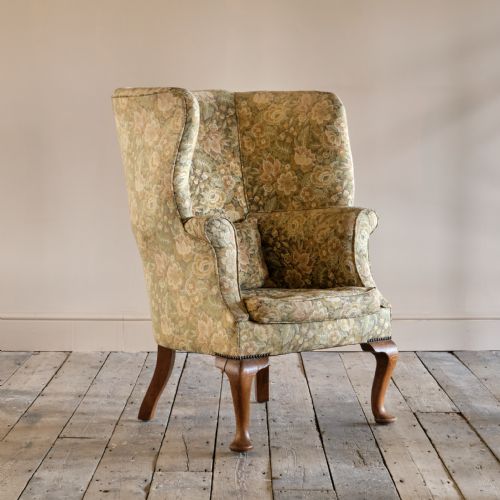

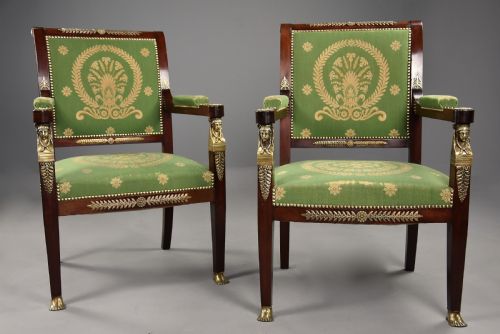


Green Pattern Armchair
A green pattern armchair brings pattern and seating together, turning a functional corner seat into a decorative anchor.
Green Pattern Armchair
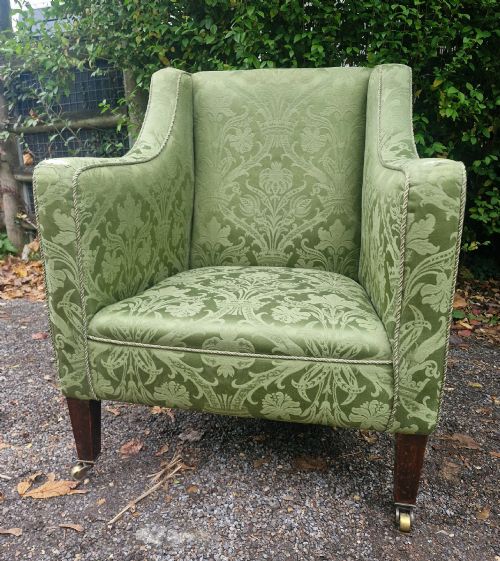
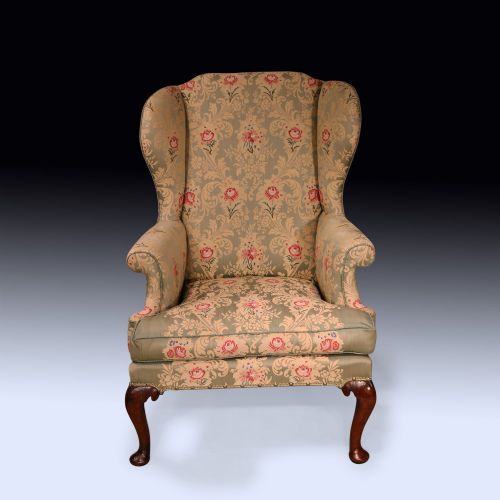
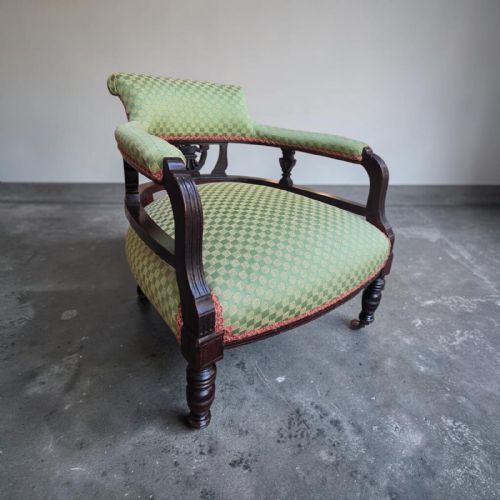
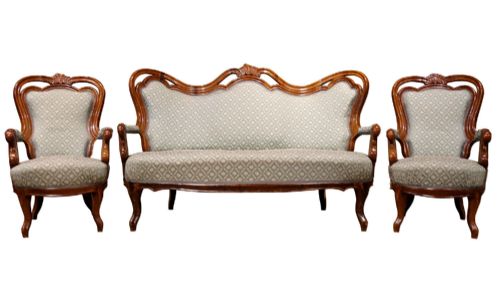
A green pattern armchair spans periods from the nineteenth century to later than nineteen-sixty, taking forms such as tub chairs, wing backs, and salon suites. The nineteenth century yields numerous examples in Victorian and Edwardian styles, alongside revival pieces.
Makers and designers represented include Howard and Sons, Holland and Sons, Heals, and J.Mills, covering open armchairs, library chairs, and gentleman's armchairs. Fabrics feature linen, tapestry, and William Morris designs over hardwood, mahogany, walnut, and rosewood frames.
How they were made
Frames rely on timbers such as mahogany, walnut, hardwood, and rosewood, sometimes accented with brass or giltwood details. Carved and bentwood techniques shape the structural woodwork of the arms and legs.
Upholstery incorporates textile, fabric, and linen, secured over sprung or padded interiors. Re-upholstery often utilises printed or woven patterns to refresh antique frames.
Green Pattern Armchair Retail Price Guide 2026
Typical asking prices for green pattern armchair among the pieces listed under this phrase on Sellingantiques today, from the lower quarter to the upper quarter. They describe what is for sale here now, not the wider market.
A barrel back chair invites you to sit and ponder why anyone ever invented straight walls.
What varies in quality
The refinement of the timber carving and the integrity of the frame construction set pieces apart. Solid hardwood and figured mahogany or walnut frames demonstrate greater structural ambition than simpler utility builds.
The choice and execution of the textile upholstery influence the overall character. Period-appropriate fabric selection and precise pattern placement reflect the care taken during restoration or re-upholstery.
Howard and sons·Holland and Sons·Heals·J.Mills
The Green Pattern Armchair Glossary
- Fauteuil
- An open armchair with upholstered arms and an exposed wooden frame, typically originating from French design traditions.
- Tub chair
- A compact upholstered armchair featuring a continuous curved back and arms that enclose the sitter.
- Wing armchair
- A fireside seat with side panels designed to shield the occupant from draughts.
- Bentwood
- Wood softened by steam and bent into curved structural forms, utilised in twentieth-century seating designs.
- Salon suite
- A matched set of upholstered seating designed for formal reception rooms.
Green Pattern Armchair: Frequently Asked Questions
What periods do these armchairs cover?
The selection spans the nineteenth century, Victorian, Edwardian, and later twentieth-century periods. Revivals of earlier styles also appear frequently.
Dates range from mid-nineteenth-century examples to pieces made after nineteen-sixty.
Which woods are used in the frames?
Common frame materials include mahogany, walnut, rosewood, and general hardwood. Giltwood and brass elements also occur on specific styles.
Timber choice often reflects the period and the status of the chair's original commission.
Are the fabrics original?
Many chairs feature new upholstery or re-upholstered textiles such as linen, tapestry, and printed cotton. Historic frames are frequently updated to suit contemporary interiors.
Listings specify when new fabrics or designer prints like William Morris textiles have been applied.
How do I identify different chair styles?
Styles include Victorian gentleman's chairs, French Empire fauteuils, Art Deco bentwood, and Queen Anne revival wing backs. Proportions, arm shapes, and leg designs indicate the aesthetic influence.
Reference to maker attributions and period characteristics helps distinguish between original eras and revival interpretations.