





Green Man Table
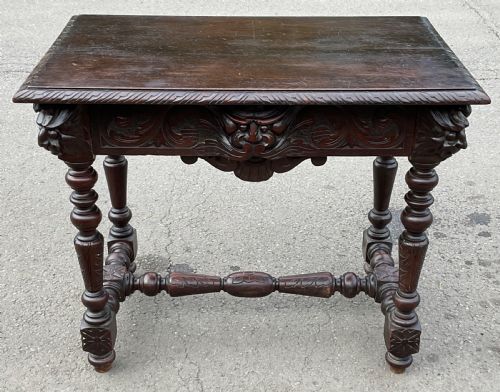
When you search for a green man table, you meet heavy nineteenth-century carved oak furniture bearing the foliage-masked face of folklore.
Green Man Table
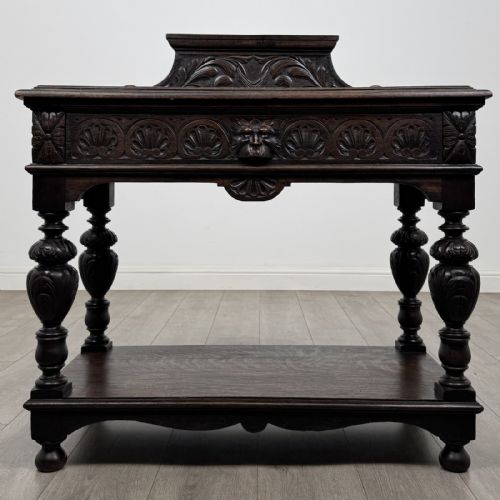
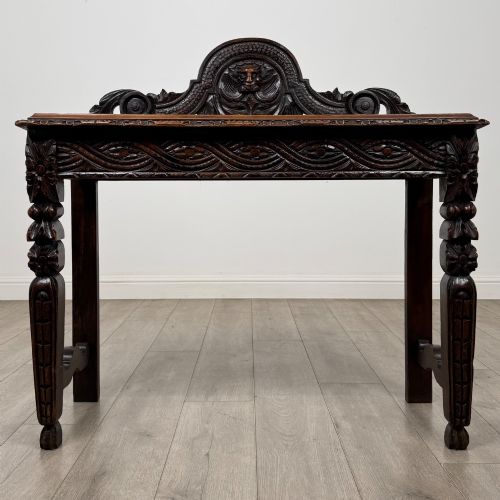
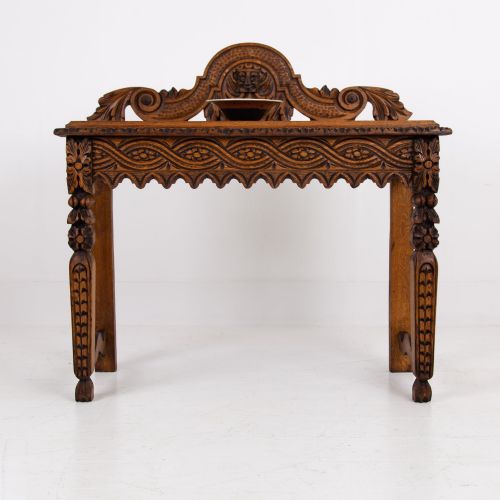
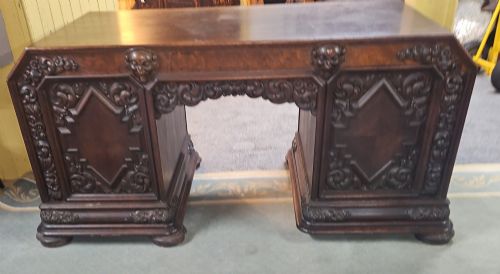
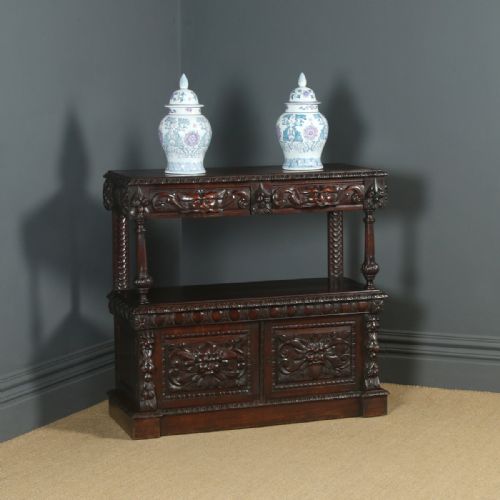
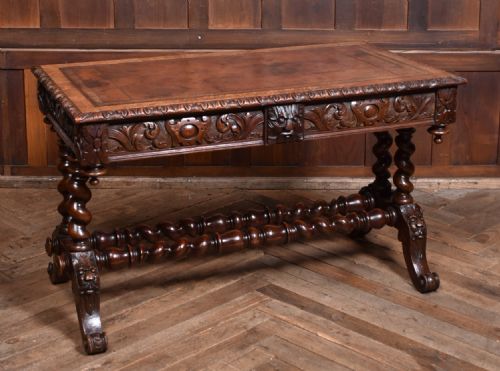
A green man table brings nineteenth-century revival styles into domestic spaces, appearing most often as side tables, hall tables, and writing desks. These pieces showcase elaborate woodwork rooted in Victorian Gothic and Flemish Renaissance traditions, taking form as centre tables, bureaux, and dining sets.
The green man motif dominates the ornamentation, peering out from carved oak friezes and drawer fronts. Examples range from compact single-drawer stands to large dining tables and hall servers framed by mythological bestiary details.
Most pieces date from the Victorian era and the latter half of the nineteenth century, utilising solid timbers shaped during periods of intense historicist revival. Buyers encounter console tables, desks, and occasional furniture finished with deep relief carving.
How they were made
Cabinetmakers built these tables primarily using solid oak, occasionally selecting golden oak or incorporating brass hardware, leather writing inserts, and glass. The construction relies on heavy timber framing designed to support deep, sculptural relief work.
Carving defines the fabrication process, with artisans chiselling foliate masks, mythical beasts, and strapwork directly into the wood. Joinery techniques from the period, including dovetailing for drawers and robust mortise and tenon frames, ensure structural endurance.
Green Man Table Retail Price Guide 2026
Typical asking prices for green man table among the pieces listed under this phrase on Sellingantiques today, from the lower quarter to the upper quarter. They describe what is for sale here now, not the wider market.
Some tables hide the green man mask within dense oak foliage so cunningly that guests only spot the peering face after weeks of tea.
What varies in quality
Timber selection and secondary materials also dictate standing, with dense, figured oak and patinated brass fittings marking out superior pieces. Structural integrity, period-correct hardware, and the integration of the mask into the overall furniture design complete the hierarchy.
Winterhalder and Hofmeier
The Green Man Table Glossary
- Green Man
- A sculptural mask of a human face emerging from or entwined with foliage and vines, symbolising rebirth and forest spirits. This motif serves as the central decorative feature across nineteenth-century revival furniture.
- Gothic Revival
- An architectural and decorative style drawing inspiration from medieval design, prevalent throughout the Victorian period. It manifests in pointed arches, heavy oak construction, and ecclesiastical motifs.
- Flemish Renaissance Revival
- A nineteenth-century style emulating sixteenth-century Low Countries design, characterised by exuberant strapwork, cartouches, and high-relief carving. Tables in this taste often display dramatic sculptural masks and bold turnings.
- Console Table
- A side table designed to stand against a wall, frequently secured with brackets or resting on front legs. These forms often carry the heaviest ornamentation on their aprons.
- Bureau
- A sloping-front desk enclosing pigeonholes and small drawers, raised on a table base or fitted with drawers below. In oak revival pieces, the fall-front frequently bears the carved foliate mask.
Green Man Table: Frequently Asked Questions
What is a green man table?
A green man table is a nineteenth-century oak furniture piece featuring hand-carved mask motifs composed of leaves and vines. These items span side tables, writing desks, and hall furniture produced during the Victorian revival periods.
They combine utilitarian surfaces with exuberant folklore ornamentation. The carved face peers from drawers, aprons, and friezes, anchoring the furniture in Gothic and Renaissance design traditions.
How were these tables used originally?
Victorian households utilised these tables in halls, libraries, and drawing rooms as writing surfaces, console displays, or servers. Hall tables welcomed visitors with imposing mythological carvings while providing a surface for calling cards.
Larger versions served as centre tables or dining furniture, functioning as both heavy domestic utilities and conversation pieces. Writing desks and bureaux provided enclosed storage for correspondence alongside carved writing beds.
How do I live with a green man table?
Placing one of these pieces requires balancing its heavy oak presence and dark timber tones within modern interiors. They anchor entrance halls, anchor living room walls as console surfaces, or function as characterful writing desks.
Maintenance involves treating the solid oak with appropriate waxes to preserve the dry, patinated finish without sealing the grain. Their robust construction allows them to serve daily domestic functions while retaining their sculptural presence.
How do I tell Victorian periods apart?
Dating relies on examining construction methods, hardware types, and the specific nuances of the revival style applied. Pieces from the mid nineteenth century often lean towards restrained Gothic forms, while later nineteenth-century examples embrace heavier Flemish Renaissance exuberance.
Drawer linings, timber oxidation, and the tool marks left by carvers help establish whether a piece originates from the mid-century or the decades around nineteen hundred. Secondary woods and fastener styles provide further chronological markers.