




Green Garden Seating
Green garden seating brings together sturdy metal and timber furniture built to weather the elements while offering quiet repose outdoors.
Green Garden Seating
Green garden seating spans substantial benches and folding chairs designed for outdoor placement across several decades. The selections on this page are dominated by robust cast iron and wrought iron benches, alongside sets of metal chairs.
Most pieces stem from the Victorian period up through the 1930s, featuring functional forms intended for lawns, courtyards, and terraces. Alongside physical benches, the grouping includes period watercolours and oil paintings depicting garden seats.
Buyers will encounter single benches, pairs, and matching sets of four chairs, often retaining traces of historical green paint. These items capture the practical utility and decorative tastes of past English and French garden design.
Materials and construction methods
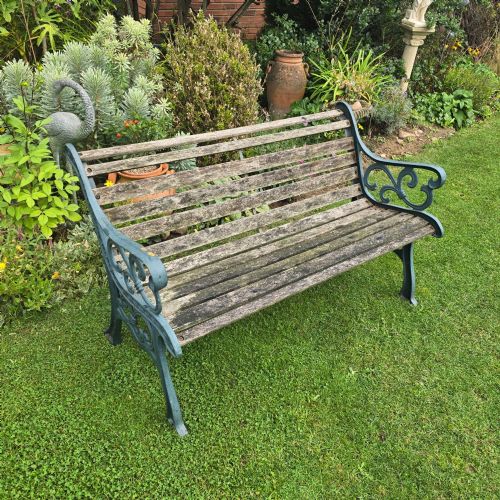
Makers utilised heavy cast iron and resilient wrought iron to form rigid frames and intricate scrollwork for these outdoor seats. Cast iron components were poured into moulds to create decorative bench ends and backs, while wrought iron was heated and hammered into strapwork.
Timber forms a supporting element in certain designs, paired with metal framing to construct slatted seats and backrests. Layered oil paint was applied to protect the metal from oxidation, with green remaining a favoured historical colour choice.
Green Garden Seating Retail Price Guide 2026
Typical asking prices for green garden seating among the pieces listed under this phrase on Sellingantiques today, from the lower quarter to the upper quarter. They describe what is for sale here now, not the wider market.
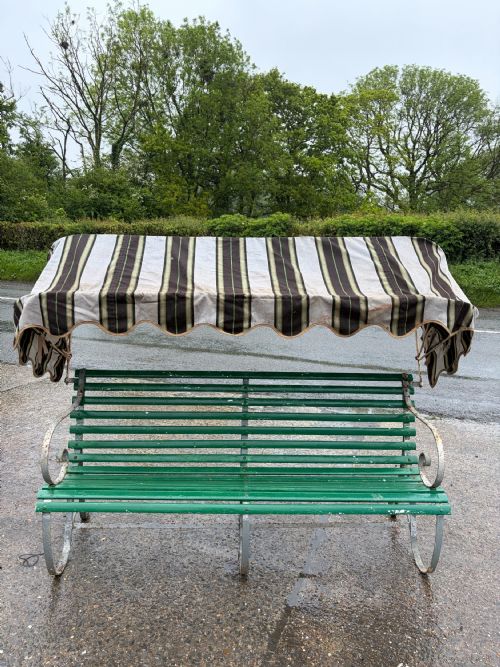
One bench comes equipped with a canopy, ensuring you stay properly shaded even when the British weather behaves unpredictably.
Distinctions in quality and execution
The sophistication of the ironwork sets finer examples apart, particularly where smiths shaped delicate strapwork and complex scrolls by hand rather than relying entirely on standard foundry casts. Greater weight and thicker metal gauge signal more substantial original construction.
The survival of original surface finishes and early paint layers adds considerable character compared to pieces that have undergone heavy modern stripping and repainting. Structural integrity in the joints and the retention of matching chair sets further elevate the standing of individual items.
The Green Garden Seating Glossary
- Cast iron
- A hard, brittle alloy poured into moulds to shape complex decorative patterns and structural bench ends. It provides the heavy foundation for many Victorian seats.
- Wrought iron
- Iron that is heated and worked by hand into durable bars and strapwork. This material allows for resilient scrollwork and flexible framing.
- Strapwork
- Flat strips of iron interlaced or joined to form decorative patterns on backs and seats. It offers both ornamental detail and structural support.
- Scroll
- A spiral or curved ornamental motif commonly forged into iron bench backs and armrests. It defines much of the classical garden furniture aesthetic.
- Canopy
- An overhead architectural extension attached to a bench to provide shelter from the elements. This feature appears on select elaborate Victorian designs.
Green Garden Seating: Frequently Asked Questions
How do I care for antique metal garden benches?
Keep the metal clean and dry during harsh winter months to protect the underlying material from moisture damage.
Applying a light protective wax or maintaining the existing paint layer helps preserve the historical surface without altering its character.
Were these seats left outside all year?
Most of these heavy iron and timber pieces were built to withstand changing weather conditions throughout the seasons.
However, bringing lighter chairs indoors during freezing winter periods helps prevent unnecessary strain on joints and fastenings.
How can I tell a Victorian bench from a later one?
Victorian examples often feature heavier casting, specific strapwork patterns, and ornate botanical motifs derived from nineteenth-century design.
Later pieces from the 1920s and 1930s tend toward simpler lines, folding mechanisms, or French country styling.
Can folding iron chairs support regular sitting?
French folding chairs utilise robust iron framing designed for practical use in domestic gardens and cafes.
Checking the pivot pins and folding action ensures the metal mechanism remains stable and secure for everyday seating.