
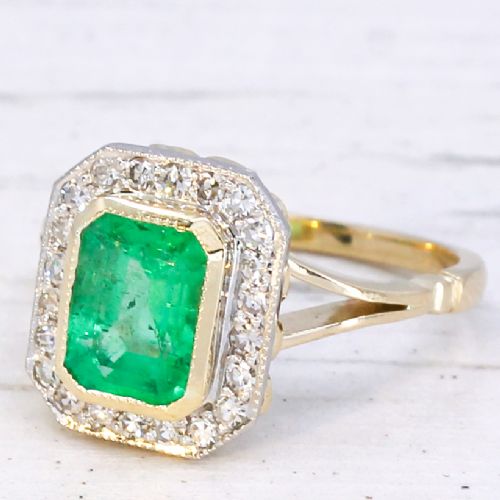


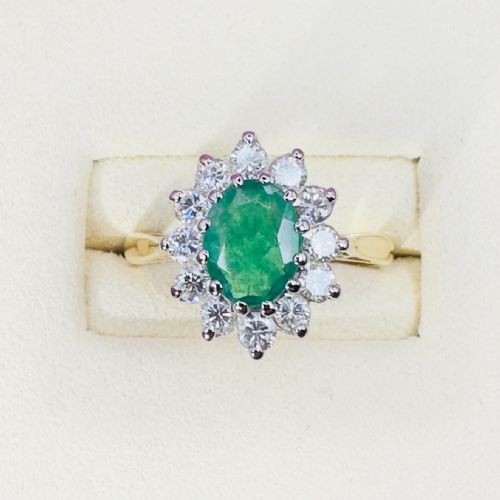

Green Emerald Halo Ring
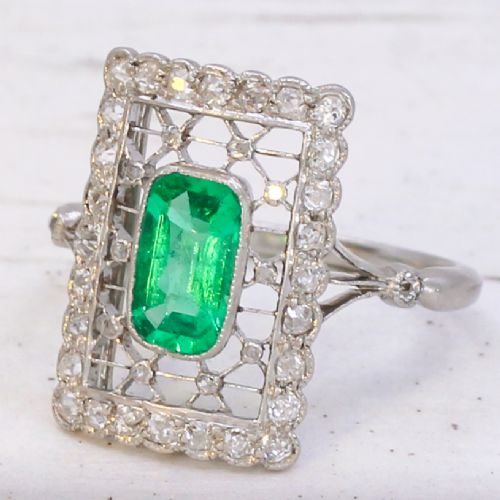
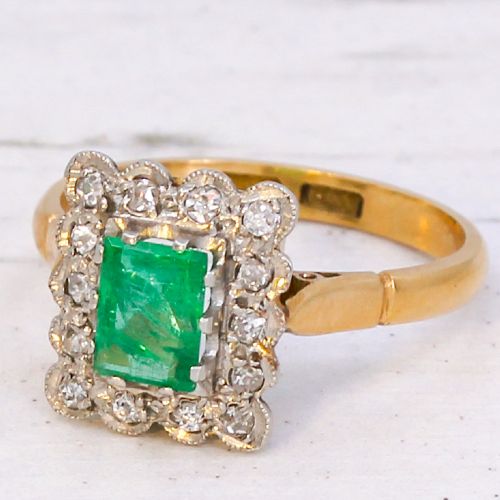
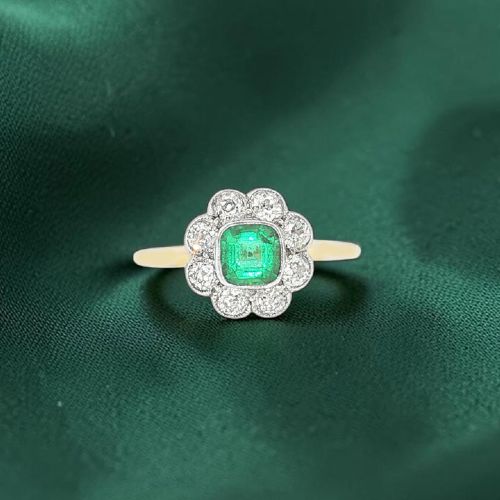
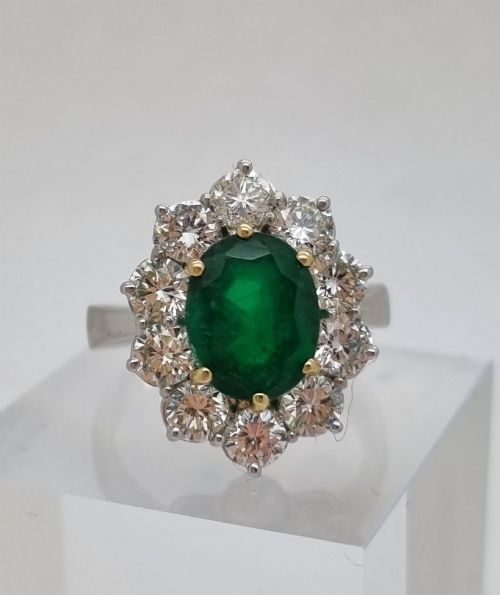
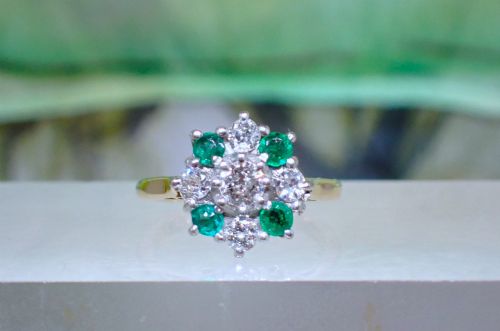
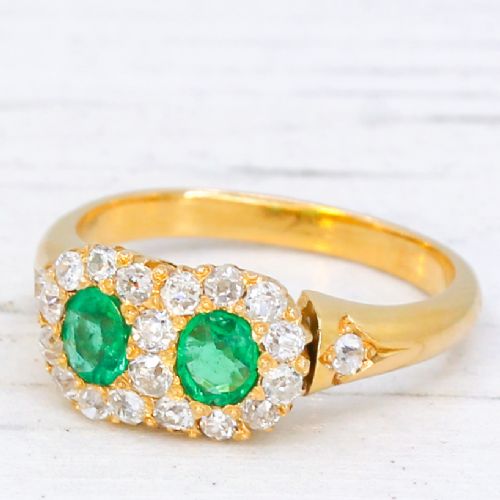
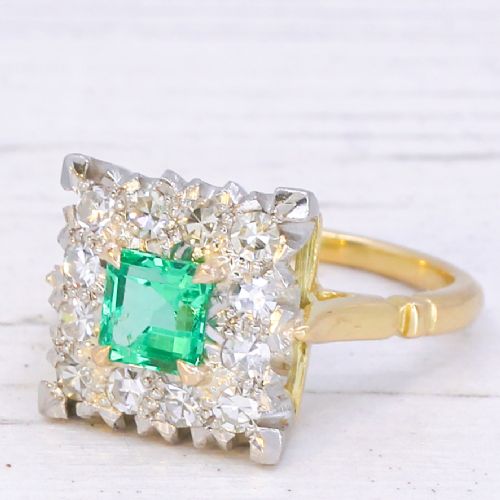
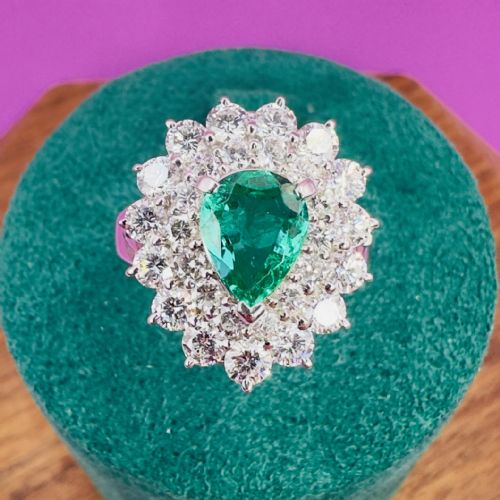
A green emerald halo ring brings together a central green beryl and a border of brilliant diamonds, appearing across Edwardian, Art Deco, and Mid-Century designs.
Green Emerald Halo Ring
A green emerald halo ring sets a central emerald within a surrounding border of diamonds, appearing frequently in cluster, dress, and cocktail ring formats. These pieces span multiple decades, drawing on Victorian, Edwardian, Art Deco, and Mid-Century aesthetic traditions.
How they were made
The foundational structures rely heavily on platinum, alongside 18ct yellow gold, 18ct white gold, and occasional lower carat variations, providing the necessary tensile strength to secure fine gemstone settings. Goldsmiths employed claw, bezel, and channel settings to fix both the central emerald and the surrounding diamond border in alignment.
Gemstone selection prioritises natural emeralds, frequently originating from Colombia or Zambia, paired alongside old cut, brilliant, or rose cut diamonds. Metalwork ranges from hand-fashioned Edwardian platinum mountings to cast mid-century yellow gold bands with adjustable shanks.
Green Emerald Halo Ring Retail Price Guide 2026
Typical asking prices for green emerald halo ring among the pieces listed under this phrase on Sellingantiques today, from the lower quarter to the upper quarter. They describe what is for sale here now, not the wider market.
Materials span platinum, 18ct yellow gold, 18ct white gold, and silver-topped gold across periods from Georgian up to the 1960s.
What varies in quality
Quality rests upon the origin, clarity, and treatment level of the central emerald, alongside the symmetry and matching of the surrounding diamond border. Stones accompanied by certification detailing minor oil or negligible oil treatments sit higher in standard than heavily treated equivalents.
The precision of the metalwork, whether hand-forged platinum or cast 18ct gold, dictates the structural integrity of the claw settings and the overall fineness of the cluster proportions.
The Green Emerald Halo Ring Glossary
- Cluster Ring
- A ring featuring a central gemstone encircled by a group of smaller surrounding stones. This configuration maximises visual presence on the finger.
- Halo
- A concentric border of smaller diamonds or gems encircling a larger centre stone. The design enhances the apparent size and brightness of the central emerald.
- Old Cut
- An antique diamond cutting style characterised by a high crown, small table, and deep pavilion. These cuts predate modern brilliant specifications and exhibit distinct facet patterns under candlelight.
- Negligible Oil
- A gemstone enhancement classification indicating that natural fissures contain little to no clarity-improving resin or oil. This signifies higher intrinsic quality for natural emeralds.
- Cocktail Ring
- A large, bold ring designed to draw attention during social gatherings. They frequently incorporate substantial centre stones and elevated cluster settings.
Green Emerald Halo Ring: Frequently Asked Questions
What is a green emerald halo ring?
A green emerald halo ring is a piece of jewellery featuring a central emerald surrounded by a border of diamonds. These pieces appear in various historical styles ranging from the Edwardian era to the mid-century period.
The central stone is typically cut in an oval, pear, or step-cut format, held securely within a platinum or gold mount by fine metal claws.
How do I care for my ring?
Emeralds are softer than diamonds and require gentle cleaning using warm water and a soft brush, avoiding harsh chemical ultrasonic cleaners. Regular inspection of the claw settings by a jeweller ensures the central stone and surrounding diamond halo remain secure.
Store the ring in an individual lined compartment to prevent scratching against other items in your jewellery collection.
How do I date an antique ring?
Dating relies upon stylistic markers such as the geometry of the platinum mountings, the type of diamond cuts utilised, and the presence of hallmarks on the inner band. Edwardian examples often display intricate millegrain work in platinum, while Art Deco versions favour strong geometric symmetry.
Certification documents accompanying the piece often provide additional historical context regarding the period of manufacture and gemstone origin.
What is an emerald treatment?
Many natural emeralds undergo oil or resin treatments to fill minute surface-reaching fractures and improve optical clarity. Certification reports grade these treatments on a scale from no oil up to significant clarity enhancement.
Stones with negligible or minor oil classifications retain higher desirability among collectors compared to heavily treated alternatives.