





Green Cut Crystal Glass
Green cut crystal glass pieces bring colour and sharp facets to a room, catching the light across decanters, hock glasses, and mantel lustres.
Green Cut Crystal Glass
When you search for green cut crystal glass, you encounter table glass and decorative vessels spanning the nineteenth and twentieth centuries. These objects range from nineteenth-century mantel lustres to twentieth-century hock glasses and decanters.
The pieces appearing on this page show distinct stylistic shifts from Victorian forms through Edwardian designs to Art Deco items. You are most likely to meet hock glasses and vases created with cased or overlay techniques from Belgian, French, and English makers.
Vessels take many functional and decorative shapes, including wine glasses, champagne coupes, perfume bottles, and table lustres. Bohemia and Val Saint Lambert feature strongly among the origins recorded in the inventory.
How they were made
Makers utilised lead crystal and cased glass methods, applying layers of green glass over clear crystal bodies. Skilled artisans then cut deep facets through the outer green layer to reveal the clear glass beneath.
Enamel and sterling silver mountings occasionally complement the worked crystal surfaces, particularly on nineteenth-century perfume bottles and decorative table wares.
Green Cut Crystal Glass Retail Price Guide 2026
Typical asking prices for green cut crystal glass among the pieces listed under this phrase on Sellingantiques today, from the lower quarter to the upper quarter. They describe what is for sale here now, not the wider market.
The listings span periods from the early nineteenth century through the Art Deco era, featuring lead crystal, cased glass, and enamel.
What varies in quality
The precision and depth of the wheel-cut facets determine the crispness of the geometric or floral patterns on the glass surface. Shallower, softer cutting yields less brilliance when the material catches the light.
The richness and saturation of the green overlay layer affect the overall visual weight and contrast against the exposed clear crystal underneath. Makers who maintained strict control during the casing process achieved sharper colour separation.
Baccarat·Charles Graffart for VSL·Joseph Simon for Val St Lambert·St Louis Massenet
The Green Cut Crystal Glass Glossary
- Cased Glass
- Glass made by blowing one layer of coloured glass inside or over another layer of a different colour. This method allows cutters to carve through the outer green layer to expose the contrasting layer beneath.
- Cut Crystal
- High-clarity lead glass shaped by abrasive wheels to produce faceted surfaces and intricate patterns. The high lead content increases the refractive index, giving the material greater sparkle.
- Hock Glass
- A traditional tall-stemmed wine glass specifically designed for Germanic white wines. These glasses frequently feature coloured bowls and elaborate stem cuttings.
- Mantel Lustre
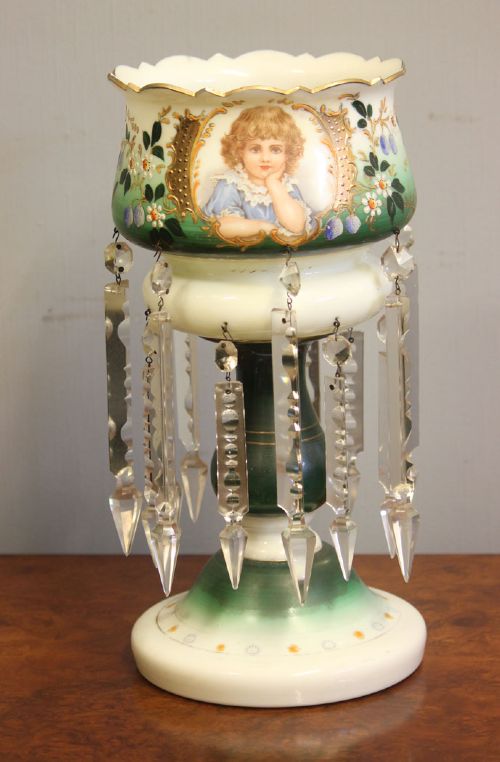
- A decorative tabletop ornament featuring a central vase hung with long cut-glass pendants. They were popular during the Victorian period for catching the flickering light of candles and gas lamps.
Green Cut Crystal Glass: Frequently Asked Questions
How do I clean green cut crystal glass?
Wash these pieces by hand using warm water and a mild detergent, avoiding harsh scrubbers that can scratch the polished surface. Dry them immediately with a lint-free cloth to prevent water spots on the faceted glass.
Take special care with items featuring silver mounts or enamel details, keeping moisture away from non-glass components during the cleaning process.
Can I use antique hock glasses for wine?
Historic hock glasses remain fully functional for serving wine during special dinners. Their tall stems and generous bowls suit aromatic white wines particularly well.
Hand-washing is essential after use, and placing them in a modern automatic dishwasher should be strictly avoided to protect the vintage lead crystal.
What is a mantel lustre?
Mantel lustres are decorative glass vessels adorned with dangling crystal pendants, designed to sit upon fireplace mantels. During the nineteenth century, their hanging prisms refracted ambient light to brighten dimly lit rooms.
Most pairs include detachable glass spears or drops hooked securely around the rim, which require careful handling if the lustre is moved.
How do I tell Victorian pieces from Art Deco ones?
Victorian items often display heavier proportions, ornate botanical engravings, and elaborate embellishments such as hanging crystal prisms. They reflect a taste for ornate ornamentation and traditional silhouettes.
Art Deco examples, by contrast, favour geometric austerity, clean angular cutting lines, and streamlined profiles characteristic of the twentieth century.