





Grand Chandelier Lighting
Grand chandelier lighting brings monumental scale and brilliant illumination to high-ceilinged spaces through multi-tiered construction and opulent materials.
Grand Chandelier Lighting
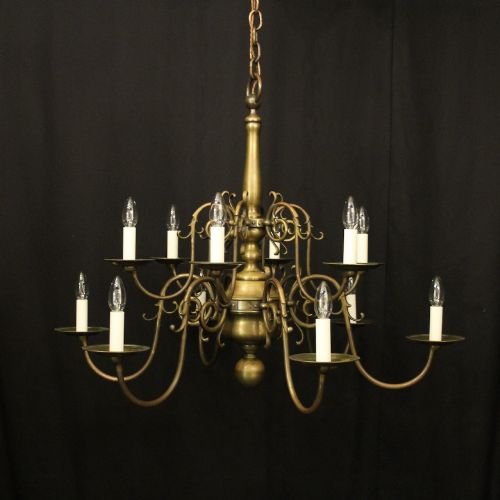
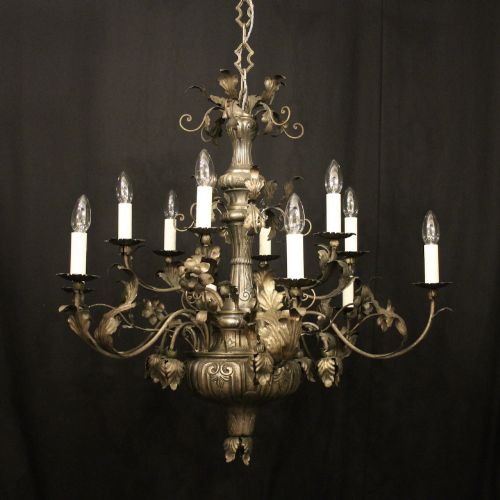
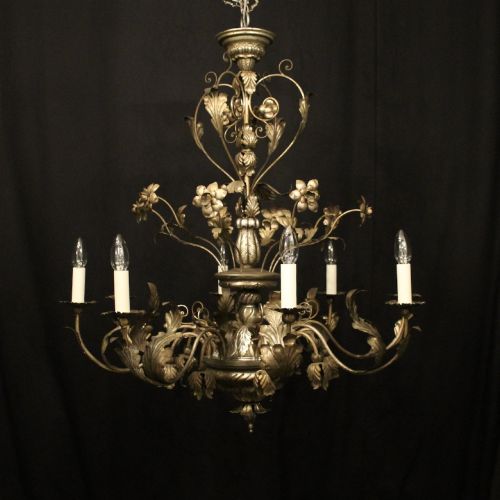
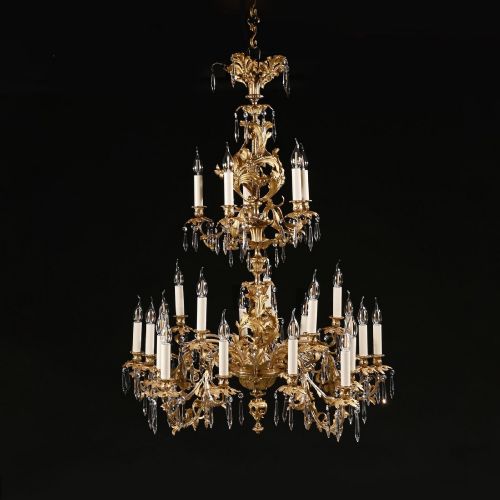
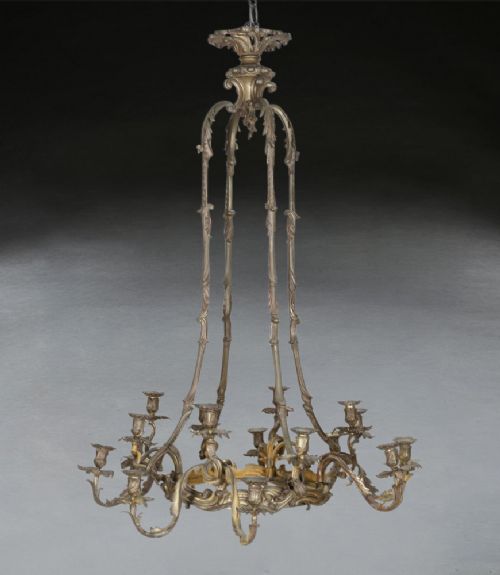
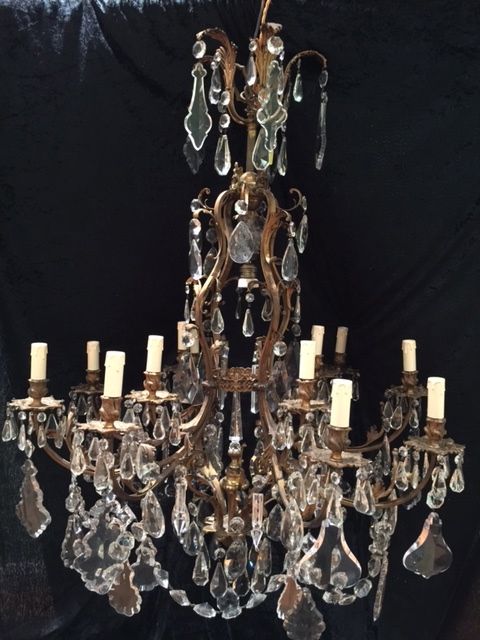
When searching for grand chandelier lighting, collectors encounter large, multi-armed fixtures designed to dominate significant interior spaces. These substantial pieces typically incorporate numerous light points, ranging from eight arms up to forty-one lights on ballroom installations.
The selections on this page span from the late 19th century through the 1920s and 1930s, encompassing French, Italian, and English origins. Forms frequently feature double-tiered formats and impressive scale, drawing inspiration from Italian Baroque, French Rococo, and Maria Theresa styles.
Buyers will most commonly meet substantial brass, bronze, and gilt-metal frameworks heavily adorned with cut glass and crystal components. These fixtures reflect historic grandeur, utilising ornate styling such as Louis XV and French Chateau aesthetics.
How these chandeliers were made
Maker workshops constructed the structural frameworks of these grand chandeliers using cast metals, specifically brass, bronze, and gilded metal. These sturdy skeletons support the massive weight of extensive arm configurations and countless hanging glass elements.
Artisans outfitted the metal structures with precision-cut glass and crystal drops, pendants, and beads, securing them by hand to create shimmering cascading effects. Gilt bronze and silvered gilding were applied to metallic surfaces to enhance visual richness under candle or electric light.
Grand Chandelier Lighting Retail Price Guide 2026
Typical asking prices for grand chandelier lighting among the pieces listed under this phrase on Sellingantiques today, from the lower quarter to the upper quarter. They describe what is for sale here now, not the wider market.
One extraordinary English ballroom design packs forty-one lights into a single grand crystalline assembly.
What varies in quality
The sophistication of the metal casting and the depth of the gilding differentiate exemplary fixtures from standard examples. Finer pieces display meticulously chased bronze work and complex multi-tiered engineering that distributes immense weight gracefully.
The clarity, cut, and sheer volume of the crystal and cut glass elements dictate the upper tier of the range. Superior installations feature high-refractive crystal drops and integrated coloured crystal details that elevate the optical brilliance of the piece.
The Grand Chandelier Lighting Glossary
- Maria Theresa chandelier
- A distinctive flat-arm crystal style named in honour of the Austrian Empress, featuring glass-sheathed metal bands and elaborate crestings.
- Gilt bronze
- Metal alloy cast into decorative forms and coated with a thin layer of gold, providing a durable and luxurious finish for grand frames.
- Cut glass
- Glass shaped and faceted by grinding and polishing wheels to catch and refract light, commonly seen in drops and bowls.
- Double tiered
- A structural arrangement where chandelier arms spread across two distinct vertical levels, creating monumental height and increased light capacity.
Grand Chandelier Lighting: Frequently Asked Questions
How do I hang a heavy grand chandelier?
These monumental brass, bronze and crystal fixtures require professional structural assessment and reinforced ceiling fixings to bear their substantial weight safely.
Installers must tie the hanging mechanism directly into ceiling joists or structural beams rather than standard plasterboard.
What periods do these chandeliers come from?
The available lighting spans from the late 19th century through the 1920s and 1930s, capturing late Victorian, Edwardian, and early twentieth-century decorative tastes.
Earlier examples often display Italian Baroque and French Rococo influences, while later pieces frequently embrace expansive English ballroom proportions.
How do I clean a crystal chandelier?
Maintenance involves gentle cleaning of individual glass and crystal drops using specialised solutions while the fixture remains securely suspended from the ceiling.
Avoid harsh chemicals that might damage the underlying gilt bronze, brass, or silvered metal finishes.
Are these chandeliers wired for electricity?
Most surviving fixtures from the late 19th century and early 20th century have been adapted for modern electrical supplies during their history.
Buyers should examine the internal wiring configuration of multi-light arrangements to ensure compatibility with contemporary electrical standards.