


Gothic Occasional Table
A gothic occasional table brings architectural character and dense historic carving into a room without dominating the floor space.
Gothic Occasional Table
A gothic occasional table is a small support surface shaped by the architectural vocabulary of medieval stone and timber work, adapted for domestic rooms in the nineteenth century. When you search for this phrase, you find pieces designed for specific household tasks, including lamp tables, plant stands, parlour tables, and side tables.
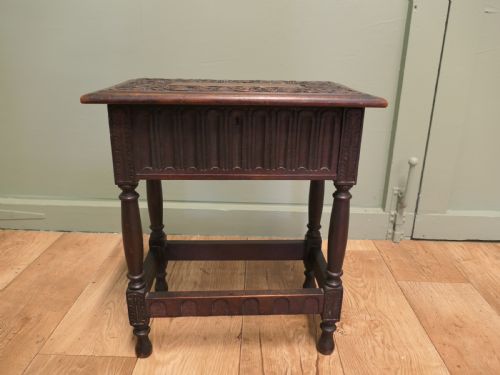
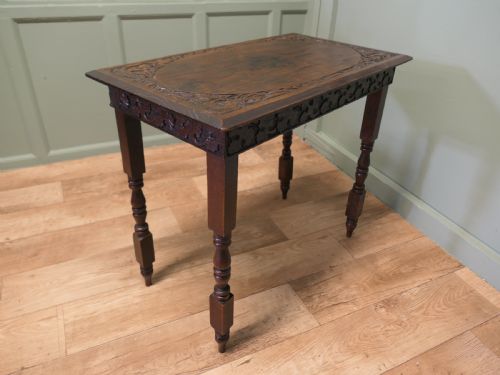
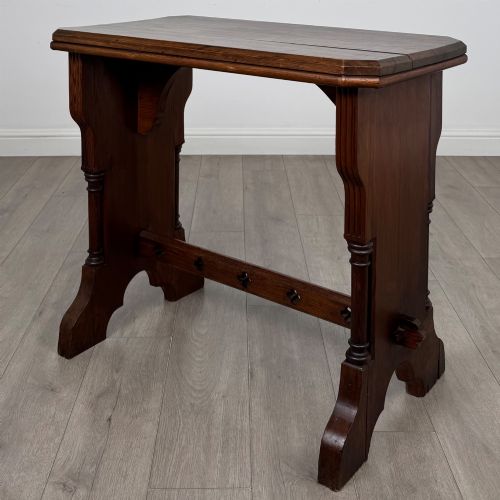
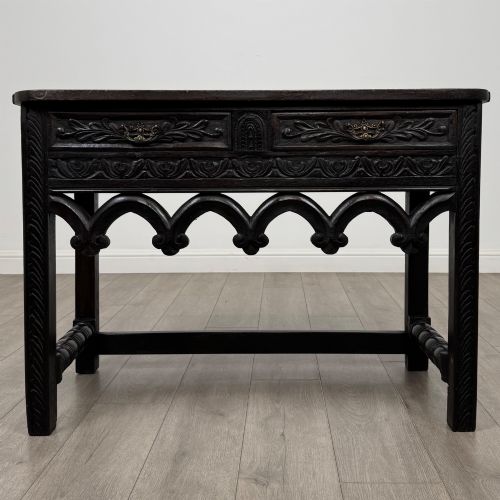
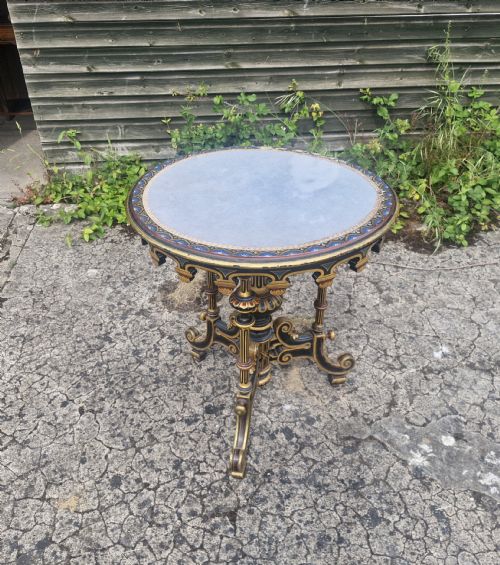
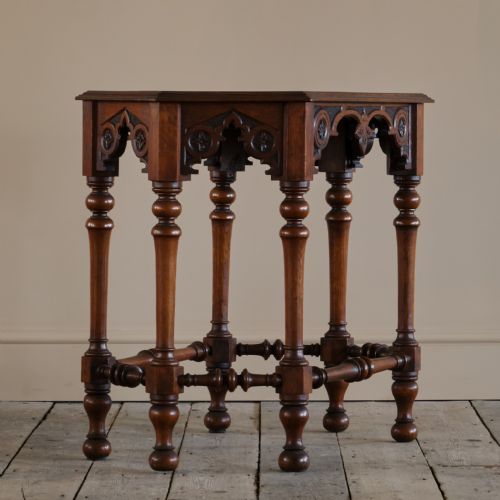
The pieces on this page lean heavily towards Victorian interpretations of Gothic Revival, Arts and Crafts, and Aesthetic Movement design. Oak is the dominant timber, appearing alongside mahogany, elm, pitch pine, and ebonised hardwood, often decorated with chip-carving, trefoil motifs, and barley twist legs.
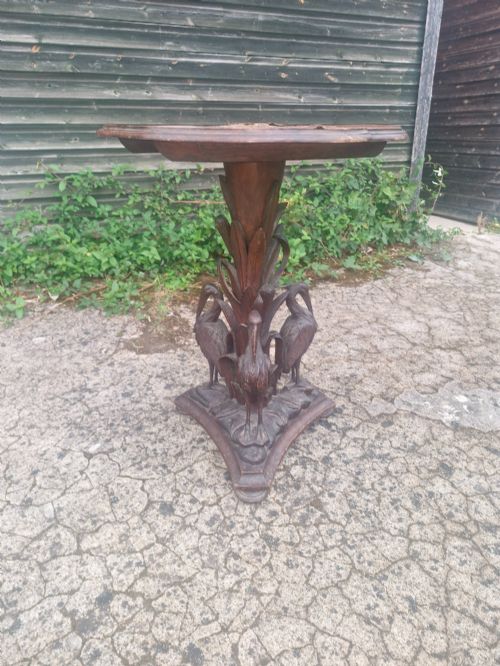
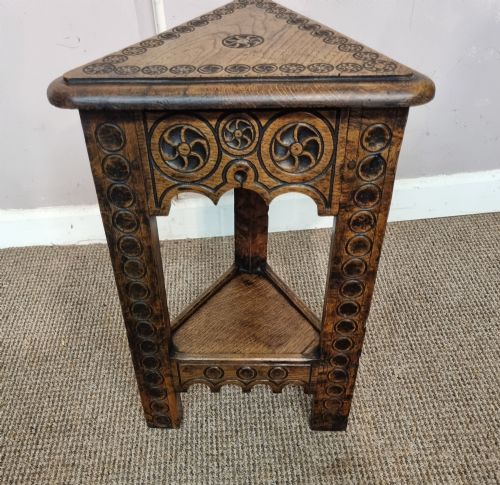
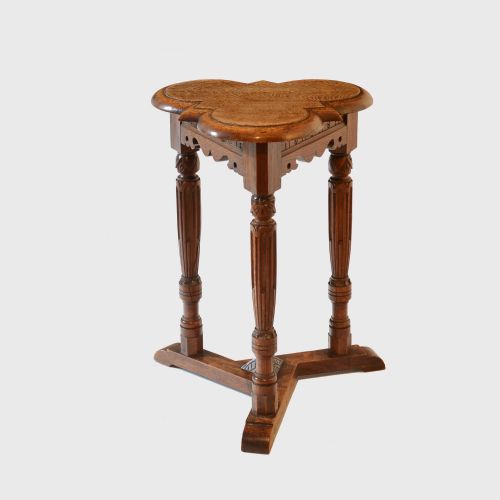
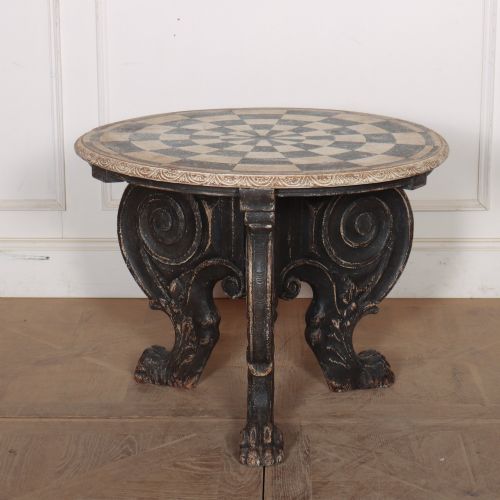
Forms vary from standard round, square, and octagonal tops to more unusual triangular, clover leaf, and tear drop shapes. These smaller tables served various functions in Victorian and Edwardian interiors, acting as surfaces for lamps, tarot readings, or decorative plants.
Materials and Construction
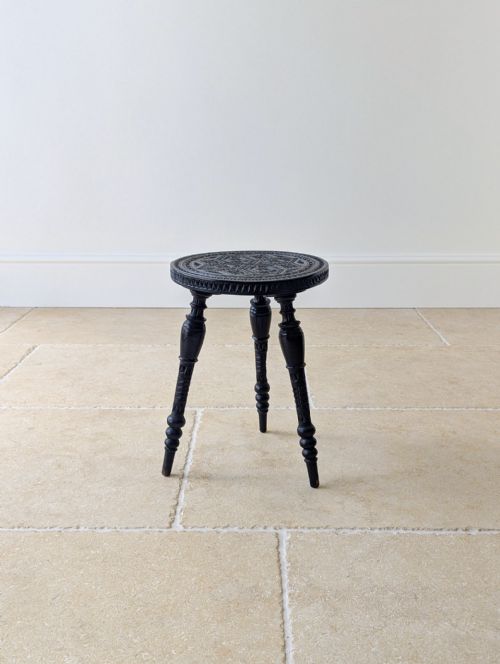
Makers relied primarily on sturdy timbers such as oak, elm, and pitch pine, selecting them for their ability to take deep, crisp chisel work. Solid construction methods, including jointed frames and turned supports like barley twists and tripod legs, give these small tables considerable weight and stability.
Surface ornamentation defines the group, utilising hand-applied chip-carving, incised Celtic patterns, zodiac carvings, and trefoil cut-outs. Selected examples incorporate ebonised finishes, painted decoration, or inlaid details, bridging the gap between heavy Gothic Revival forms and lighter Aesthetic or Arts and Crafts ideals.
Gothic Occasional Table Retail Price Guide 2026
Typical asking prices for gothic occasional table among the pieces listed under this phrase on Sellingantiques today, from the lower quarter to the upper quarter. They describe what is for sale here now, not the wider market.
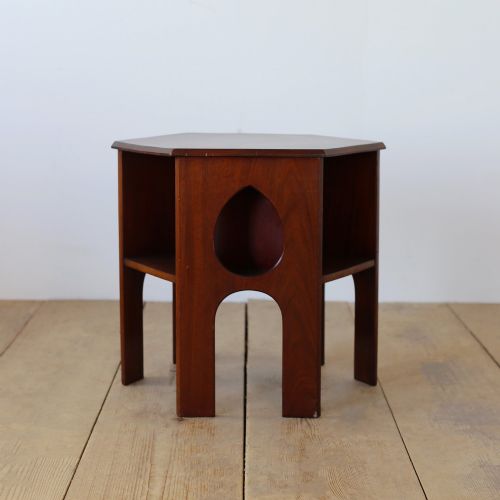
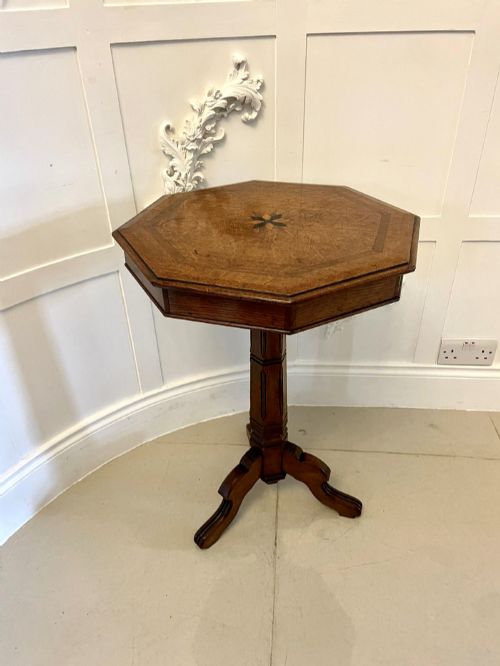
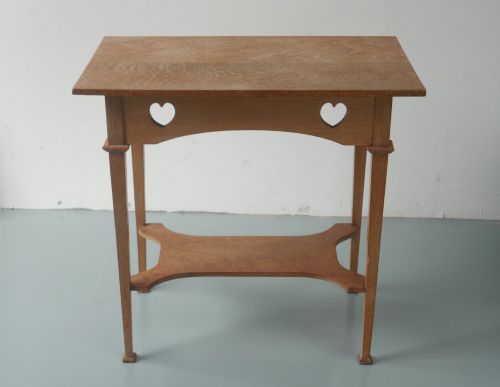
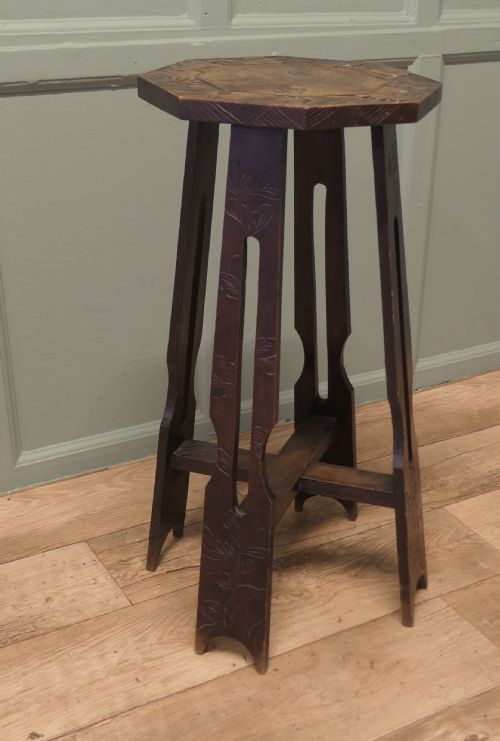
Table forms span side tables, plant stands, centre tables, and tripod supports reflecting Gothic Revival, Arts and Crafts, and Aesthetic movements.
Judging Quality and Execution
Quality rests in the depth and sharpness of the carving rather than the complexity of the silhouette alone. Superior pieces display confident, hand-executed detail in the tracery and linenfold panels, whereas lesser examples rely on shallow stamping or plain turned legs with little regional character.
Timber selection dictates the finish, with dense, well-figured oak and rich mahogany holding patination far better than softer woods. The integration of structural joints, such as pegged stretchers and solid top constructions, separates robust daily furniture from purely decorative novelties.
Liberty & Co·Baillie Scott
The Gothic Occasional Table Glossary
- Gothic Revival
- A nineteenth-century architectural and decorative style that revived medieval pointed arches, trefoils, and heavy timber construction. It transformed domestic furniture by introducing ecclesiastical motifs to everyday tables.
- Trefoil
- A three-lobed ornamental design resembling clover leaves, frequently pierced through table brackets or carved into wooden panels. This shape derives directly from Gothic stone window tracery.
- Barley Twist
- A cylindrical furniture leg turned to resemble a spiralling rope or column. This turned detail appears frequently on nineteenth-century supports.
- Chip-carving
- A technique where small chips are removed from a flat wooden surface with knives or chisels to create geometric patterns. It provides dense texture on small table tops and friezes.
- Occasional Table
- A small, movable table intended for intermittent use in a reception room or parlour. Examples range from plant stands to lamp tables.
Gothic Occasional Table: Frequently Asked Questions
What is a gothic occasional table?
A gothic occasional table is a compact nineteenth-century stand influenced by medieval architecture, featuring carved arches, trefoils, and dark timbers.
These pieces were built in shapes ranging from octagonal to triangular, serving as functional stands for lamps, books, or plants in period homes.
How were these tables used originally?
Victorians placed them in parlours and halls to hold table lamps, display decorative plants, or serve during card and tarot readings.
Their modest footprint allowed them to sit beside seating or in corners without cluttering the room.
How do I spot a Victorian gothic table?
Look for heavy use of oak, deep hand-carved tracery, barley twist legs, and pointed arch motifs derived from medieval stone buildings.
Many examples date from the mid to late nineteenth century, reflecting the broader Victorian enthusiasm for Gothic Revival design.
Will an antique table fit a modern home?
Their compact dimensions make them practical surfaces beside modern sofas or in hallways where floor space is limited.
The dark wood and architectural carving provide strong textural contrast against plain contemporary walls.