






Gothic Oak Occasional Table
A gothic oak occasional table brings robust architectural character and heavy timber warmth into a modern room with ease.
Gothic Oak Occasional Table
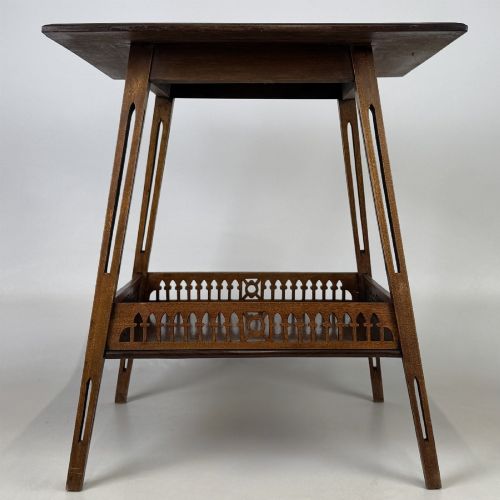
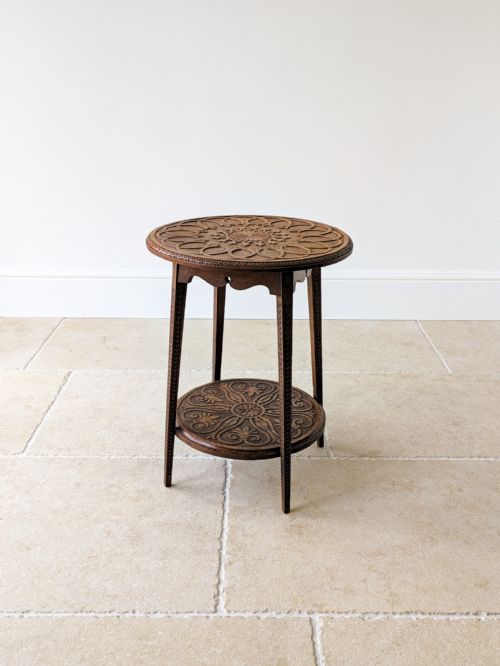
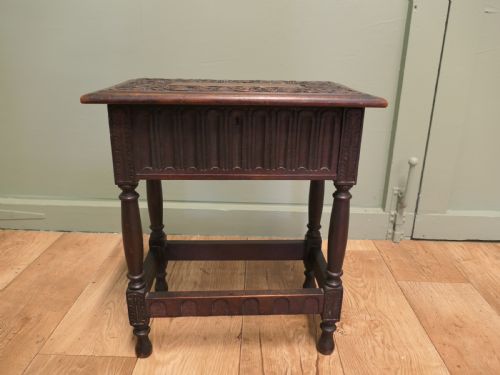
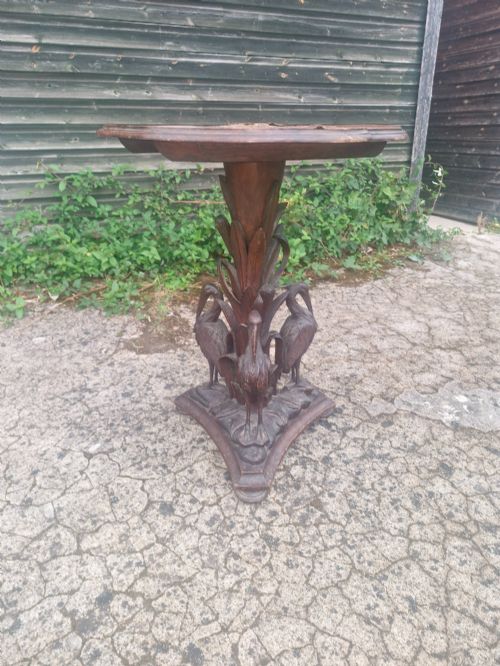
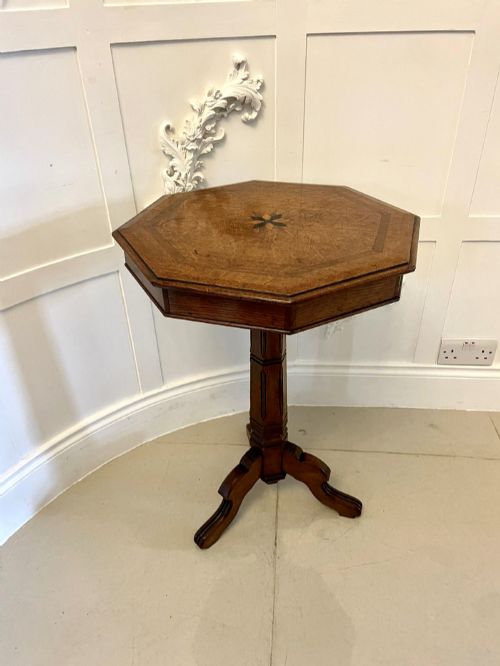
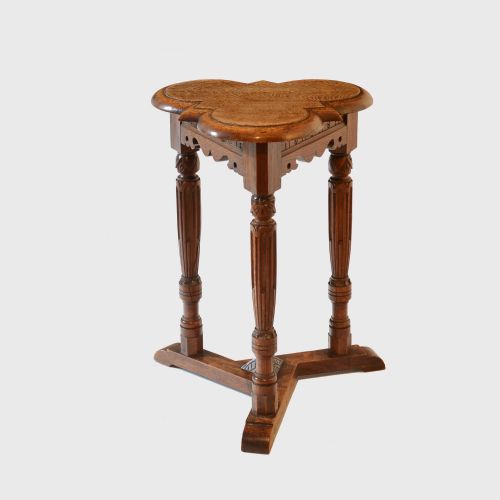
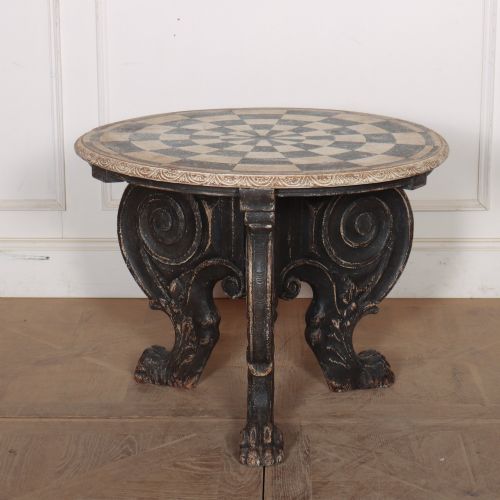
When someone searches for a gothic oak occasional table, they encounter a heavy timber surface rooted in nineteenth century revival movements. The forms span compact lamp tables, octagonal centre tables, and occasional furniture adapted from earlier coffin stools and joint stools.
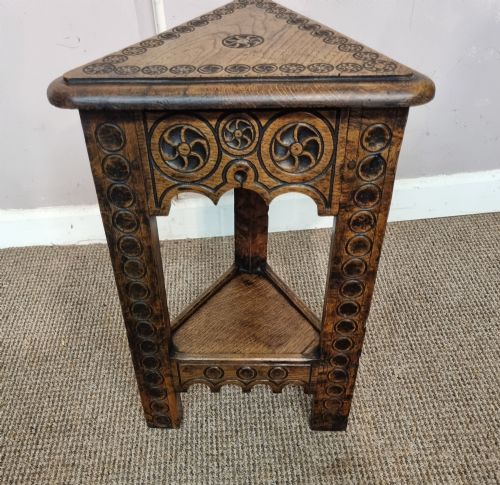
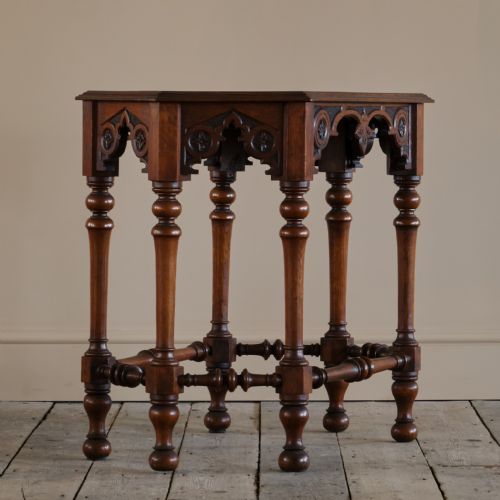
Victorian and Edwardian workshops produced most examples seen here, often incorporating trefoil, clover leaf, and triangular tops alongside barley twist legs. Stylistic influences cross between Gothic Revival, Gothic Reform, and Arts and Crafts movements.
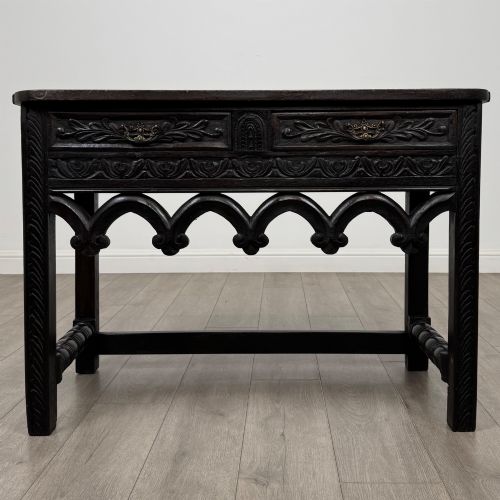
Proportions remain generally domestic, intended for parlours and halls rather than grand refectories. Carved ornamentation on the friezes and legs draws directly from medieval architectural motifs.
Materials and construction methods
Solid oak provides the primary structural foundation, complemented by secondary timbers and occasional iron, brass, or ceramic tile inserts. Wood inlay and painted wood details appear on specific Arts and Crafts and Victorian pieces to accent the dark grain.
Joinery relies on traditional methods suited to heavy timber, while surface enrichment employs deep hand carving of linenfold, tracery, and zodiac motifs. Table edges and legs frequently display turned elements such as barley twist supports.
Gothic Oak Occasional Table Retail Price Guide 2026
Typical asking prices for gothic oak occasional table among the pieces listed under this phrase on Sellingantiques today, from the lower quarter to the upper quarter. They describe what is for sale here now, not the wider market.
Some Victorian parlour tables carry zodiac carvings, reminding us that nineteenth-century drawing rooms enjoyed consulting the stars over tea.
Judging the quality of revival tables
Quality rests in the crispness and depth of the timber carving rather than plain surface smoothness. Sharp relief work on trefoil tops and friezes separates superior cabinet work from mechanical production.
The integrity of the oak timber and the weight of the structure dictate overall durability. Well-chosen grain patterns and substantial gauge timber elevate an occasional table far above standard utilitarian items.
Baillie Scott
The Gothic Oak Occasional Table Glossary
- Gothic Revival
- An architectural and decorative style that revived medieval forms, pointed arches, and heavy timber construction during the nineteenth century. This aesthetic defines the primary character of these tables.
- Trefoil
- A three-lobed ornamental design resembling clover leaves, frequently carved into table tops or pierced through wooden panels. It acts as a standard decorative marker for Gothic pieces.
- Barley Twist
- A helical turning technique applied to wooden table legs and supports, popular during the Victorian and Edwardian eras. This form adds visual movement to heavy oak furniture.
- Joint Stool
- A sturdy wooden stool constructed with mortise and tenon joints, sometimes adapted historically or later repurposed to serve as a low occasional table. These items display simple, robust framing.
- Gothic Reform
- A mid-nineteenth century design philosophy advocating for structural truth and simplified medieval construction principles over excessive surface ornamentation. Tables from this movement show disciplined, architectural lines.
Gothic Oak Occasional Table: Frequently Asked Questions
How do I style a gothic oak table at home?
Pair the dark timber with neutral walls and simple ceramics to let the architectural carving stand out in the room. The robust presence suits studies, hallways, and living spaces as a functional lamp or side surface.
Avoid crowding the top with too many objects so the grain and carved details remain visible. A single brass lamp or book stack complements the historic weight of the wood.
What is the difference between a side table and a centre table?
Side tables typically feature a flat side designed to sit flush against a wall in a parlour or hallway. Centre tables offer finished detailing on all four sides because they stand independently in the middle of a room.
Both forms utilise solid oak construction, but the placement dictates the arrangement of the legs and any lower tier shelving.
How do I date a nineteenth century oak table?
Examine the construction marks, timber thickness, and the specific decorative vocabulary employed across the piece. Victorian examples often show heavier relief carving, while Arts and Crafts or Gothic Reform pieces lean toward structural simplicity.
Hardware, screw types, and joinery methods inside the apron or beneath the top provide additional clues regarding the decade of manufacture.
Are these tables sturdy enough for daily use?
Solid oak construction and pegged joints give these tables exceptional structural resilience for everyday placement. They handle the weight of lamps, books, and daily items easily.
Routine care requires gentle cleaning suited to antique timber rather than harsh chemical polishes to protect the original waxed or polished finish.