



Gothic Oak Accent Desk
These gothic oak accent desk pieces bring robust timber and architectural revival lines to a room, offering both history and sturdy utility.
Gothic Oak Accent Desk
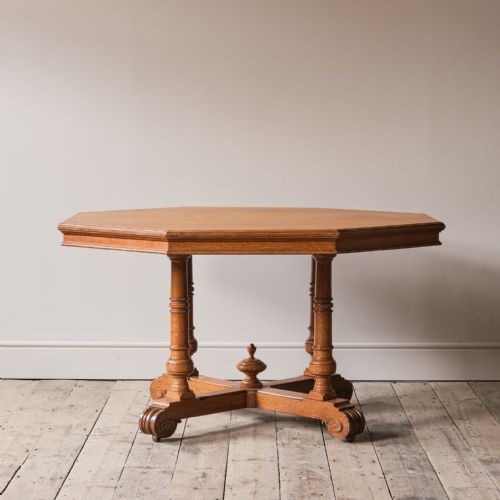
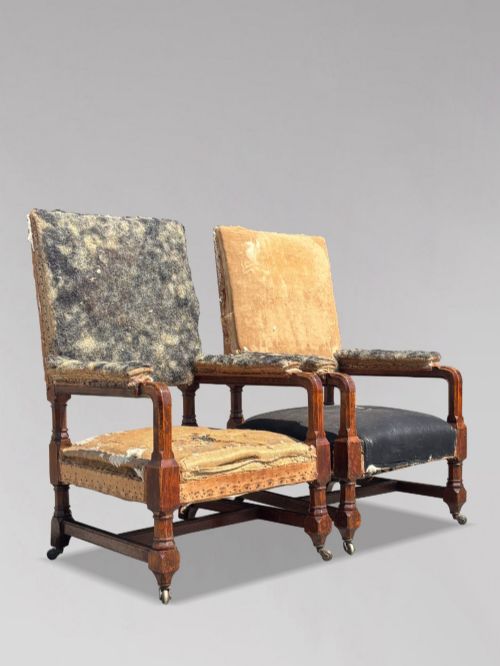
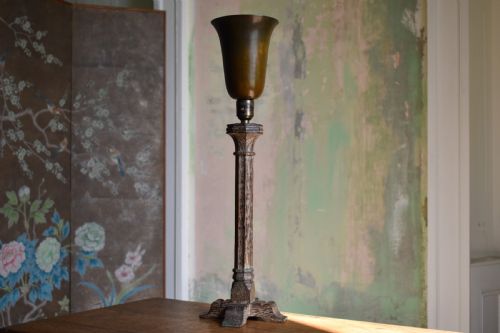
When buyers search for a gothic oak accent desk, they find pieces rooted primarily in the Victorian period and the broader nineteenth century, alongside later Arts and Crafts examples. While the surviving inventory leans heavily towards seating and tables rather than traditional writing desks, these items share the heavy timber construction and pointed arches characteristic of the style.
The materials and forms reflect a strong preference for solid oak, often paired with leather, brass, or textile elements. Pieces span from simple side chairs and centre tables to elaborate library armchairs and prie-dieu prayer desks.
Materials and construction
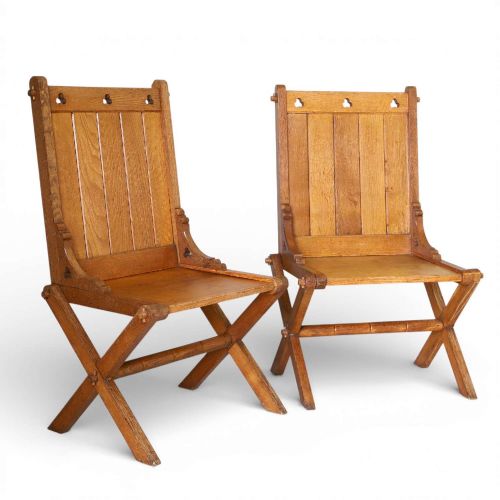
Makers relied primarily on solid oak, frequently carved with trefoil details, linenfold panels, and architectural motifs associated with Gothic Revival and Renaissance Revival traditions. Secondary elements such as brass hardware, leather upholstery, and hessian backing appear across the inventory to add functional contrast to the heavy timber.
Joinery methods of the nineteenth and early twentieth centuries prioritise structural permanence, utilising pegged mortise and tenon joints. Surface treatments range from polished honey oak finishes to limed oak applications seen on later twentieth-century pieces.
Listings span the Victorian period through to the 1930s, utilising solid oak, brass, and leather across various revival styles.
Assessing quality in the range
The distinction between standard items and exceptional pieces rests upon the depth and crispness of the timber carving. Items featuring hand-carved tracery, figural elements, or specific historical design references display a higher degree of workshop skill.
Original secondary materials, such as period leather upholstery and patinated brass fittings, elevate a piece above examples that have undergone modern replacement or extensive re-working.
The Gothic Oak Accent Desk Glossary
- Gothic Revival
- An architectural and decorative style drawing inspiration from medieval design, featuring pointed arches, trefoils, and heavy carved timber. It experienced a major resurgence during the Victorian period.
- Prie-Dieu
- A devotional desk or chair designed for kneeling prayer, typically featuring a sloped upper shelf and a padded lower rail. These items are frequently constructed in carved oak.
- Limed oak
- A wood finishing technique that leaves a white or lighter pigment in the open grain of the oak. This treatment lightens the appearance of the timber.
- Curule
- An ancient form of X-frame seating, revived during the nineteenth century in Renaissance Revival designs. These folding-style chairs feature intersecting curved supports.
Gothic Oak Accent Desk: Frequently Asked Questions
What periods do these pieces date from?
The available pieces originate mainly from the nineteenth century, spanning Victorian Gothic Revival workshops through to early twentieth-century Arts and Crafts production.
Dates range from the mid-nineteenth century up to the 1930s, capturing several decades of revivalist cabinetmaking.
Are these items made of solid wood?
The listings consist predominantly of solid oak construction, chosen by makers for its durability and suitability for deep carving.
Secondary materials such as leather, brass, and woven textiles are integrated into seating and tables to provide functional contrast.
How do I identify a Gothic Revival piece?
Look for architectural motifs including pointed arches, trefoil cutouts, linenfold panels, and heavy geometric framing. These design elements distinguish revival pieces from plain vernacular furniture.
Carvings often echo medieval stone tracery translated into timber.
How should I care for historic oak furniture?
Maintain the timber by avoiding direct heat sources and sudden humidity changes that can cause the solid oak to split. Regular dusting and occasional application of appropriate wax will preserve the finish.
Protect original leather and fabric components from prolonged direct sunlight.