






Gothic Carved Oak Stool
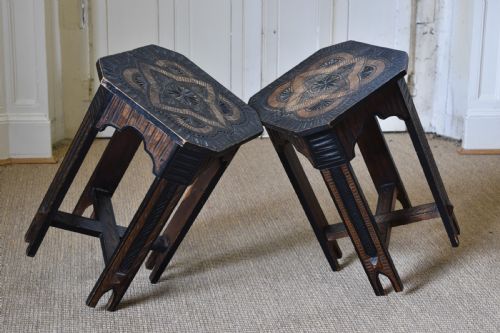
A gothic carved oak stool grounds a room with medieval architectural weight and dense, hand-chiselled decoration.
Gothic Carved Oak Stool
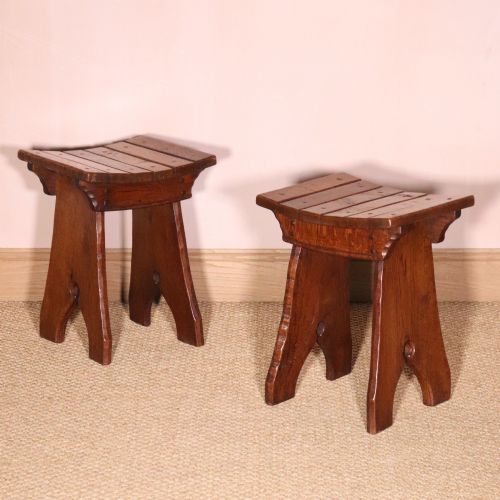
A gothic carved oak stool brings together heavy timber construction and ecclesiastical ornament derived from medieval architecture, often taking the form of low seats, footstools, or box forms. These pieces span from the nineteenth century revival periods back to seventeenth century examples, though nineteenth century Victorian and Arts and Crafts interpretations appear most frequently.
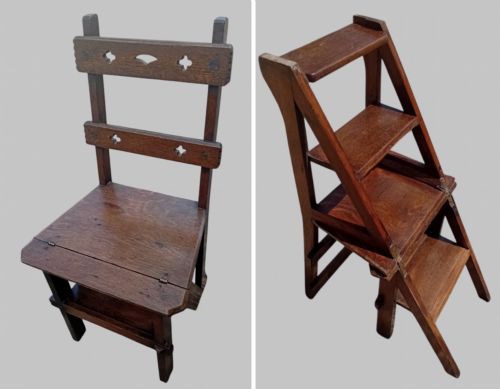
Makers drew heavily on gothic window tracery, quatrefoils, and chip carving to decorate the sturdy wood, placing utility alongside revivalist aesthetics. While the search points to stools, the surviving evidence shows these pieces often overlap with window seats and metamorphic library steps sharing the same heavy timber vocabulary.
How they were made
Cabinet makers utilised solid oak, burr elm, and occasionally walnut or stained wood, selecting dense native timbers capable of taking deep chisel work. Joinery relied on traditional pegged mortise and tenon joints to support the heavy structural demands placed on small seats.
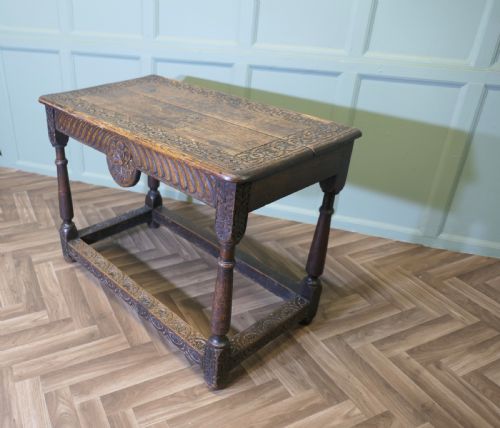
Surface decoration involved hand chip carving, low relief tracery, and occasionally brass fittings or leather and fabric upholstery inserts. Craftsmen worked the timber directly to produce structural board forms and trestle bases without resorting to thin veneers.
Current listings feature oak, burr elm, walnut, brass, and fabric across nineteenth and twentieth century periods.
What varies in quality
The standard of a gothic carved oak stool rests upon the crispness of the hand carving and the selection of the timber. Sharp, deeply undercut tracery executed in well-figured solid oak separates a thoughtful revival or period piece from mechanical later production.
Proportion and structural integrity dictate the success of the piece, as heavier timber requires precise joinery to prevent distortion. Pieces retaining their original surface patination without excessive modern intervention command greater respect.
Jack Grimble·Richard Hicks Bridgens
The Gothic Carved Oak Stool Glossary
- Gothic Revival
- An architectural and decorative movement reviving medieval forms, pointed arches, and tracery patterns during the nineteenth century. It heavily influenced furniture design across domestic interiors.
- Chip Carving
- A technique where small chips are removed from a flat wooden surface using chisels or knives to create geometric patterns. This method appears frequently on nineteenth century oak stools and tables.
- Tracery
- Openwork ornamental stone or woodwork based on intersecting ribs, commonly found in gothic cathedral windows. Cabinet makers translated these patterns directly onto the panels of seats and benches.
- Joint Stool
- A sturdy wooden stool constructed with pegged joints rather than turned legs, common in seventeenth century households. They provided robust seating and served multiple domestic uses.
- Trestle Form
- A structural arrangement where the top is supported by upright board ends or frames rather than four distinct legs. This archaic method provides exceptional stability for heavy oak seats.
Gothic Carved Oak Stool: Frequently Asked Questions
How do I spot a true period piece?
Examine the construction methods beneath the seat, looking for hand-pegged joints and timber movement appropriate to age rather than machine-cut components. Surface wear should match the handling of centuries rather than artificial distress.
Compare the carving depth and motifs against documented nineteenth century revival pieces to confirm whether the object dates to the medieval period or its later Victorian revival.
Where were these stools used?
These sturdy seats found placement in hallways, libraries, and great rooms where heavy architectural furniture suited the interior scheme. Their robust construction allowed them to function as movable seating or low footstools.
In Victorian homes, they served decorative as well as practical roles, echoing the revival styles popular in ecclesiastical and domestic architecture.
How do I care for oak furniture?
Maintain stable indoor humidity levels to prevent the dense oak timber from splitting or warping over seasonal shifts. Avoid placing the wood near direct heat sources or in prolonged bright sunlight.
Feed the dry surface periodically with traditional beeswax to preserve the natural grain and build up a healthy patination over time.
What is a metamorphic stool?
A metamorphic piece conceals a secondary function, transforming from a compact stool or seat into a set of library steps. This clever engineering suited nineteenth century domestic spaces requiring multi-use furniture.
Mechanisms rely on sturdy hinges and pivots integrated discreetly into the heavy oak framework to allow smooth conversion between forms.