



Gold Leaf Furniture
Gold leaf furniture brings sculptural warmth into a room, spanning grand Italian consoles and intimate French salon suites.
Gold Leaf Furniture
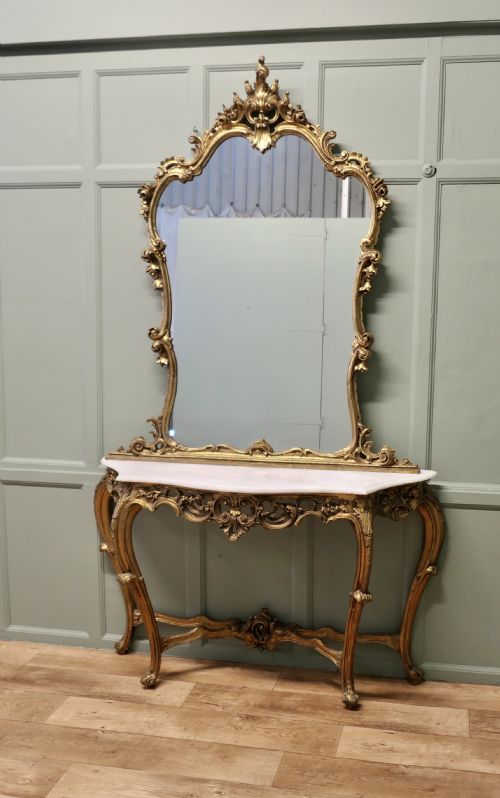
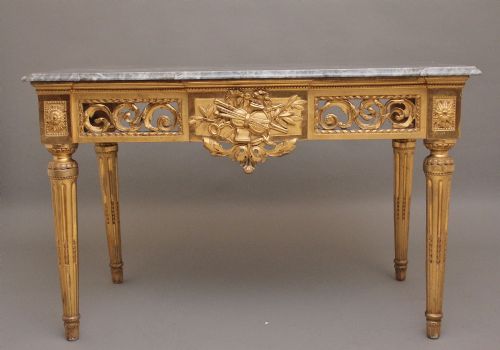
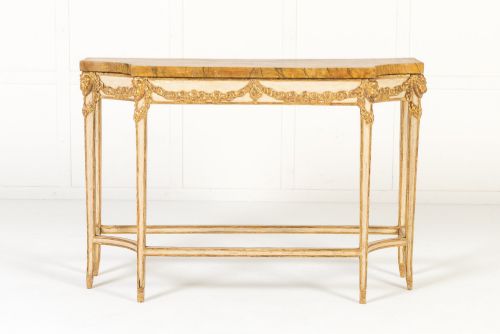
Gold leaf furniture encompasses a range of decorative seating, tables, and mirrors finished with fine metal leaf or gilt. When searching for gold leaf furniture, buyers encounter console tables, side tables, wall mirrors, and salon suites originating from the seventeenth century through to the early twentieth century.
Italian Neoclassical and French Rococo designs dominate the available selection, often taking the form of console tables paired with marble tops or carved wooden frames. Pieces from the eighteenth and nineteenth centuries appear frequently, reflecting varied European traditions from Venetian interiors to Regency workshops.
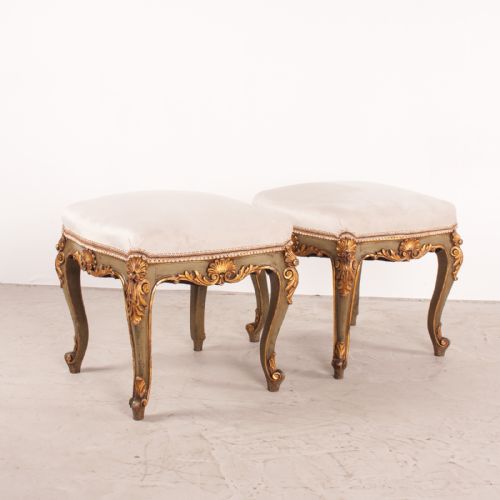
Seating options within this category range from Victorian giltwood stools to expansive French salon suites and duchesse brisee sets. Wall mirrors and trumeau mirrors complete the typical forms, bringing reflective light and gilded woodwork together.
Materials and Construction
Artisans built these pieces primarily from wood, applying layers of gesso to create a smooth preparatory surface for the application of gold leaf and paint. Giltwood frames required skilled carving by hand before the delicate metal leaf could be laid down.
Marble tops frequently accompany console tables and side tables, resting upon gilded wooden bases alongside structural elements of glass and fabric upholstery. Paint finishes often combine with gilding on Continental pieces to introduce contrasting colour beneath the gold leaf.
Gold Leaf Furniture Retail Price Guide 2026
Typical asking prices for gold leaf furniture among the pieces listed under this phrase on Sellingantiques today, from the lower quarter to the upper quarter. They describe what is for sale here now, not the wider market.
Early seventeenth-century Italian cassones hide rich gilded details behind heavy walnut lids designed to store bridal trousseaus.
Assessing Quality and Execution
The depth and crispness of the wood carving distinguish superior examples from simpler productions, particularly on eighteenth-century Italian giltwood and nineteenth-century revival pieces. Hand-applied gesso and leaf show subtle variations in texture that reveal the hand of the maker.
The integration of materials such as inset marble tops and original glass plates defines the character of higher-grade console tables and wall mirrors. Proportion and balance in the structural frame dictate whether a piece maintains its visual harmony over centuries.
Whytock and Reid
The Gold Leaf Furniture Glossary
- Giltwood
- Wood that has been coated with gold leaf or gold paint. This finish provides the characteristic metallic sheen seen on many tables and mirrors.
- Gesso
- A plaster mixture applied to wood as a base before gilding or painting. It allows carvers to achieve sharp detail.
- Console table
- A table designed to stand against a wall, frequently supported by two front legs. These often feature marble tops and elaborate gilded carving.
- Trumeau mirror
- A wall mirror incorporating a painted or carved panel above the glass. They frequently coordinate with matching console tables.
- Salon suite
- A matching set of upholstered seating and tables intended for a formal reception room. These sets often display unified giltwood frames.
Gold Leaf Furniture: Frequently Asked Questions
How do I clean gold leaf furniture?
Dust surfaces gently using a very soft, dry brush or a clean microfiber cloth without applying pressure. Avoid all commercial cleaning sprays, water, and chemical polishes that can lift the delicate metal leaf.
Keep gilded pieces away from direct sunlight and excessive humidity to protect the underlying gesso and wood from expanding or cracking.
Where should I place a console table?
Console tables sit well in entrance halls, living rooms, or dining spaces against a flat wall, often positioned beneath a matching wall mirror. Because many historical examples feature finished decoration on the front and sides, they anchor a room visually.
Ensure the floor is level so that heavy marble tops rest securely without putting uneven stress on the carved wooden frame.
What is the difference between giltwood and painted gilt?
Giltwood refers to solid or carved wood surfaces covered entirely in thin sheets of gold leaf over a prepared gesso ground. The golden sheen is dominant and catches the light directly.
Painted and gilt pieces incorporate visible painted pigments alongside the gold leaf, creating a contrasting palette often seen on Continental and Venetian furniture.
How do I identify a 19th-century revival piece?
Nineteenth-century revival furniture often borrows stylistic cues from earlier Louis XVI or Rococo periods, utilising machine-assisted preparation alongside traditional hand-carving techniques. Examine the timber construction and the wear patterns on the gesso to read the age accurately.
Consulting the specific proportions and decorative motifs helps distinguish nineteenth-century interpretations from original eighteenth-century works.