



Gold Gilded Tea Set
A gold gilded tea set brings remarkable table presence, combining brilliant metallic embellishment with fine ceramic craftsmanship across centuries of design.
Gold Gilded Tea Set
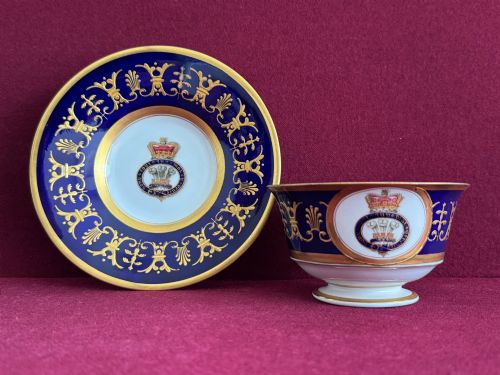
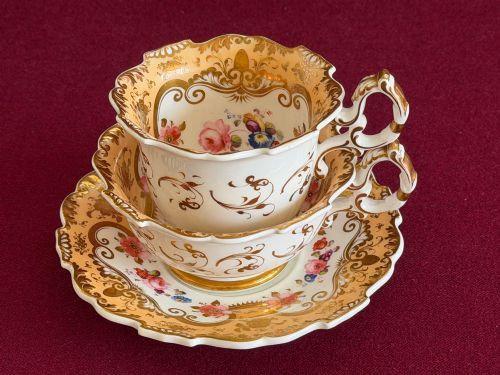
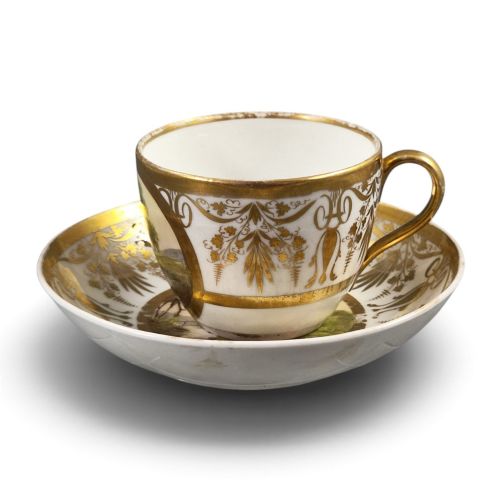
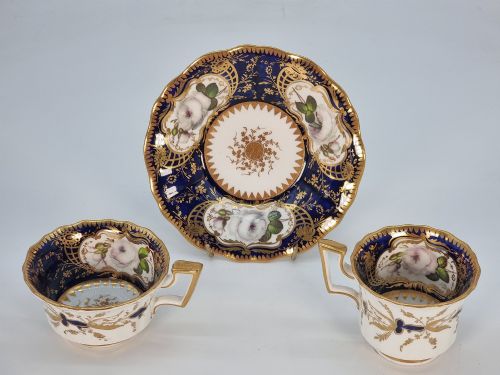
A gold gilded tea set comprises matched or complementary vessels designed for serving hot beverages, most commonly appearing on this page as teacups and saucers, trios, and comprehensive tea or coffee services. These items span periods from the Georgian and Regency eras through to the mid twentieth century, reflecting shifting tastes in domestic hospitality.
The assortment on this page includes English porcelain from factories such as Coalport, Spode, and Worcester, alongside continental porcelain from KPM Berlin and Limoges, and Japanese Satsuma earthenware. Buyers encounter both cabinet pieces made for display and service sets intended for use.
Formats vary from single cabinet cups to complete tea and coffee services with matching pots, creamers, and sugar bowls, occasionally supplemented by silver gilded spoons.
How they were made
Makers utilised porcelain, bone china, hard-paste porcelain, and earthenware as the foundational ceramic bodies for these wares, shaping them by hand or mould before firing at high temperatures. Artisans then applied painted decoration, often featuring hand-painted landscapes or botanical motifs.
Gilding was applied using gold leaf or gold gilt, bonded to the ceramic surface through specialised firing techniques to create resilient metallic bands, handles, and intricate highlights. Enamel colours were frequently added alongside the gilding to build up complex patterns such as bat wing designs or thousand flowers motifs.
Gold Gilded Tea Set Retail Price Guide 2026
Typical asking prices for gold gilded tea set among the pieces listed under this phrase on Sellingantiques today, from the lower quarter to the upper quarter. They describe what is for sale here now, not the wider market.
What varies in quality
The finesse of the hand-painted decoration distinguishes superior pieces from standard production, with detailed landscapes and precise brushwork indicating skilled factory painters. The crispness and preservation of the gold leaf or gilt detailing also dictate the overall standard of the object.
The integrity of the ceramic body, whether fine bone china, hard-paste porcelain, or earthenware, and the prestige of the manufacturing house contribute significantly to the standing of any given set or service.
Barr and Barr·H and R Daniel·Coalport·KPM Berlin·Ahrenfeldt and Asalvary·Davenport·Taniguchi·Royal Worcester
The Gold Gilded Tea Set Glossary
- Cabinet cup
- A decorative teacup and saucer made primarily for display in a cabinet rather than for daily use. These often feature elaborate hand-painted scenes and heavy gilding.
- Trio
- A matched set consisting of a teacup, a saucer, and a matching tea plate. This configuration became standard in British and European tea services during the nineteenth century.
- Hard-paste porcelain
- A ceramic material composed of kaolin and petuntse, fired at very high temperatures to produce a dense, vitrified body. It provides a durable canvas for intricate gilding.
- Gilding
- The application of gold leaf or gold powder to ceramic surfaces for decorative effect. In older pieces, this was applied by hand before being fixed in a kiln.
- Satsuma ware
- A type of Japanese earthenware featuring a crackled ivory glaze decorated with polychrome enamels and extensive gilt work. It gained significant popularity in the West during the nineteenth century.
Gold Gilded Tea Set: Frequently Asked Questions
What is included in a tea service?
A tea service typically comprises teacups, saucers, a teapot, a cream jug, and a sugar bowl. Many listings on this page also include matching tea plates.
Larger services combine coffee pots and cups, expanding the scope for formal entertaining.
How do I care for gilded porcelain?
Gilded porcelain requires careful hand washing in warm water using a mild detergent. Abrasive sponges and modern dishwashers will damage the gold leaf over time.
Storing pieces with felt separators protects the rims and handles from friction wear.
How can I tell Regency pieces apart?
Regency items often feature classical shapes inspired by Georgian Neoclassical and Biedermeier styles. They frequently display hand-painted reserves against rich background colours.
Factory marks on the underside, where present, help confirm the exact decade of production.
Were these sets meant for daily use?
Many sets from the Georgian and Victorian periods were produced for formal drawing room hospitality rather than robust daily dining. Cabinet cups were made specifically for display.
Later twentieth-century sets were constructed to withstand more regular service use.