



Gold Gilded Ceramic Saucer
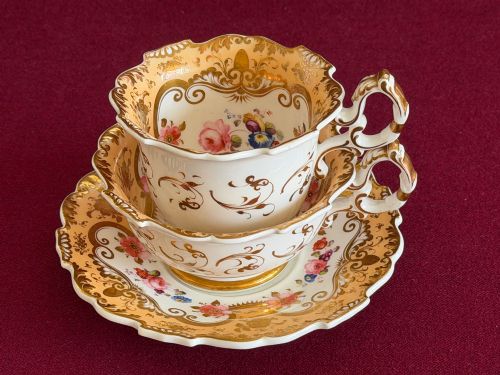
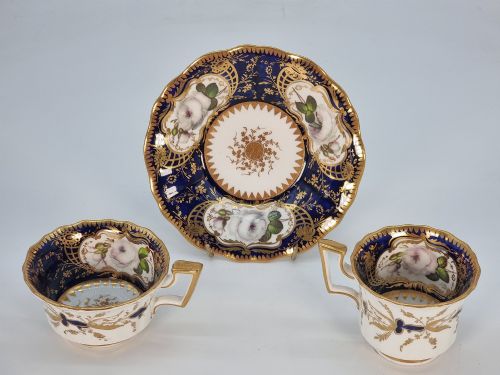
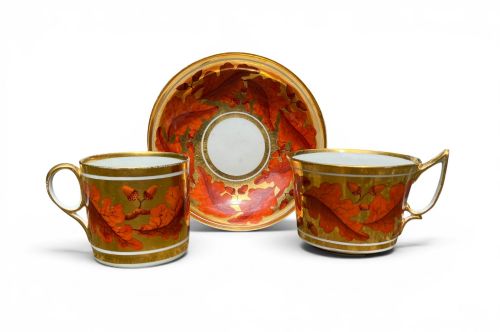
A gold gilded ceramic saucer brings refined polish to the tea table through luminous metallic detailing.
Gold Gilded Ceramic Saucer
A gold gilded ceramic saucer forms part of tea sets, coffee services, and trios originating from periods spanning the eighteenth century through to the mid twentieth century. Buyers seeking this form encounter porcelain, bone china, and earthenware pieces shaped into saucers, tea bowls, and matching cups.
The selections available here range from early Georgian Worcester and Regency Derby wares to Edwardian and later twentieth century productions. English factories such as Coalport and Spode sit alongside continental works from Berlin and Russia, together with Japanese Satsuma examples.
How they were made
Potters shaped ceramic bodies from porcelain, bone china, and earthenware before applying hand-painted designs and enamel pigments. Artisans then added gold leaf, gilding, and gold gilt highlights to the surfaces to create reflective metallic borders and motifs.
Porcelain cups once served strong brews while delicate saucers kept table linens safe from enthusiastic eighteenth century tipplers.
What varies in quality
The refinement of the ceramic body and the precision of the hand-painted decoration distinguish the standard of individual pieces. The application of gold gilding and enamel work reveals the skill involved in the original manufacture.
A H & R Daniel·Flight & Barr Worcester·Kusnetzoff·Royal Worcester·Duesbury & Kean
The Gold Gilded Ceramic Saucer Glossary
- Porcelain
- A hard, fine-grained ceramic material fired at high temperatures. It forms the primary base for many antique tea wares.
- Gilding
- The application of gold leaf or gold paint to a ceramic surface. This technique creates decorative metallic borders and highlights.
- Coffee Can
- A small, straight-sided cylindrical cup designed for drinking coffee. These vessels frequently accompany matching saucers.
- Trio
- A matching set comprising a teacup, a coffee cup or tea bowl, and a saucer. They represent standard formations in ceramic tableware.
Gold Gilded Ceramic Saucer: Frequently Asked Questions
What periods do these saucers date from?
The pieces span the eighteenth century through to the mid twentieth century. Examples cover Georgian, Regency, Edwardian, and later eras.
English factories and continental makers both contribute to the historical range represented in the current selection.
How were these saucers decorated?
Artisans applied hand-painted enamel colours directly onto the ceramic body. Gold leaf and gilding were then added to create metallic detailing.
Many items feature intricate floral motifs, botanical studies, or abstract patterns alongside the gold work.
What ceramic materials are used?
Makers utilised porcelain, bone china, and earthenware to form the base bodies. Each material offers different levels of translucency and weight.
Porcelain and bone china predominate among the English and continental pieces available.
Do saucers come with matching cups?
Several pieces form part of complete tea sets, coffee services, or trios that include matching cups or bowls. Individual saucers and coffee cans also appear independently.
Checking individual listings confirms whether a cup accompanies a specific saucer.