


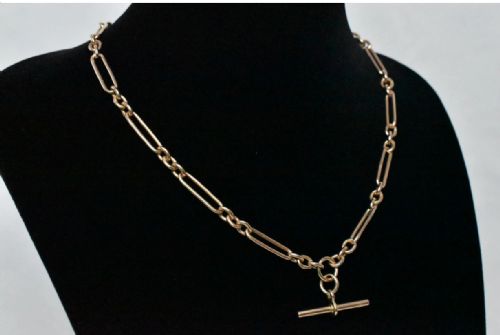


Gold Fob Necklace
A gold fob necklace carries the weight of practical timekeeping into modern wear, offering articulated links and suspended seals.
Gold Fob Necklace
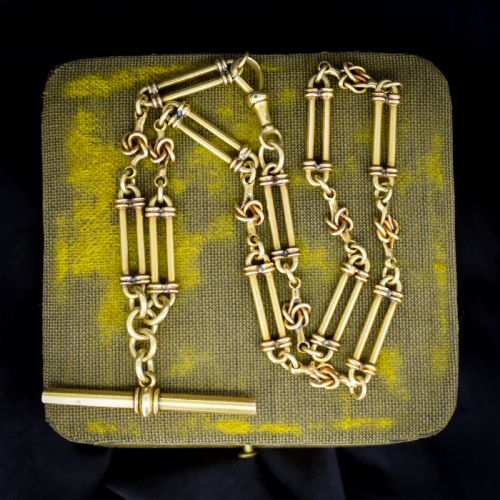
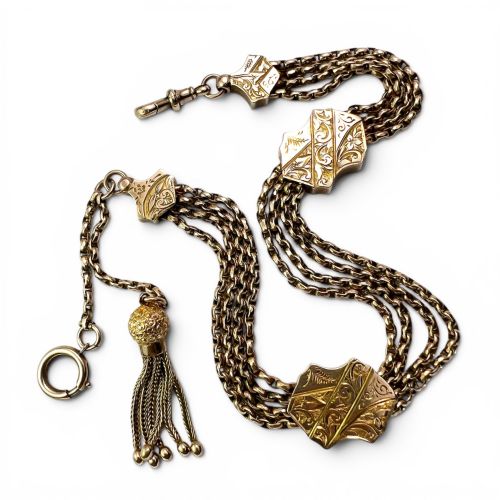
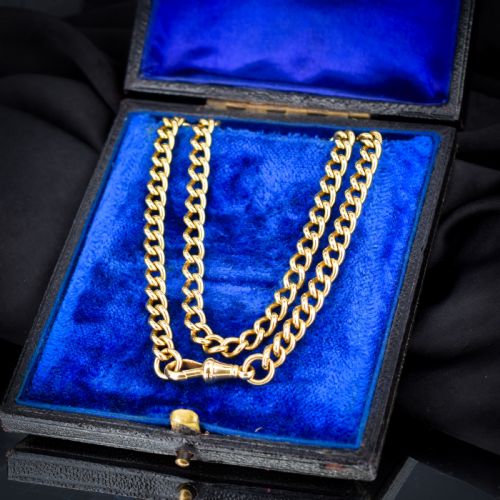
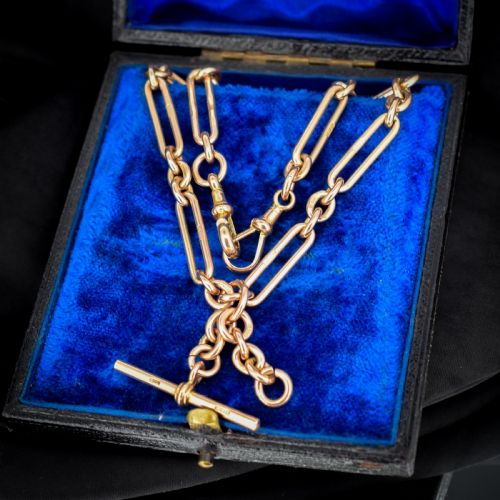
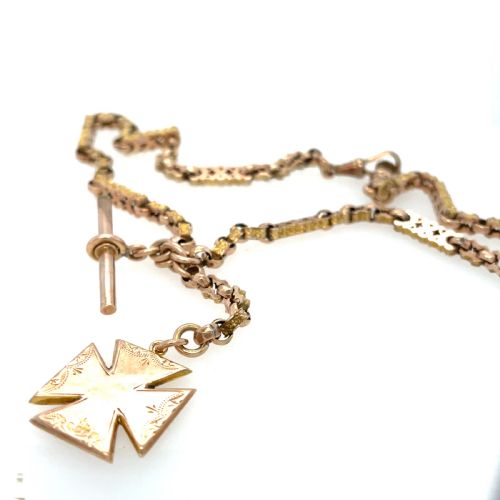
A gold fob necklace adapts nineteenth-century pocket watch chains and sovereign holders into neckwear, utilising forms such as Albert chains, curb links, and trombone links. These pieces merge practical utility with ornamental display through attached T-bars, dog clips, and dangling seals.
The Edwardian and Victorian periods dominate the available selection, frequently presenting 9ct rose gold or yellow gold alongside occasional 18ct gold variations. Buyers meet graduated pocket watch chains and shorter lengths adapted specifically to sit as necklaces.
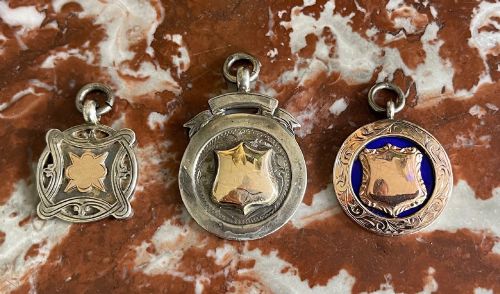
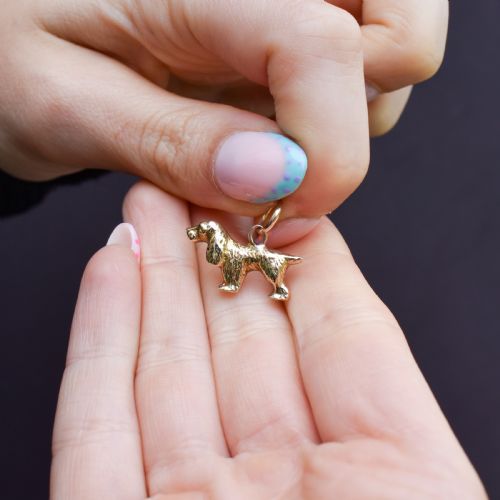
Pendants and charms including spinning fobs, carnelian seals, and animal charms often accompany the chain links. These configurations deliver substantial presence through weight and metalwork without losing their historical character.
Materials and construction
Goldsmiths constructed these chains predominantly from 9ct rose gold and yellow gold, with select examples fashioned in 18ct yellow gold and rolled gold. Hallmark stamps on links and dog clips frequently record the metal standard and assay office origin.
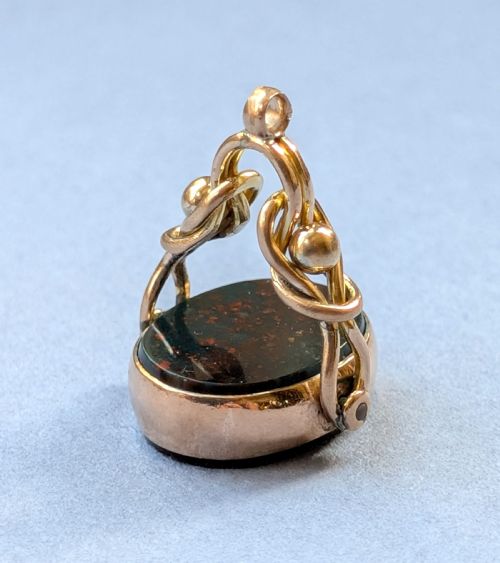
Link formation relies on traditional techniques, joining hollow or solid curb, trombone, and belcher patterns with secure dog clips and T-bars. Swivelling mechanisms allow spinning fobs to rotate within their settings, displaying dual stones or engraved seals.
Spaniels and teddy bears make occasional appearances among the fobs, proving that historical timekeepers had a playful side.
Distinctions in quality
The integrity of individual links and the sturdiness of swivel mechanisms dictate the structural standard of a chain. Solid gold construction holds up better over decades of wear than lighter or rolled gold alternatives.
The refinement of the decorative fob pendant, whether stone-set with agate and cornelian or engraved as a seal, elevates the piece. Maker marks and clear hallmarks add historical substance to the metalwork.
The Gold Fob Necklace Glossary
- Albert chain
- A heavy watch chain designed to secure a pocket watch to a waistcoat, now frequently worn as a necklace. These chains often feature graduated links and a T-bar.
- T-bar
- The crossbar attached to the centre of an Albert chain, originally used to button the chain through a waistcoat hole. On necklaces, it remains as a decorative drop.
- Dog clip
- A spring-loaded clasp shaped like a small clip, used to attach pocket watches, fobs, or charms securely to a chain. They provide a reliable fastening method.
- Spinning fob
- A pendant mounted on a swivel axis so the central stone or seal rotates freely. They typically display different hardstones or initials on each face.
- Trombone link
- A watch chain link style composed of alternating long rectangular bars and short circular rings. This geometric design offers distinct visual rhythm.
Gold Fob Necklace: Frequently Asked Questions
How do I wear a pocket watch chain as a necklace?
Pocket watch chains adapt readily to neckwear by fastening the dog clip directly to an opposing link or ring. The remaining T-bar and attached fob hang as a central pendant.
Shorter lengths sit comfortably as chokers, while longer graduated chains provide a lower drape across the collarbone.
What is the difference between 9ct and 18ct gold chains?
The distinction lies in the proportion of pure gold alloyed into the metal, with 18ct containing a higher gold content than 9ct. Both standards appear across different periods.
Nine-carat rose gold and yellow gold offer durability and warmth, while 18ct gold presents a richer colour.
What are spinning fobs used for?
Spinning fobs originally served as personal wax seals for correspondence or as decorative items displaying hardstones. The rotating axis allowed the wearer to show different faces.
Today, they act as focal pendants that add movement and historical detail to a gold chain.
How do I identify Victorian and Edwardian chains?
Victorian pieces often feature robust curb links, rich rose gold tones, and substantial seals or lockets. Edwardian examples frequently showcase lighter trombone links and refined proportions.
Assay office hallmarks and date letters stamped on the links provide precise verification of the manufacturing era.