




Gold Dog Necklace
A gold dog necklace uses a spring-loaded swivel fastener originally made to secure pocket watches to waistcoats.
Gold Dog Necklace
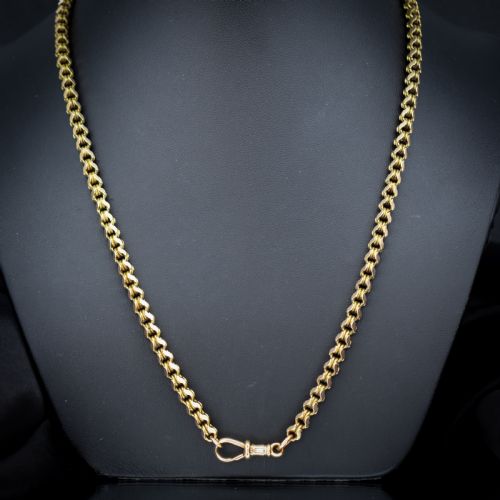
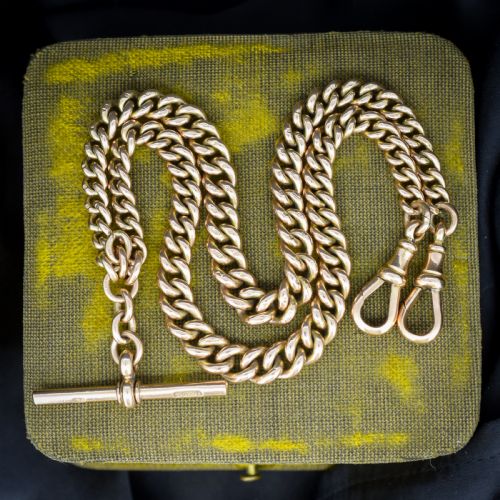
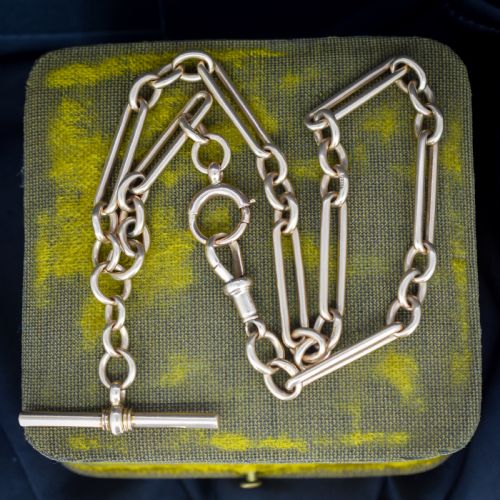
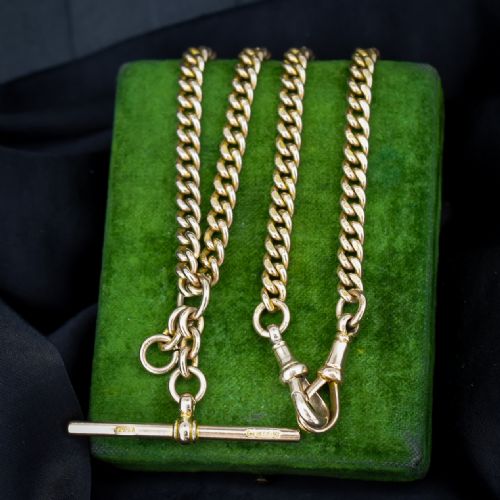
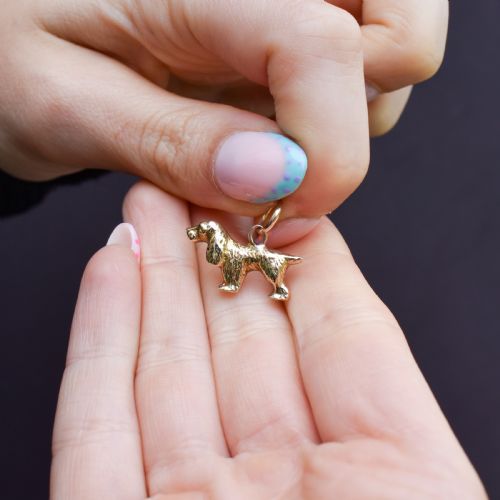
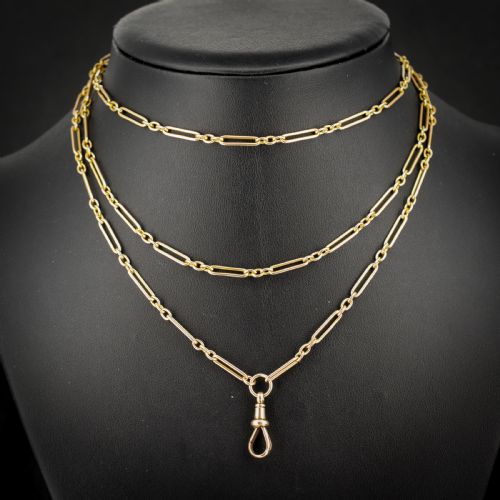
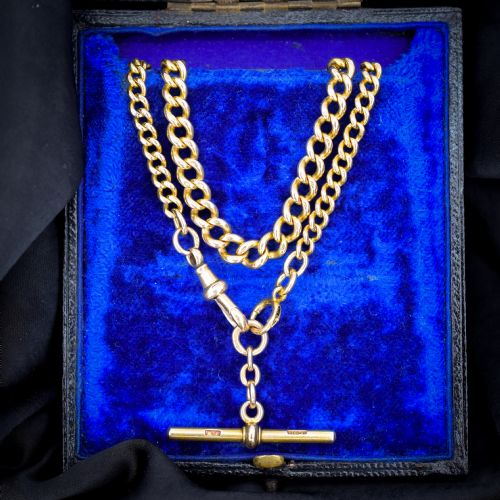
A gold dog necklace primarily takes the form of an antique watch chain, specifically Albert chains, guard chains and muff chains adapted for modern neckwear. These pieces emerge predominantly from Victorian and Edwardian workshops, alongside select mid-century charm pendants.
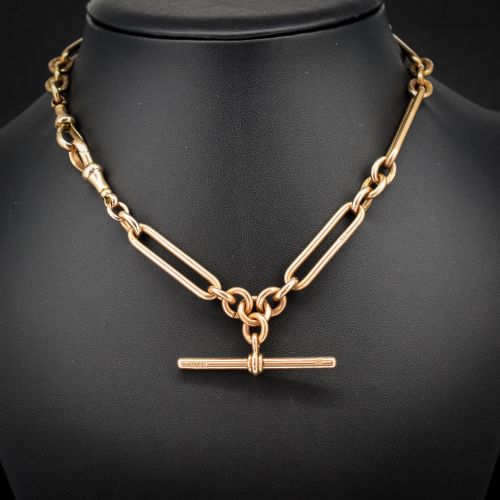
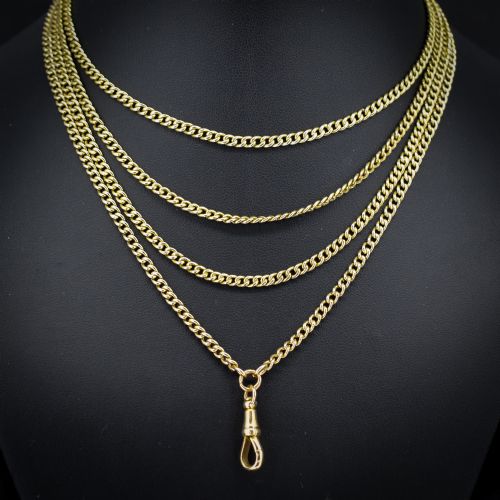
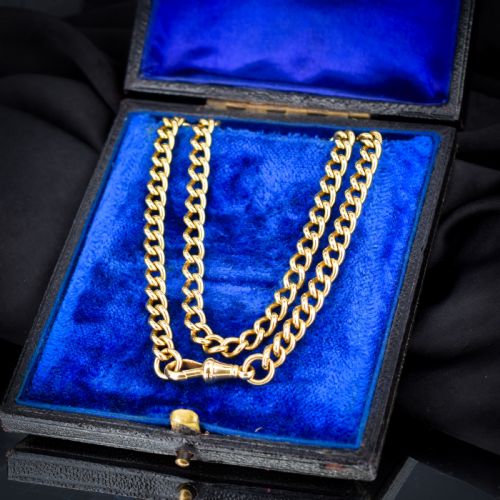
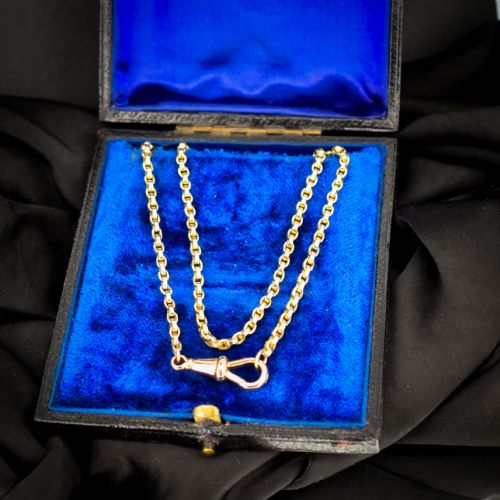
The defining characteristic of these items is the presence of one or more dog clips, which function as spring-loaded swivel clasps. Buyers encounter long guard chains measuring over fifty inches alongside shorter curb, trombone and fancy link chains designed to sit close to the collarbone.
Makers constructed these chains to hold pocket watches, fobs and charms, meaning the surviving pieces carry substantial links and robust fasteners built for daily utility. The selection spans standard yellow gold, rose gold, white gold and platinum across the nineteenth and twentieth centuries.
Materials and Construction
Goldsmiths worked primarily in nine-carat, fifteen-carat and eighteen-carat gold, utilising both yellow and rose hues depending on the prevailing preference of the decade. Platinum and rolled gold also appear, providing alternative weights and durability for long guard chains.
Links were formed by hand or through early mechanical stamping, creating distinct patterns such as curb, trombone, paper clip, belcher and fancy configurations. Each link connects to the next via soldered rings, while the dog clip mechanism incorporates an internal steel spring to maintain tension on the swivel thumbpiece.
Guard chains were originally long enough to keep a lady's hand muff safely tethered to her wrist during chilly morning carriage rides.
Quality Variations
The grade of gold directly influences the richness of colour and the inherent value of the piece, with fifteen-carat and eighteen-carat examples sitting above standard nine-carat versions. Heavier chains display denser link construction and minimal wear at the pivot points where links rub together.
The integrity of the dog clip mechanism dictates everyday utility, as worn springs fail to snap shut securely. Original hallmarks stamped on individual links or the tongue of the dog clip indicate official assay office testing, anchoring the date and origin with greater certainty.
The Gold Dog Necklace Glossary
- Dog clip
- A spring-loaded swivel clasp featuring a lever-operated tongue that retracts into the body to attach to a loop or ring. This mechanism forms the primary fastener on watch chains and guard chains.
- Albert chain
- A heavy watch chain designed to secure a pocket watch in a waistcoat pocket, featuring a T-bar at one end and a dog clip at the other. Double Albert versions use two drops meeting at a central connector.
- Guard chain
- An exceptionally long chain worn looped around the neck, often measuring fifty inches or more to protect muff garments or pocket watches from loss. They frequently incorporate sliding decorative elements.
- Trombone link
- A watch chain link pattern consisting of alternating small circular links and elongated rectangular bar links. This style gained popularity during the late Victorian and Edwardian eras.
- T-bar
- A short transverse metal bar attached to the centre of an Albert chain, originally slipped through a buttonhole to anchor a pocket watch securely.
Gold Dog Necklace: Frequently Asked Questions
What is a dog clip on a chain?
A dog clip is a spring-loaded swivel clasp that acts as the primary fastener on these antique chains. It allows the wearer to attach charms, pendants or pocket watches securely.
The mechanism uses a thumb lever to open a retractable gate, which snaps shut automatically when released. This design ensures items remain fastened during daily movement.
How do you wear a long guard chain?
Long guard chains measuring fifty inches or more are typically doubled or tripled around the neck to sit comfortably. They provide versatile styling options depending on the desired drop length.
Alternatively, these chains can be worn as a single long strand or wrapped with the dog clip secured to a belt loop. The substantial length accommodates various layering preferences.
What is the difference between an Albert chain and a standard necklace?
An Albert chain was originally engineered to anchor a pocket watch, featuring structural elements like a T-bar and dog clips. Standard necklaces prioritize decorative wear without utility fasteners.
These functional components give antique watch chains a heavier weight and a distinct industrial aesthetic. Collectors value them today as statement necklaces that showcase Victorian metalworking.
How can you tell the gold purity of these chains?
Gold purity is identified through hallmarks stamped directly onto the links, dog clips or T-bars. British pieces often display carat stamps such as nine carat, fifteen carat or eighteen carat alongside assay office marks.
Rolled gold pieces consist of a thin gold layer bonded to a base metal core rather than solid precious metal. Examining these small stamped marks reveals the exact composition of the metal.