


Gold Aquamarine Jewellery
Gold aquamarine jewellery captures the cool, pale blue of the beryl stone set in warm or bright precious metals across several historic eras.
Gold Aquamarine Jewellery
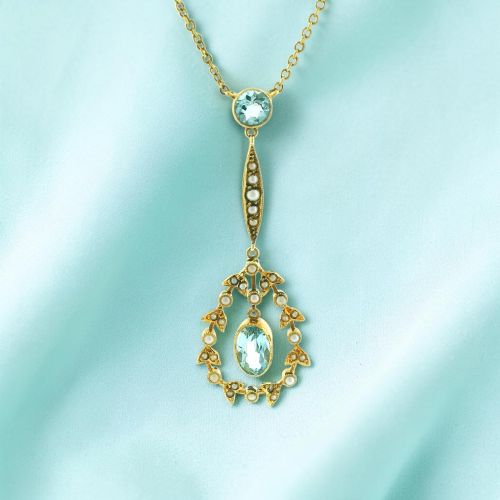
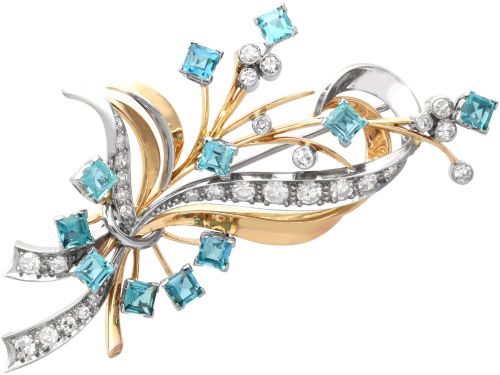
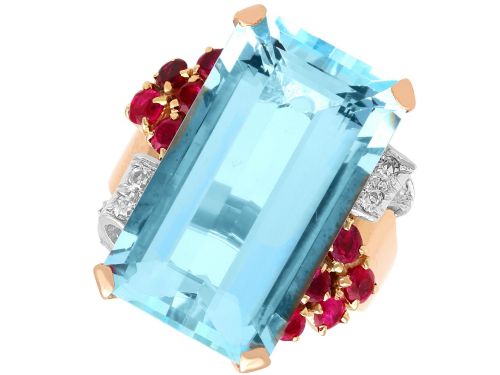
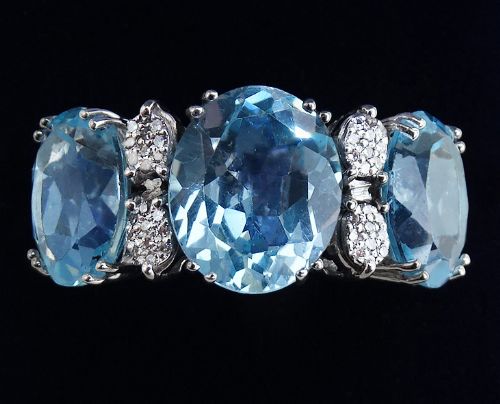
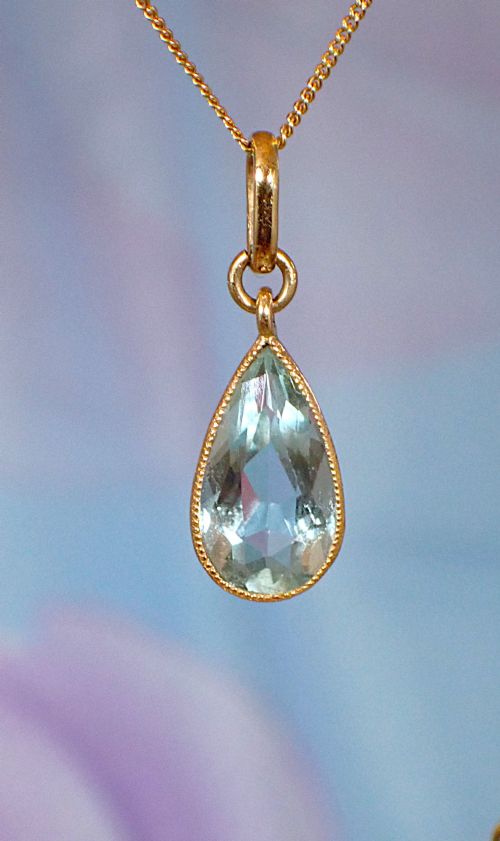
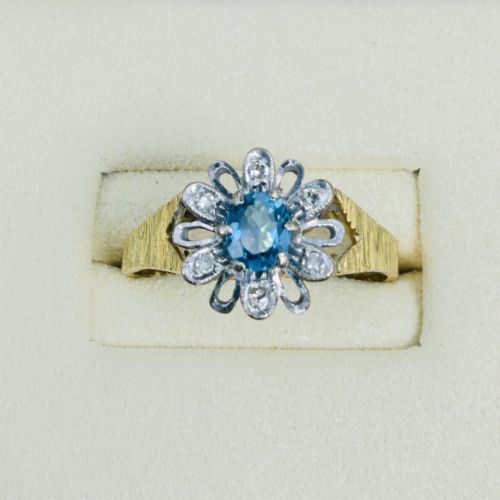
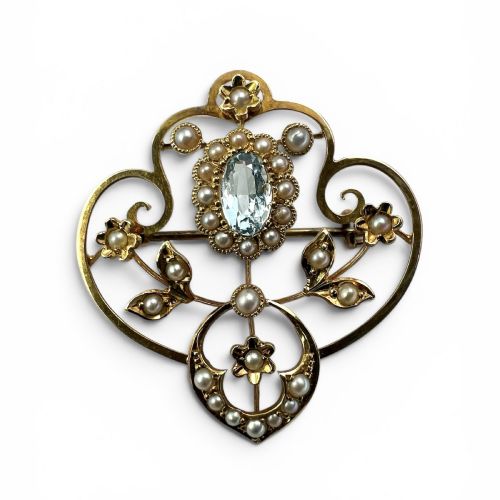
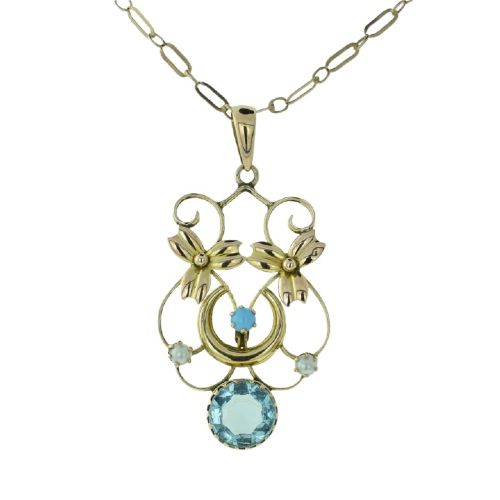
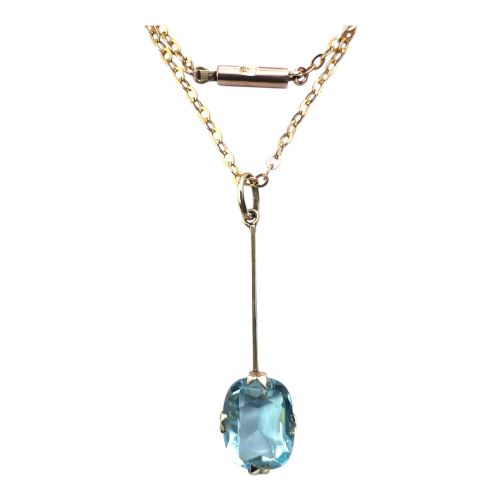
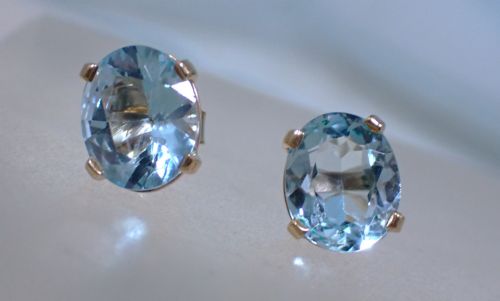
Gold aquamarine jewellery encompasses rings, pendants, earrings, necklaces, and brooches spanning from the Victorian period through the Edwardian era, Art Deco, and into the mid-century decades. Buyers searching this phrase will find a diverse selection of pieces ranging from delicate floral motifs to substantial cocktail rings and sprays.
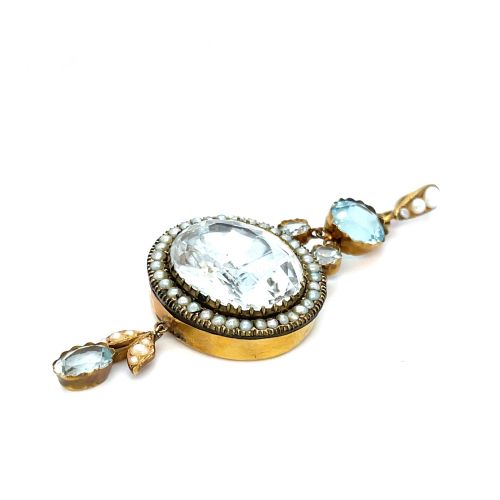
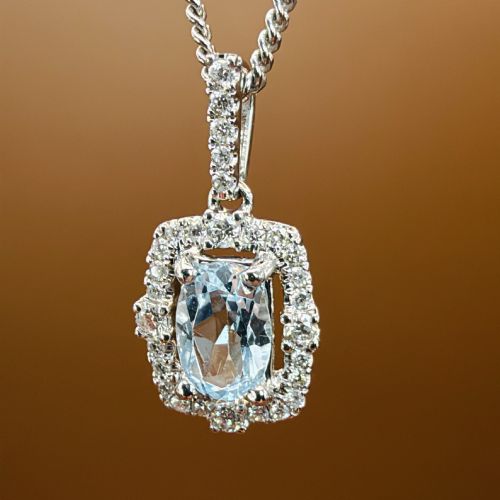
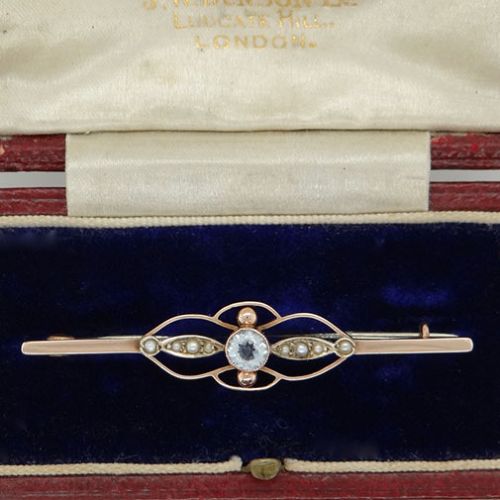
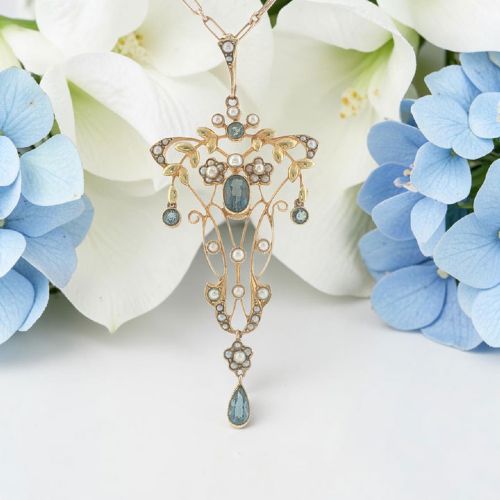
Edwardian and Victorian examples frequently pair the pale beryl with seed pearls or small diamonds in yellow or rose gold settings. Later mid-century designs shift towards white gold and platinum, often favouring larger, dramatic step-cut aquamarines flanked by minimal diamond accents.
Materials and construction
Goldsmiths utilised varying purities of yellow, rose, and white gold, alongside platinum and palladium, to mount the stones. Aquamarines are predominantly oval, pear, or square cut, occasionally supported by foil backs in older pieces or accented with secondary gems like tourmaline, demantoid garnet, and sapphire.
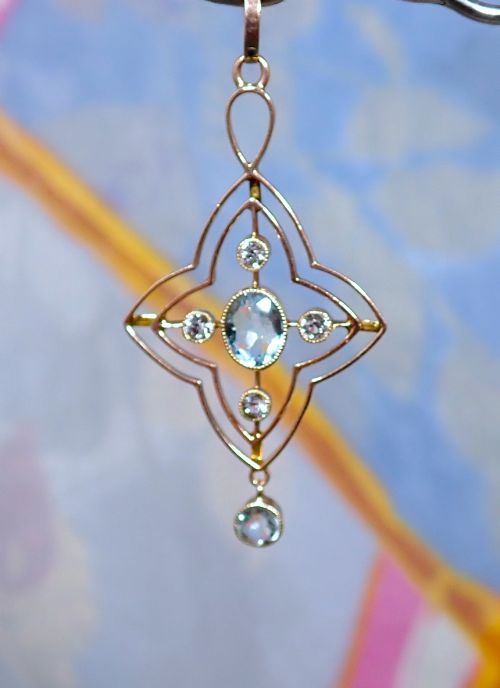
Edwardian and Art Nouveau workshops relied on intricate millegrain edges and openwork wire frames, whereas mid-century makers focused attention on substantial claw settings and sculptural spray mounts designed to showcase oversized central beryls.
Gold Aquamarine Jewellery Retail Price Guide 2026
Typical asking prices for gold aquamarine jewellery among the pieces listed under this phrase on Sellingantiques today, from the lower quarter to the upper quarter. They describe what is for sale here now, not the wider market.
Listings feature yellow, rose, and white gold alongside platinum, paired with periods stretching from Victorian times through the 1960s.
Judging the work
Quality rests upon the depth of the stone's saturation, the clarity of the crystal, and the crispness of the metalwork. Finer examples display a clean, even pale blue without distracting inclusions, set securely within hand-finished mounts that preserve structural integrity.
The sophistication of the design and the harmony between the metal colour and the beryl elevate a piece from a simple commercial item to a refined collector's object.
C'est Laudier
The Gold Aquamarine Jewellery Glossary
- Aquamarine
- A blue-to-greenish-blue variety of beryl utilised extensively in fine jewellery. Its name derives from the Latin for seawater.
- Millegrain
- A decorative jewellery technique featuring a line of tiny raised metal beads along the edges of a setting. It was particularly popular during the Edwardian and Art Deco periods.
- Seed pearl
- A very small, naturally occurring pearl often drilled and threaded into clusters or floral drop arrangements on antique pieces. They add a delicate texture adjacent to faceted stones.
- Lavalier
- A pendant featuring a dangling component suspended from a chain, frequently seen in Edwardian and Art Nouveau designs. These pieces often incorporate pearls and coloured gemstones alongside aquamarine.
- Spray brooch
- A pinned ornament shaped to resemble a floral spray or plant branch. In mid-century examples, these showcase prominent central stones surrounded by clustered metal leaves.
Gold Aquamarine Jewellery: Frequently Asked Questions
How do I date my aquamarine piece?
Examine the metal purity marks, the cut of the stones, and the overall manufacturing style. Edwardian pieces often use low-carat yellow gold with delicate millegrain, while mid-century items favour heavier white gold or platinum settings with large step-cut stones.
Consulting hallmarks and comparing the mount style to known design eras will help narrow down the decade of production.
Are these stones natural?
Most antique and vintage aquamarines are natural beryl, though treatment practices evolved over the twentieth century. Period pieces from the Victorian and Edwardian eras feature genuine mined gems.
Examining the internal inclusions under magnification can reveal natural crystal growth patterns typical of older stones.
How should I clean antique gold jewellery?
Use a soft cloth dampened with warm soapy water to gently wipe the metal and stone surfaces. Avoid harsh chemical dips or ultrasonic cleaners, especially for pieces containing pearls or foil backs.
Pat the item dry thoroughly with a lint-free cloth before storing it safely in a lined box.
Can I wear an aquamarine ring daily?
Aquamarine is a durable gemstone measuring around eight on the Mohs hardness scale, making it generally suitable for regular wear. However, antique settings require care to avoid bending fragile claws or damaging delicate seed pearls.
Removing your ring during heavy manual tasks will protect both the gold mount and the central beryl from impact.