

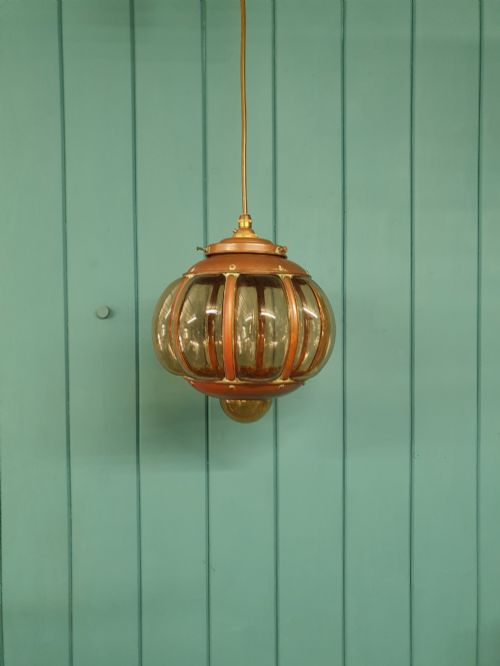


Globe Pendant Light
These globe pendant light fixtures bring spherical illumination and period character to interiors, drawing on designs from the Edwardian era through the nineteen-thirties.
Globe Pendant Light
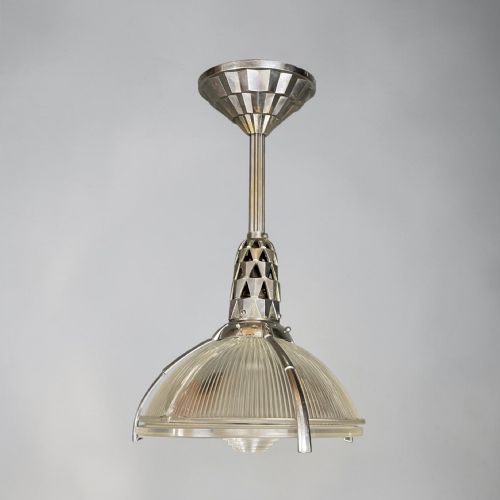
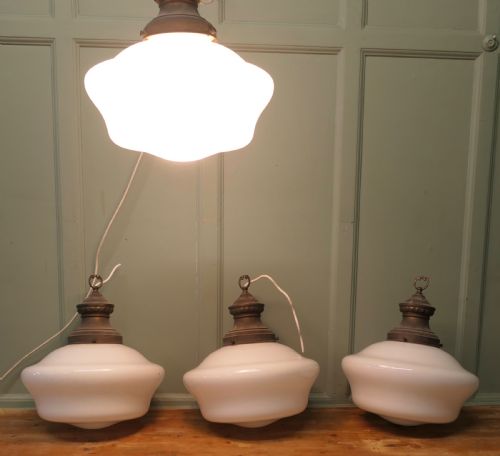
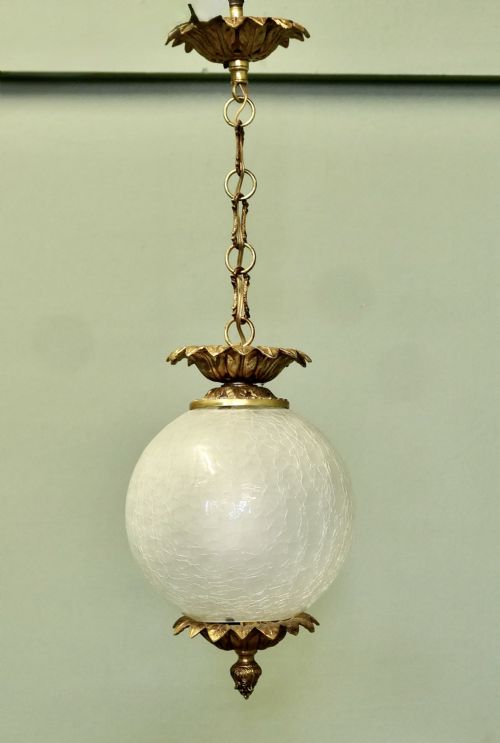
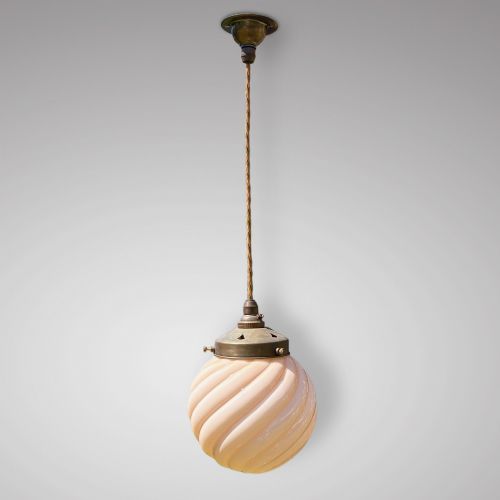
A globe pendant light provides suspended spherical illumination, originating primarily in periods such as the Edwardian era, the nineteen-twenties, and the nineteen-thirties. You will most frequently encounter glass globes paired with brass, chrome, or metal suspension hardware across various domestic and institutional settings.
The selection ranges from industrial workshop fittings and nautical fixtures to refined Art Deco hallway lights and French opaline designs. These ceiling lights span diverse aesthetic movements including Art Nouveau, Gothic Revival, and industrial utilitarianism.
How they were made
The shades rely on blown or pressed glass techniques, utilising opaline, frosted, smoked, moonstone, and prismatic glass to diffuse light evenly. Metal components incorporate brass, copper, nickel plated metal, bronze, and chrome to form the galleries, chains, and ceiling roses.
Construction methods vary from robust industrial framing and caged designs to delicate etched crystal and gilt bronze mounts produced by specialised makers and metalworkers.
Globe Pendant Light Retail Price Guide 2026
Typical asking prices for globe pendant light among the pieces listed under this phrase on Sellingantiques today, from the lower quarter to the upper quarter. They describe what is for sale here now, not the wider market.
One unexpected listing strays into jewellery with a set of rock crystal drop earrings.
What varies in quality
Quality rests upon the weight and clarity of the glass, the precision of the metal casting, and the integrity of original surface finishes. Heavier opaline or prismatic shades and substantial metal galleries distinguish finer examples from standard commercial production.
The presence of maker attribution, specialised etching, or complex multi-tier framing elevates an individual piece above simpler utilitarian lighting.
Perry & Co·Émile-Jacques Ruhlmann
The Globe Pendant Light Glossary
- Opaline glass
- A milky, semi-translucent glass developed to soften light output without significant glare. It is frequently found in Edwardian and Art Deco lighting.
- Prismatic glass
- Glass moulded with intricate geometric ribs or prisms designed to refract and maximise light distribution. This technique is prominent in early twentieth-century industrial lighting.
- Gallery
- The metal collar or ring that grips the upper rim of a glass shade and connects it to the suspension rod or chain.
- Gilt bronze
- Bronze coated with a thin layer of gold or gold-colored alloy to impart a rich decorative finish. It appears on more ornate Victorian and Edwardian hanging lanterns.
Globe Pendant Light: Frequently Asked Questions
How do I hang a globe pendant light?
Suspension typically involves attaching the ceiling rose to a secure joist and connecting the internal wiring to the main electrical supply. The drop height is adjusted using the supplied chain, rod, or flex.
Professional installation by a qualified electrician is strongly recommended to ensure the weight of the glass and metal components is safely supported.
What rooms suit a globe pendant light?
These fixtures suit hallways, kitchens, dining spaces, and high-ceilinged rooms where a central spherical light source provides balanced illumination. Their varied diameters accommodate both compact corridors and expansive living areas.
Matching the scale of the glass globe to the proportions of the room ensures the fitting complements the surrounding architecture.
How do I clean an opaline glass globe?
Remove the glass shade from its metal gallery if possible, then wash it gently in lukewarm water with mild soap. Avoid abrasive scourers that can scratch the delicate surface.
Dry the glass thoroughly with a lint-free cloth before reattaching it to the suspension hardware.