




Globe Ceiling Light
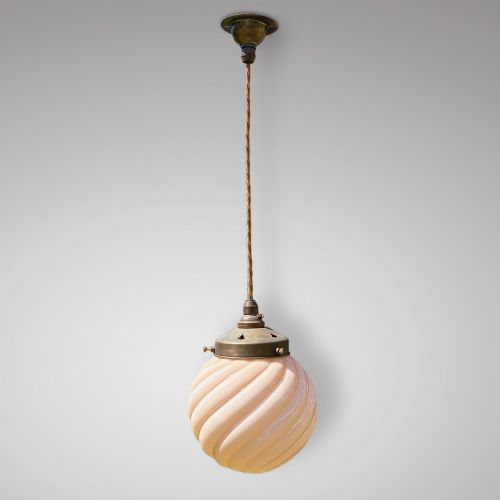
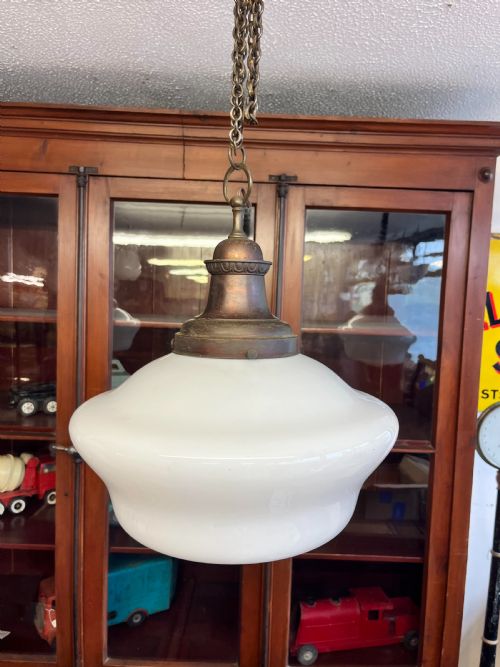
A globe ceiling light brings clean symmetry and balanced illumination to a room, offering functional charm from the Victorian, Edwardian and Art Deco periods.
Globe Ceiling Light
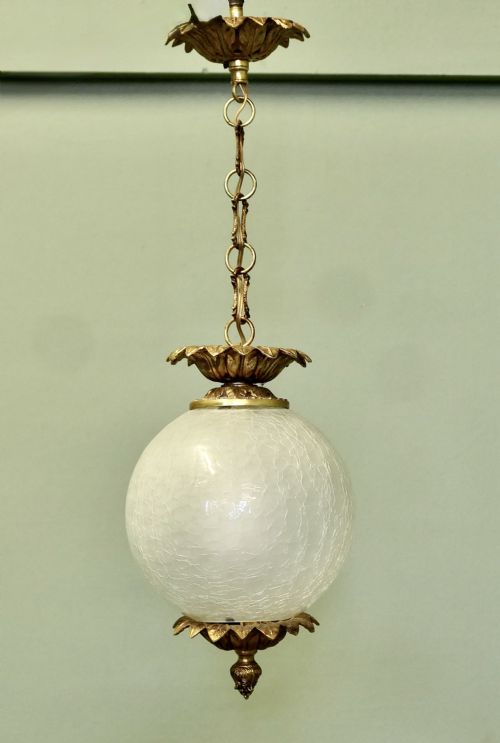
A globe ceiling light covers a wide spectrum of historical domestic and industrial lighting, spanning Victorian lanterns, Edwardian cut crystal, and Art Deco opaline designs. These spherical fixtures hang from chains, cords or direct mounts, casting diffuse illumination across hallways, parlours and larger rooms.
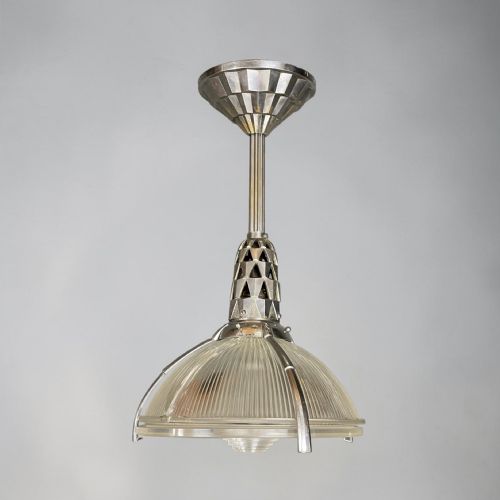
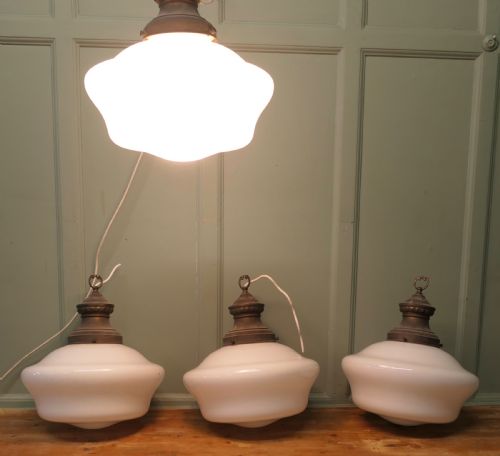
The version most commonly met on this page is the early twentieth century Art Deco pendant light featuring smooth opaline or frosted glass suspended by chrome or bronze fittings. Alongside these sit utilitarian industrial chapel lights, nautical brass fixtures, and prismatic glass shades designed for optimal light dispersion.
Origins range across English, French and Italian workshops, taking in distinct regional tastes from industrial utilitarianism to decorative domestic elegance. Whether expressed through simple white glass globes or elaborate bronze frames, each piece demonstrates the period's commitment to rounded, harmonious illumination.
Materials and construction methods
Makers shaped glass through blowing, moulding and pressing, producing smooth opaline, moonstone, and heavily textured prismatic surfaces that soften harsh bulb glare. Metal components relied on brass, copper, chrome, and nickel plated iron to form galleries, chains, and decorative mountings.
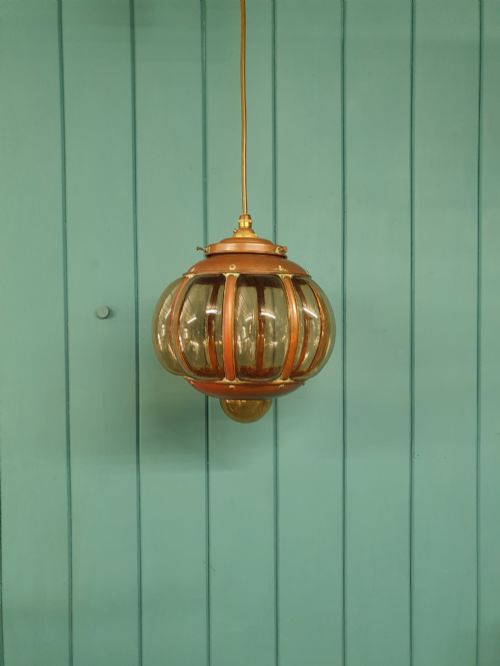
Techniques combined artisan glasswork with robust metal engineering, often pairing delicate etched crystal or green glass shades with heavy cast bronze or brass frameworks. Industrial variants utilised durable iron and caged designs intended for sustained functional use in commercial and institutional spaces.
Some Edwardian hallways were once greeted by fish scale shades, proving that even Victorian engineers enjoyed a touch of aquatic texture.
Distinctions in quality and execution
Quality rests in the weight and purity of the glass, where dense opaline or thick hand-pressed crystal outlasts thin, brittle alternatives. The sophistication of the metal hardware - such as heavy cast brass galleries, finely chased bronze, and substantial chrome fittings - separates standard utility pieces from finer commissions.
Proportion and the integrity of the original hanging system dictate the overall coherence of the fixture. Matching galleries to appropriate shade diameters and retaining period fixings elevates an example far above later assembled or mismatched counterparts.
Perry And Co·Émile-Jacques Ruhlmann
The Globe Ceiling Light Glossary
- Opaline glass
- A milky, translucent glass created by adding bone ash or other agents to the molten batch. It diffuses light evenly without harsh glare.
- Holophane
- A proprietary pressed glass featuring external prismatic ribs designed to refract and direct light efficiently. These optics became standard in industrial and Edwardian interiors.
- Gallery
- The metal collar or ring that grips the top of a glass shade and connects it to the suspension rod or chain. Original galleries often bear maker stamps.
- Pendant light
- A hanging luminaire suspended from the ceiling by a single cord, chain or metal rod. It typically centres illumination over tables, hallways or stairwells.
- Prismatic
- A faceted glass surface designed to split and scatter light rays. This technique maximises illumination while obscuring the bulb within.
Globe Ceiling Light: Frequently Asked Questions
How do I hang a heavy glass globe?
Heavier glass shades require direct ceiling joist anchoring and a properly rated brass or bronze gallery to support the downward load safely.
Professional installation using a weight-tested hook and chain ensures the historic components bear the stress without damaging the ceiling rose.
Are these lights rewired for modern use?
Many surviving examples retain period metalwork and galleries while receiving updated internal wiring to meet contemporary electrical safety standards.
Rewiring preserves the exterior historical appearance while ensuring the internal lamp holder and cabling function reliably in modern homes.
What rooms suit a globe pendant?
Spherical fixtures provide balanced 360-degree illumination that works well in confined circulation spaces like hallways and landings.
Larger scale opaline or prismatic globes also anchor high-ceilinged rooms, providing both practical task light and architectural presence.
How do I distinguish Edwardian from Art Deco lights?
Edwardian examples tend to feature cut crystal, intricate brass galleries, and traditional nautical or Gothic revival detailing.
Art Deco pieces favour streamlined chrome, smooth opaline glass, and simplified geometric forms that reflect the aesthetic shifts of the interwar decades.