

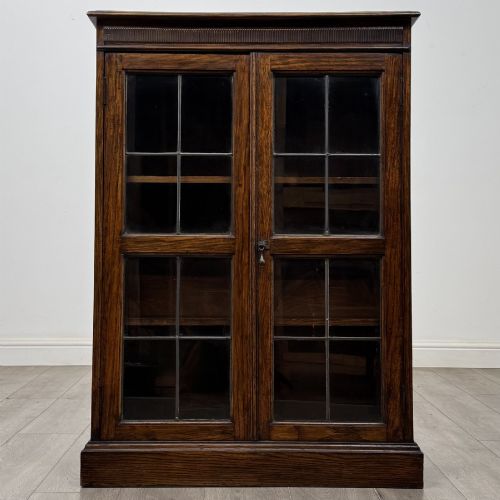
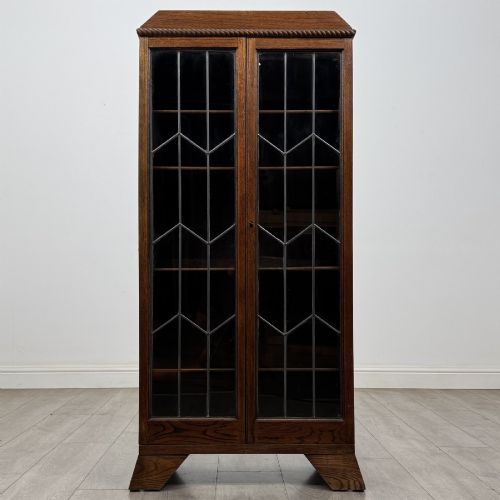
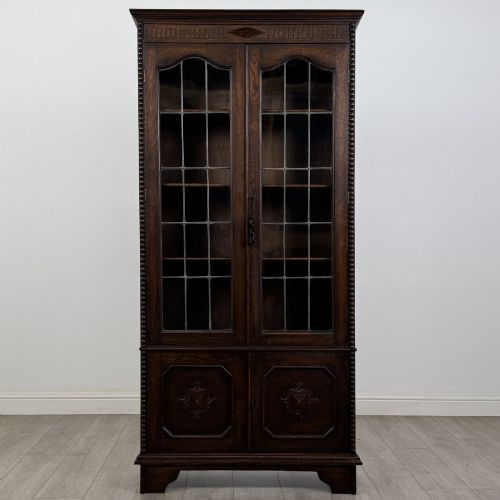
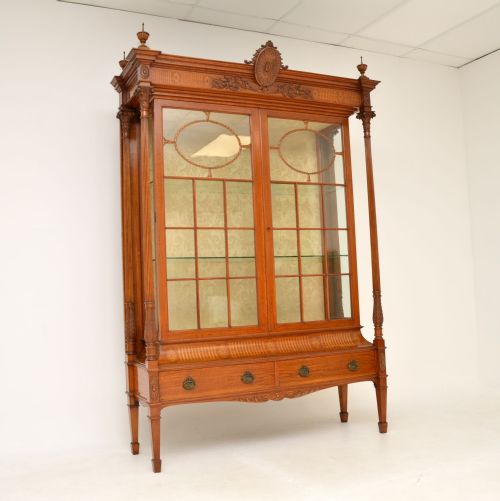
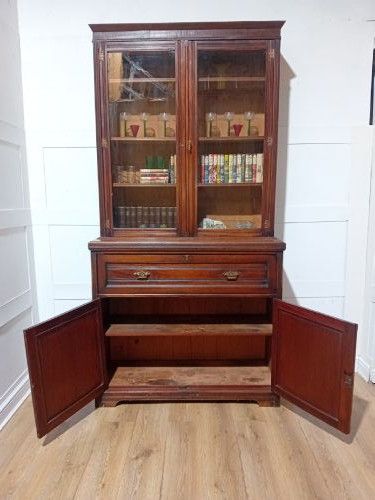
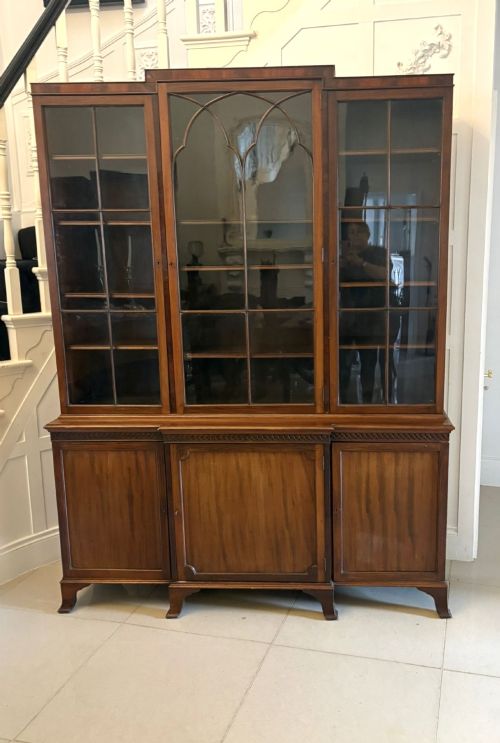
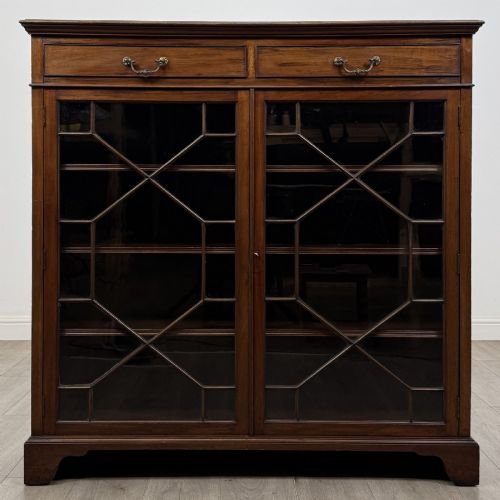
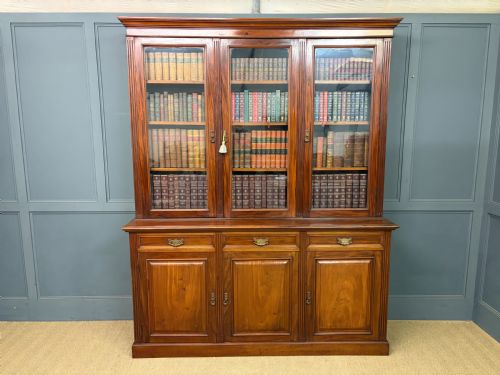
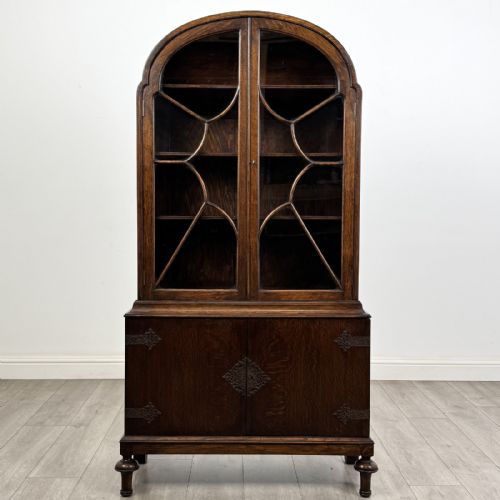
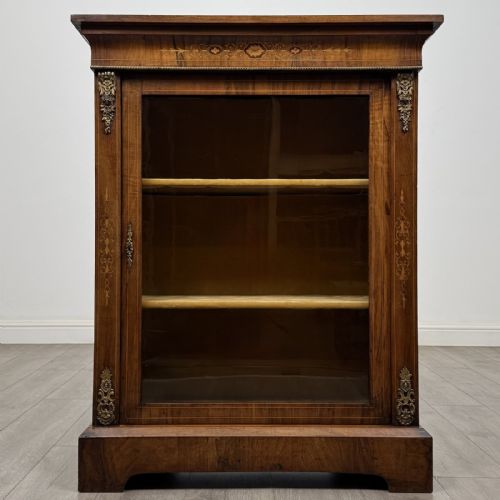
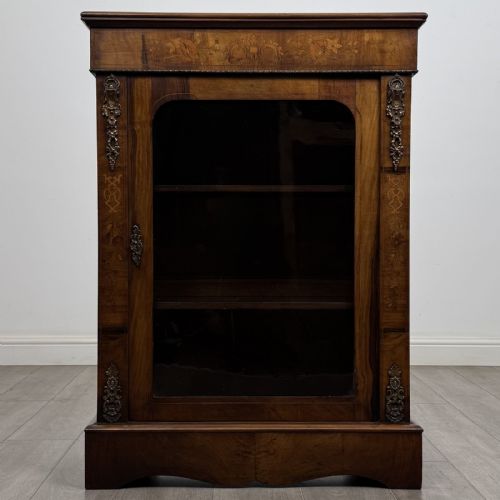
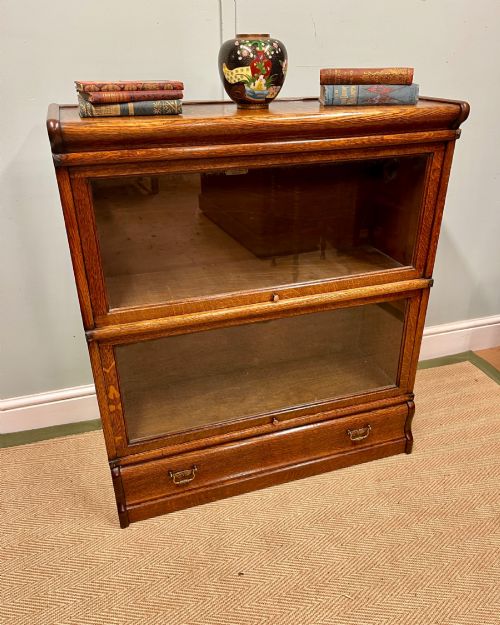
Glazed Bookcase with Doors
A glazed bookcase with doors provides a dust-free home for a library while displaying fine bindings behind transparent panes.
Glazed Bookcase with Doors
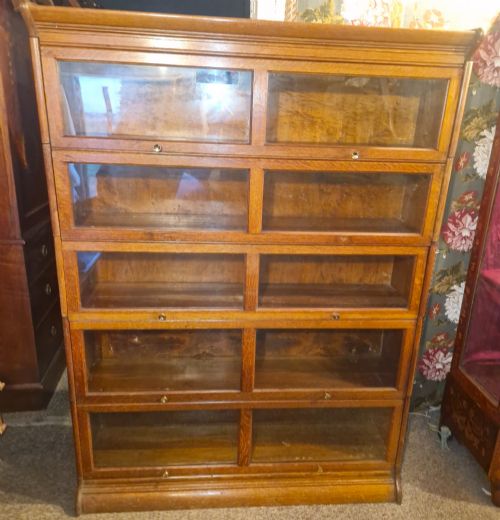
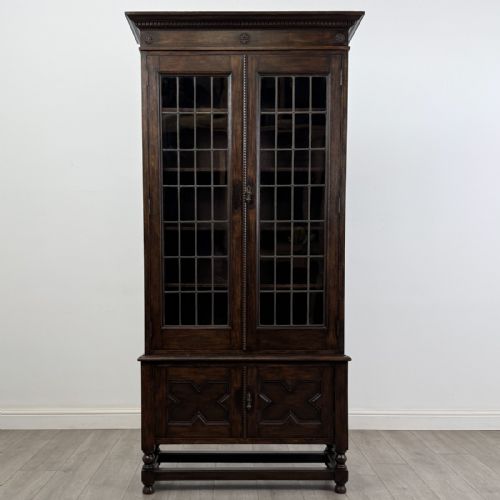
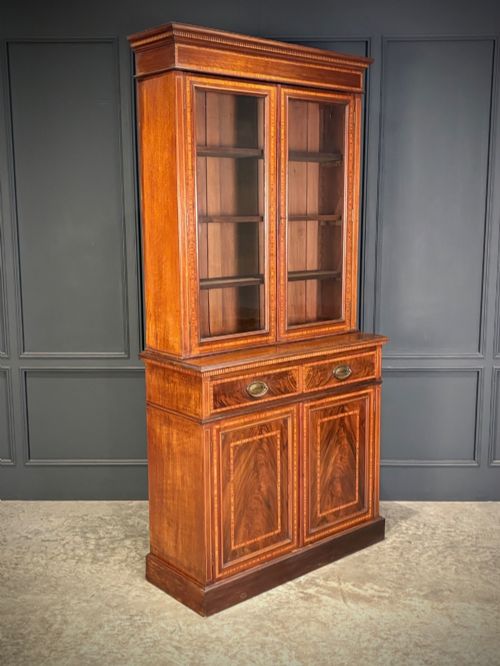
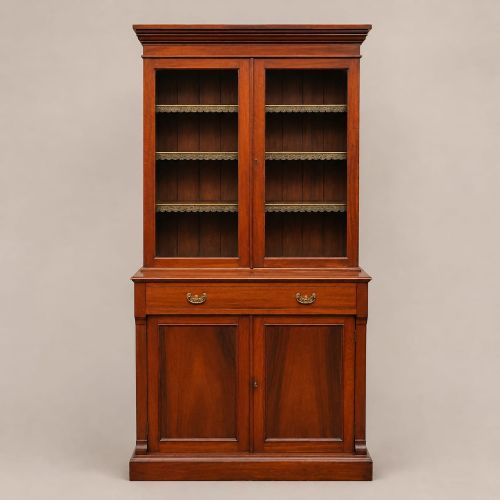
A glazed bookcase with doors brings together centuries of cabinet-making, spanning the formal proportions of the Georgian period through the substantial designs of the Victorian era and into lighter Edwardian interpretations. Buyers encounter forms ranging from freestanding library pieces and bureau bookcases with fitted interiors to sectional barrister variants and display cabinets.
The material vocabulary relies heavily on mahogany, oak, and walnut, punctuated by satinwood, rosewood, and pine. Structural elements often incorporate glass and brass fittings, while specific examples show leaded details or hand-painted panels.
Stylistic influences stretch from Regency elegance and Jacobean Revival to Arts and Crafts simplicity and 1920s commercial utility. Pieces serve practical domestic storage alongside the exhibition of china and books.
Materials and Technique
Construction draws on timber selection, pairing solid woods like oak and pine with figured mahogany and walnut veneers. Cabinet-makers utilised traditional joinery to house adjustable shelving and internal drawers, supporting heavy volumes without sagging.
Glazing techniques involve framing transparent panes in timber doors, occasionally utilising lead or brass mounts to secure the glass. Surface finishes range from wax and French polish to painted interiors, highlighting the natural grain of the wood.
Glazed Bookcase with Doors Retail Price Guide 2026
Typical asking prices for glazed bookcase with doors among the pieces listed under this phrase on Sellingantiques today, from the lower quarter to the upper quarter. They describe what is for sale here now, not the wider market.
Some school libraries relied on these heavy oak cases to survive decades of enthusiastic readers.
Judging Quality
The standard of a glazed bookcase with doors rests upon timber selection and the precision of the cabinet-making. Figured veneers, delicate inlay work, and well-proportioned cornices elevate a piece above utilitarian school or commercial examples.
Original glass panes, functioning brass hardware, and smooth door operation indicate superior preservation. The integration of fitted secretaire drawers or specialised sectional mechanisms distinguishes workshop skill from standard production.
Macey·Tudor and Burrey
The Glazed Bookcase with Doors Glossary
- Secretaire bookcase
- A hybrid furniture form incorporating a pull-down writing drawer with a fitted interior beneath upper glazed shelving.
- Globe Wernicke
- A patented sectional barrister bookcase system comprising stackable modular glazed units with up and over doors.
- Inlay
- The technique of embedding contrasting pieces of wood or metal into a solid timber surface to create decorative patterns.
- Cornice
- The decorative moulded projection that crowns the upper edge of a tall bookcase cabinet.
Glazed Bookcase with Doors: Frequently Asked Questions
What is a sectional bookcase?
A sectional bookcase consists of stackable modular tiers with individual up and over glass doors. This design allows units to be added or rearranged as a library grows.
Originally developed for offices and barristers, these pieces offer practical modular storage while keeping books visible and protected from dust.
How do I care for antique glass?
Antique glass requires gentle cleaning with standard non-ammonia window cleaner applied to a soft cloth rather than sprayed directly onto the surface. This prevents moisture from seeping into fragile wooden frames or damaging old putty.
Old panes often display minor bubbles and ripples which should be preserved alongside the original timber.
Where should I place my bookcase?
Bookcases with doors need placement away from direct sunlight and strong heat sources to prevent timber warping and veneer cracking. Stable indoor humidity keeps old mahogany and oak stable.
Allow enough clearance around the doors so they swing open fully without catching on surrounding furniture or skirting boards.
How do I date a bookcase?
Dating relies on observing construction methods, hardware, and stylistic details such as Regency curves or Edwardian painted satinwood. Secondary timbers inside drawers and backboards offer further clues to age.
Consulting the overarching period characteristics helps narrow down whether a piece belongs to the Georgian, Victorian, or later eras.