
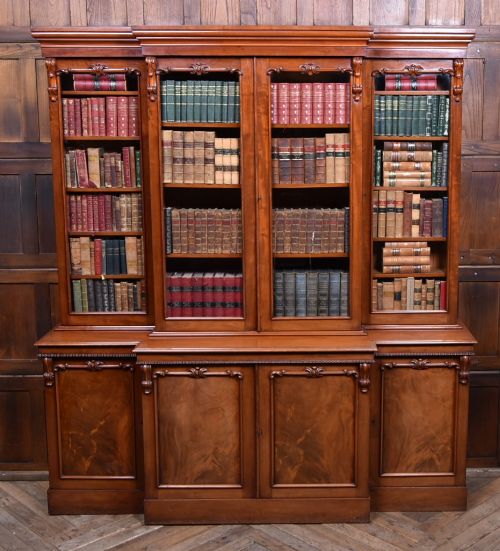
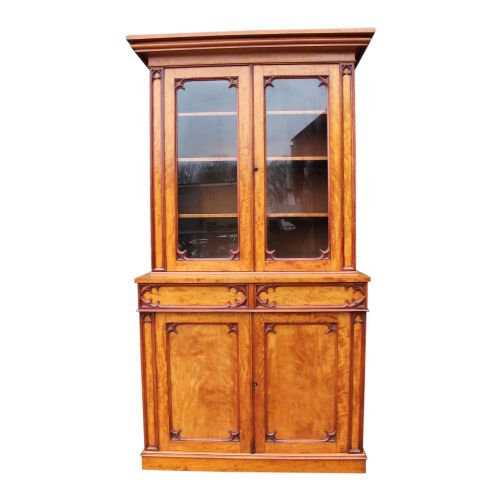
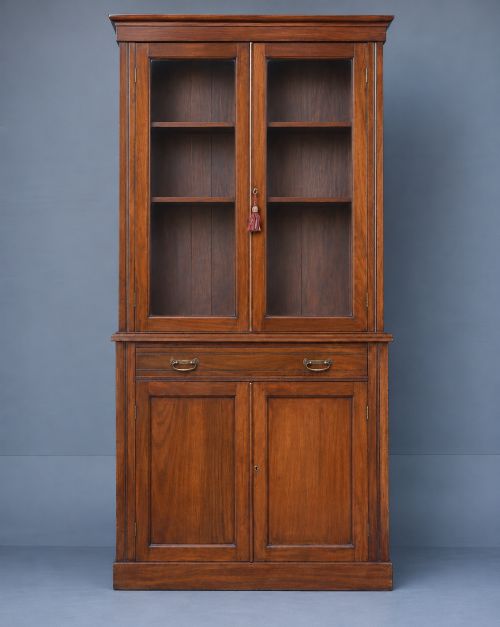
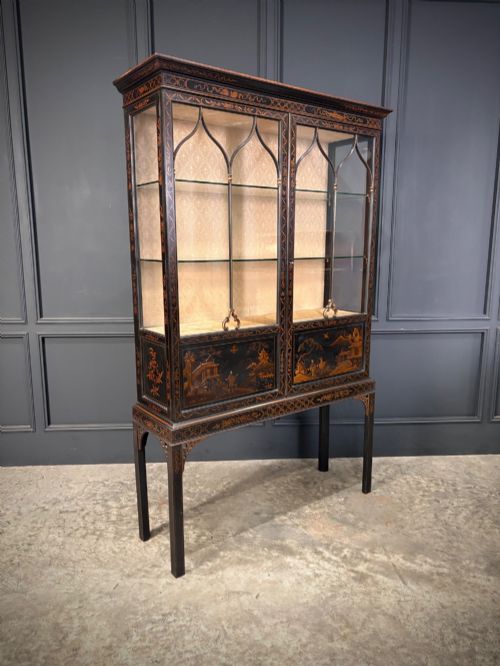
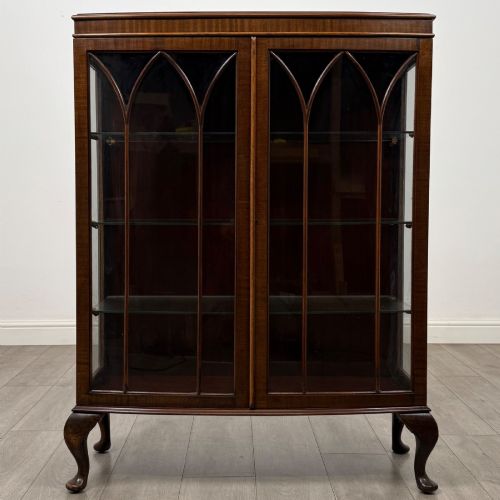
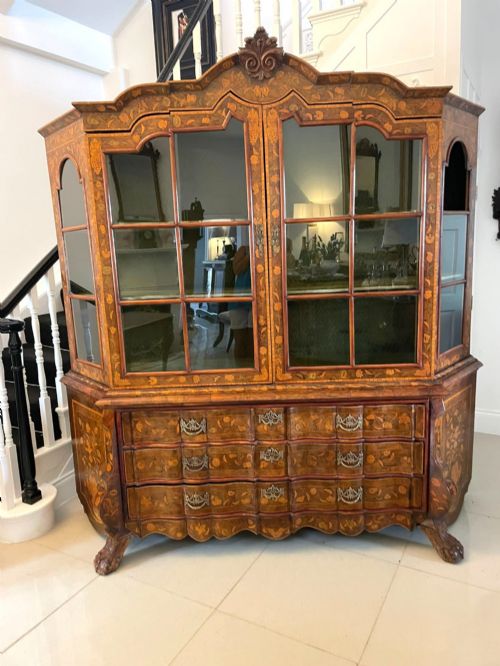
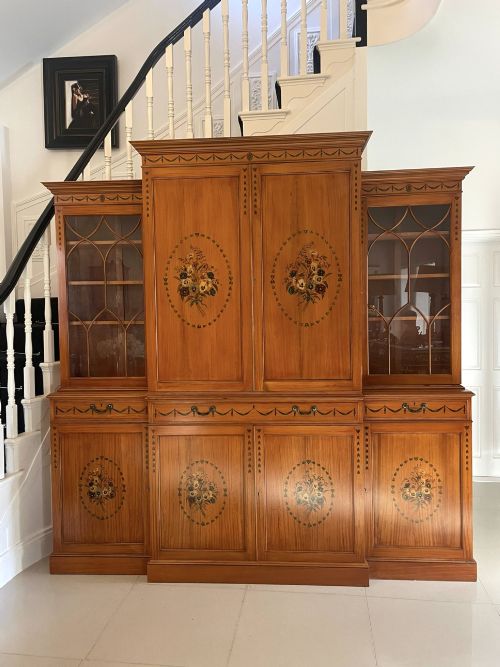
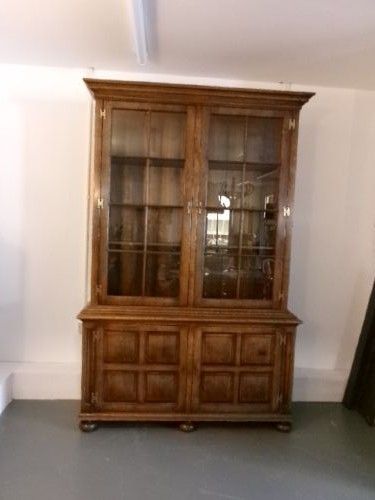
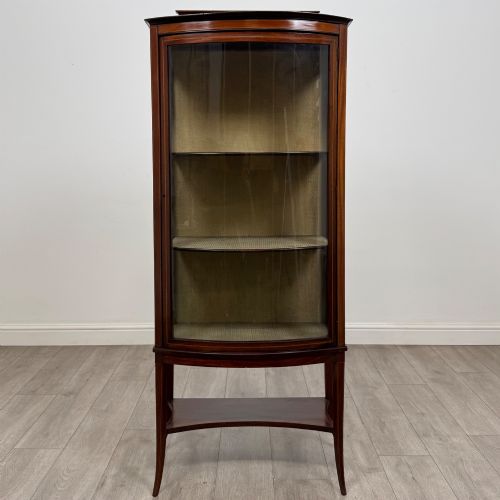
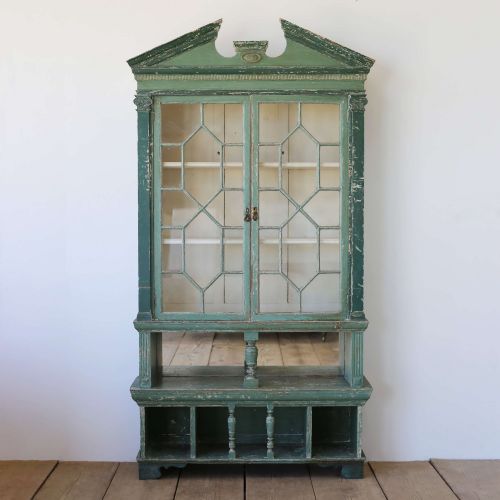
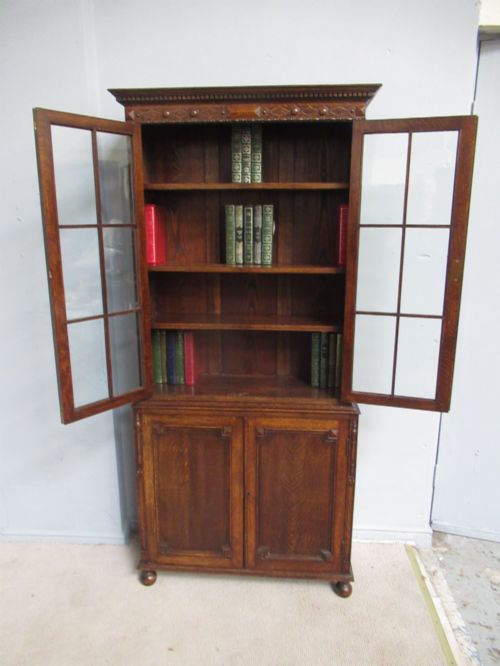
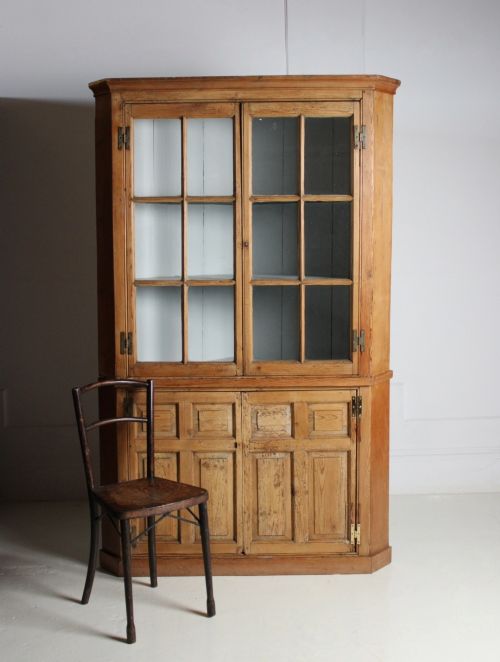
Glazed Bookcase on Cupboard
A glazed bookcase on cupboard combines upper display shelving behind glass doors with a lower enclosed timber base for storage.
Glazed Bookcase on Cupboard
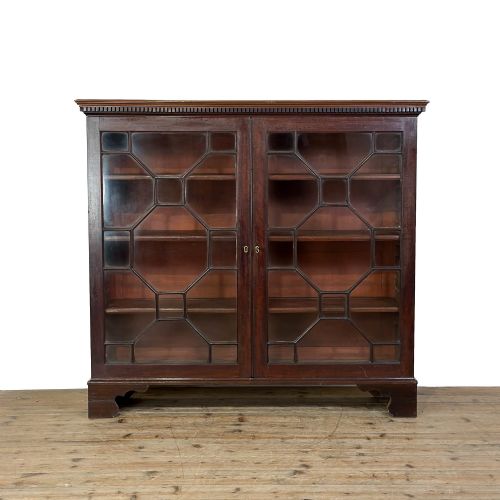
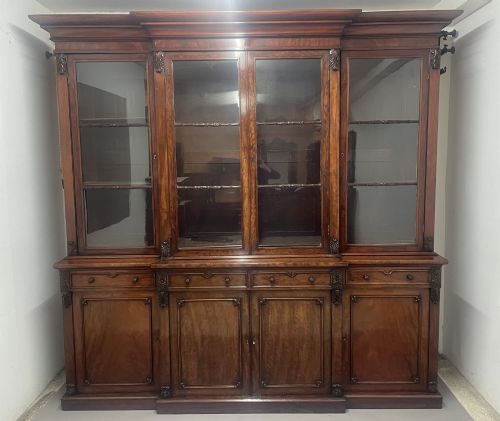
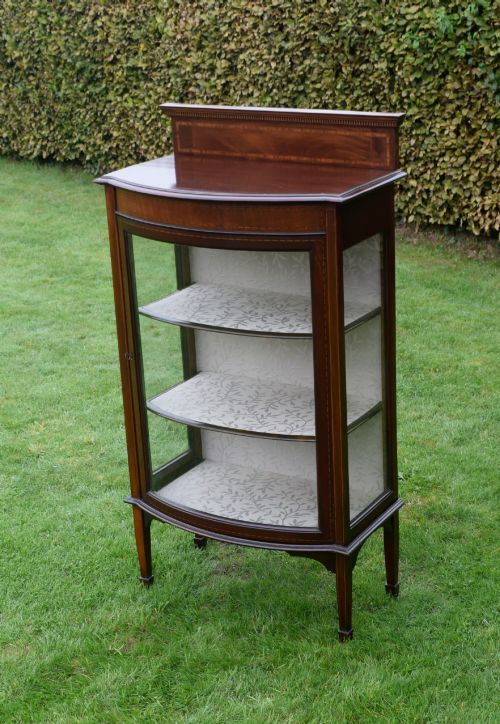
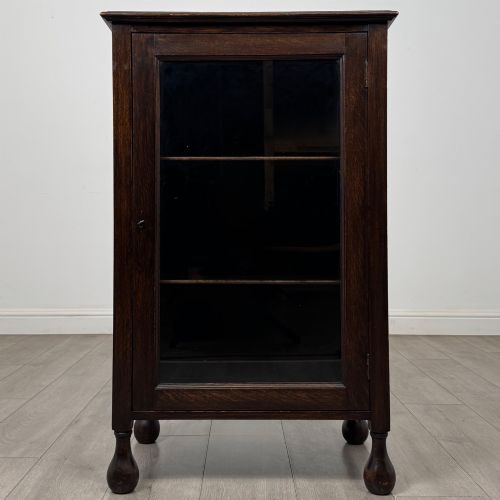
A glazed bookcase on cupboard unites a tall shelving section enclosed by glass doors with a lower enclosed wooden cabinet base. Pieces span periods from the eighteenth century through the Victorian and Edwardian eras, utilising timber construction.
Mahogany and walnut predominate among the surviving examples, often featuring figured grains or inlay work. The upper section displays books or collections, while the lower cupboard conceals utilitarian storage.
How they were made
Cabinet makers constructed these dual-section pieces primarily from mahogany, walnut, oak, and pine timbers. Selected veneers such as burr walnut or flame mahogany adorned primary surfaces.
Glazing techniques incorporated glass panels secured with wooden glazing bars or lead came, sometimes arranged in astragal patterns. Brass hardware and occasional ormolu mounts completed the joinery.
Listings feature woods including mahogany, walnut, oak, satinwood, and pine alongside glass and brass components.
What varies in quality
The selection of timber grain largely determines visual merit, with highly figured mahogany and burr walnut commanding attention. Finely executed inlay work, marquetry, and carved detailing distinguish superior examples.
Proportion and structural integration between the upper shelving unit and lower cupboard dictate overall refinement. Original glass, hardware, and interior adjustable shelving further elevate a piece.
Jas Shoolbred·Gillows·S&H Jewell·Maple & Co
The Glazed Bookcase on Cupboard Glossary
- Astragal
- Wooden bars forming a lattice or grid to hold smaller panes of glass within a door. These bars often feature moulded profiles in Georgian and Edwardian cabinet work.
- Breakfront
- A piece of furniture where the central section projects forward from the flanking wings. This architectural arrangement creates depth and shadow on larger library bookcases.
- Secretaire
- A desk disguised as a drawer, featuring a drop-front writing surface that conceals small pigeonholes and drawers inside. They appear built into the cupboard section of tall library pieces.
- Veneer
- A thin layer of figured wood applied over a secondary timber base to provide decorative exterior surfaces. Burr walnut and flame mahogany veneers define high-status Victorian and Edwardian examples.
Glazed Bookcase on Cupboard: Frequently Asked Questions
How are the two sections joined?
The upper glazed bookcase rests upon the lower cupboard base, often secured by alignment pins or simple gravity.
Because the two parts separate for transport, moving these tall architectural library pieces requires careful handling.
What woods were commonly used?
Mahogany and walnut represent the primary hardwoods utilised for formal parlour and library pieces, frequently finished with polished veneers.
Oak and pine appear in utilitarian examples, kitchen dressers, and provincial pieces intended for everyday domestic service.
Are the interior shelves adjustable?
Many Victorian and Edwardian library bookcases feature internal wooden racks allowing shelves to move up and down.
Fixed shelving is more typical in eighteenth-century vernacular cabinets and regional pine cupboards.
How do I date a piece?
Stylistic details such as Sheraton Revival inlay, Arts and Crafts simplicity, or heavy Victorian carving provide primary chronological clues.
Construction methods, secondary timbers inside drawers, and glass manufacture also help establish the period of production.