


Glass Icicle Chandelier
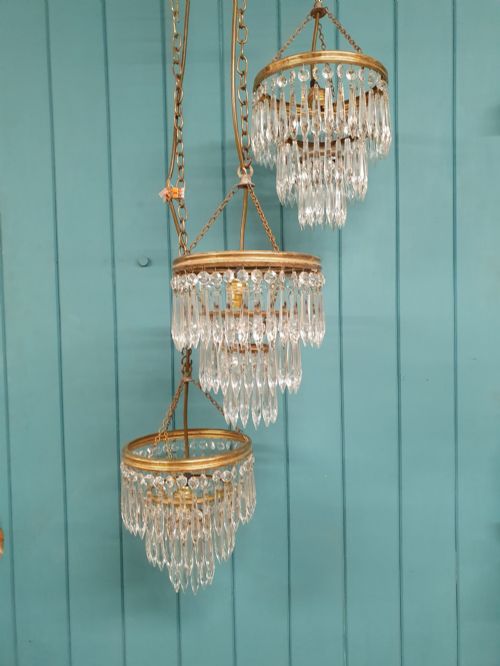
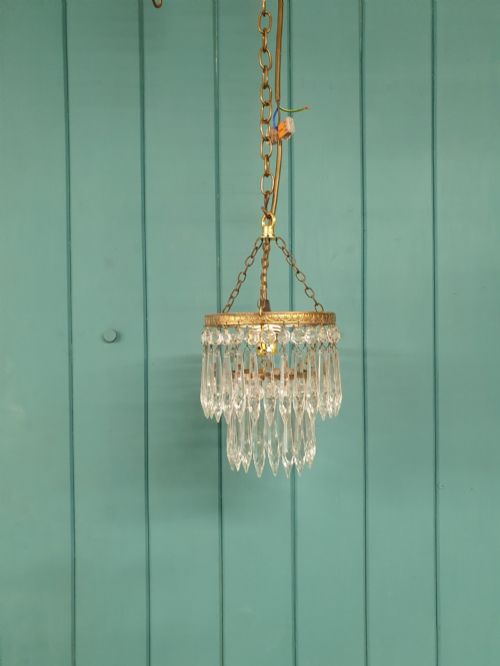
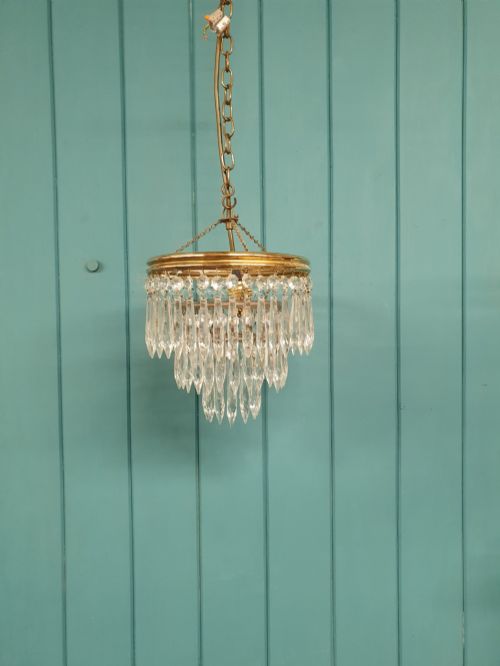
These glass icicle chandeliers bring bright light and sharp architectural presence to a room, formed primarily of brass and cut glass.
Glass Icicle Chandelier
When you search for glass icicle chandeliers, you encounter hanging light fixtures defined by prominent glass spikes, drops, and faceted components. These pieces date from the Edwardian era through the nineteen-thirties, spanning early twentieth-century production.
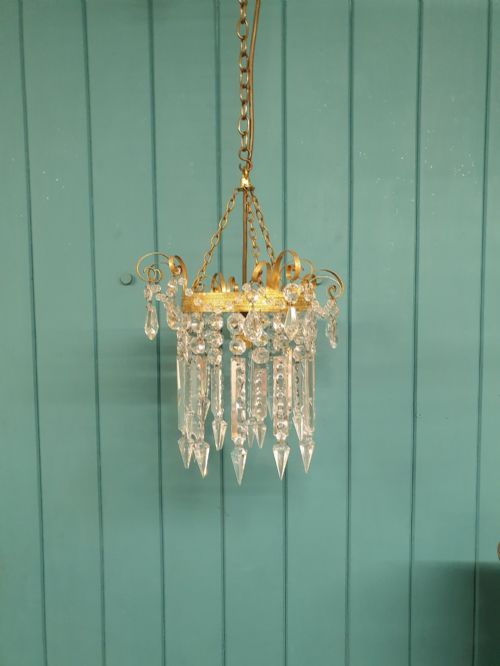
The prevailing format on this page is the spike chandelier, often manufactured in smaller diameters ranging from six to thirteen inches. Examples frequently pair brass frames with cut glass or crystal glass elements, alongside occasional French waterfall designs and Art Deco opalescent pieces.
How they were made
Makers constructed the structural frames of these chandeliers using brass, gilt brass, and copper to support the hanging elements. Metal components range from plain brass mounts to more ornate gilt and copper work.
Lighting assemblies incorporate glass, crystal, frosted glass, and cut glass to diffuse illumination. Individual spike drops and faceted components are suspended from the metal armature to catch and refract light.
Some spike chandeliers come equipped with finials, adding a tiny metal cap to the business end of an icicle.
What varies in quality
The standard of cutting on the glass elements dictates much of the visual clarity and brilliance across these fixtures. Crisp facets on the spikes and drops reflect light far more cleanly than softer, moulded alternatives.
Metalwork construction also distinguishes simpler utility pieces from more ambitious examples. Substantial brass or gilt frames with integrated finials and well-cast mounts demonstrate superior initial manufacture.
The Glass Icicle Chandelier Glossary
- Spike chandelier
- A hanging light fixture featuring prominent pointed glass drops resembling icicles. These pieces rely on vertical glass elements to create a sharp silhouette.
- Cut glass
- Glass that receives its decorative patterns through mechanical grinding and polishing. This process creates sharp facets that enhance light refraction.
- Gilt brass
- Brass that has received a thin layer of gold application over the base metal surface. This finish provides a warmer, more reflective tone than standard unpolished brass.
- Opalescent glass
- Glass exhibiting a milky, milky-blue translucence with pearlescent qualities. This material diffuses light softly across Art Deco lighting fixtures.
- Waterfall chandelier
- A lighting form where cascading tiers of glass drops flow downward in overlapping rows. These configurations soften the rigid lines of the supporting metal frame.
Glass Icicle Chandelier: Frequently Asked Questions
What periods do these chandeliers come from?
These chandeliers originate primarily from the Edwardian period and the nineteen-thirties. Production spans early twentieth-century designs, including French Chateau and Art Deco styles.
Most surviving examples date between nineteen-twenty and nineteen-thirty. Edwardian pieces often feature straightforward brass and cut glass spike arrangements.
How large are these chandeliers?
The pieces listed on this page tend toward compact dimensions, frequently measuring between six and thirteen inches in diameter. These smaller sizes suit modest ceiling heights and intimate rooms.
Pairs of spike chandeliers appear alongside single fixtures, offering matching options for multiple spaces. Larger multi-light configurations occur less frequently in the record.
What materials make up the frames?
Frames are constructed predominantly from brass, gilt brass, and copper. These metals provide the necessary structural strength to support suspended glass elements.
Finish treatments vary from bright polished brass to gilt surfaces and copper tones. The choice of metal generally aligns with the production period and stylistic influences.
How do I identify Art Deco examples?
Art Deco pieces incorporate specific manufacturing traits like opalescent glass shades and geometric copper mounts. These fixtures often bear distinct French attribution from makers active around nineteen-thirty.
By contrast, Edwardian pieces rely heavily on clear cut glass spikes and simpler brass framing. The treatment of the glass and the configuration of the metalwork mark the shift between these periods.