

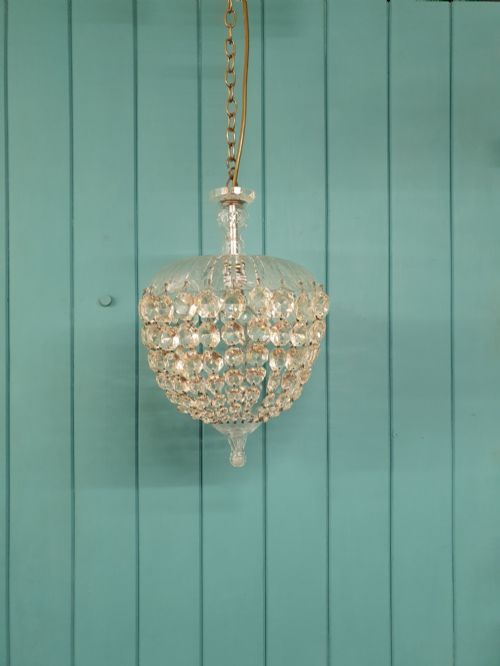


Glass Bead Light Fixture
A glass bead light fixture brings sparkle and period charm to a room through delicate wiring and reflective crystal elements.
Glass Bead Light Fixture
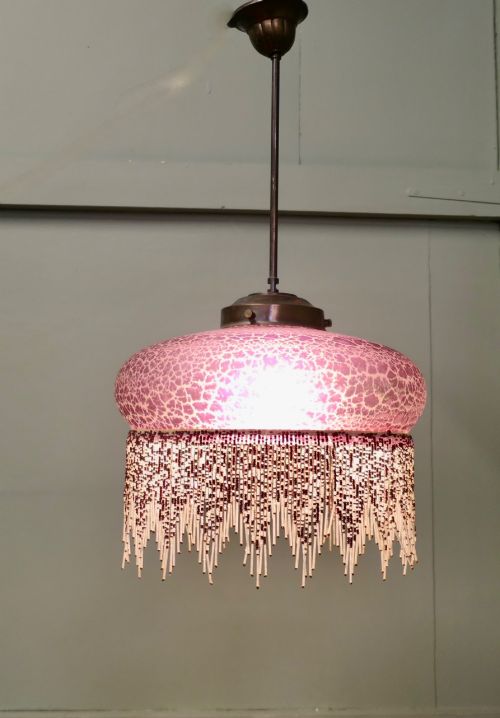
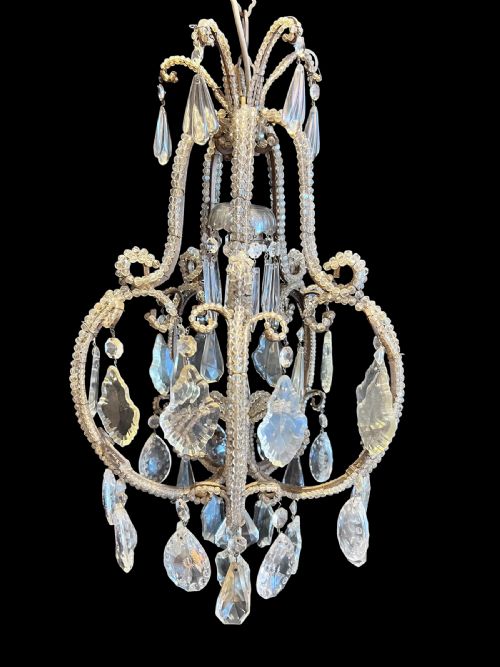
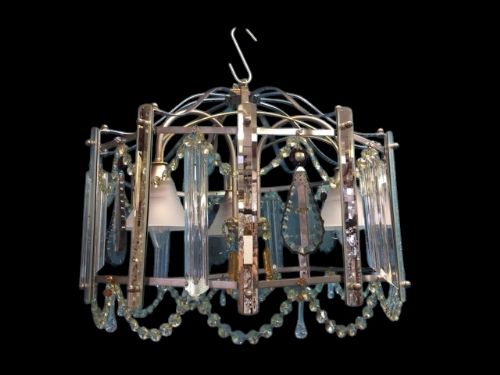
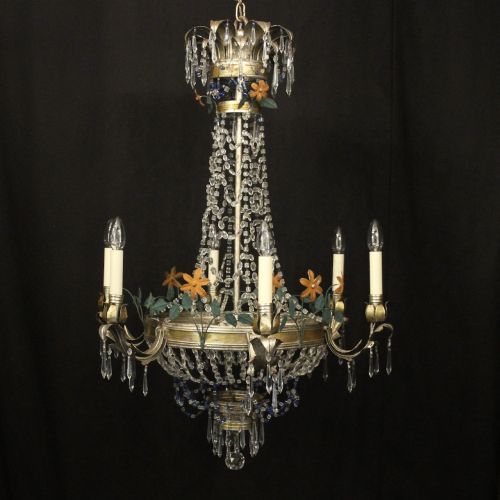
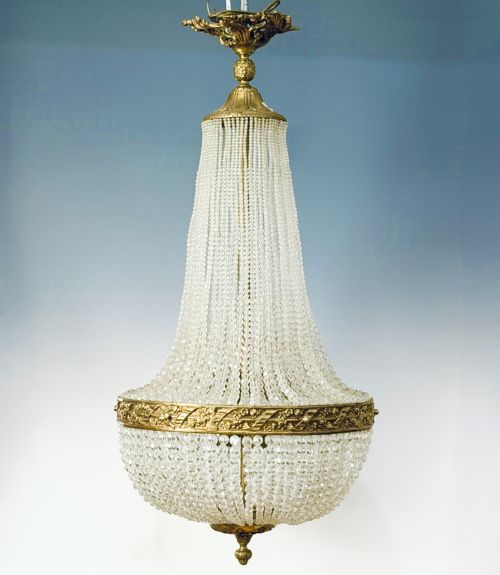
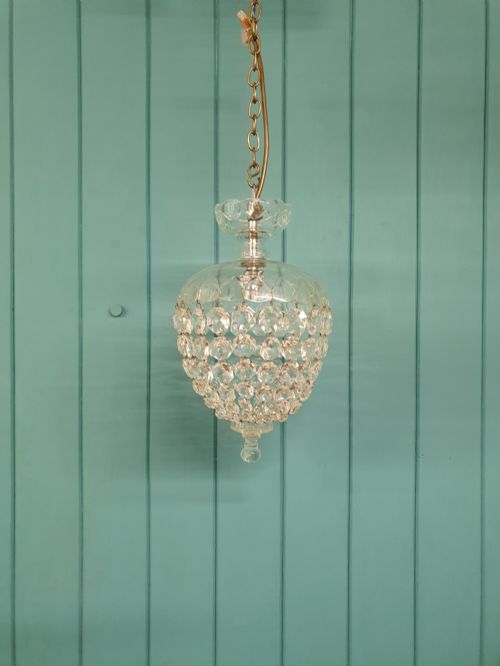
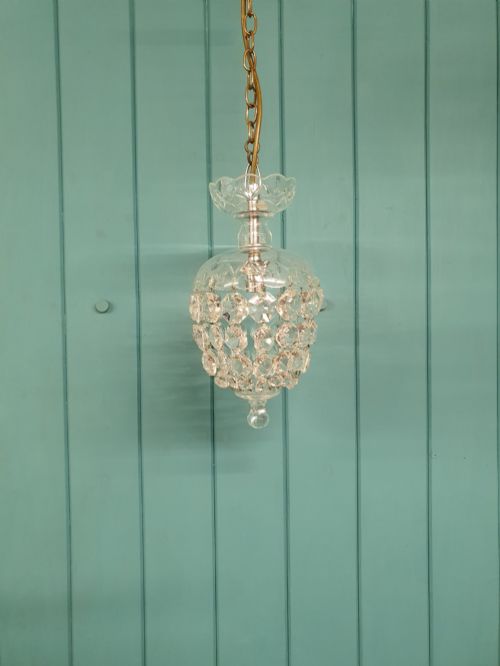
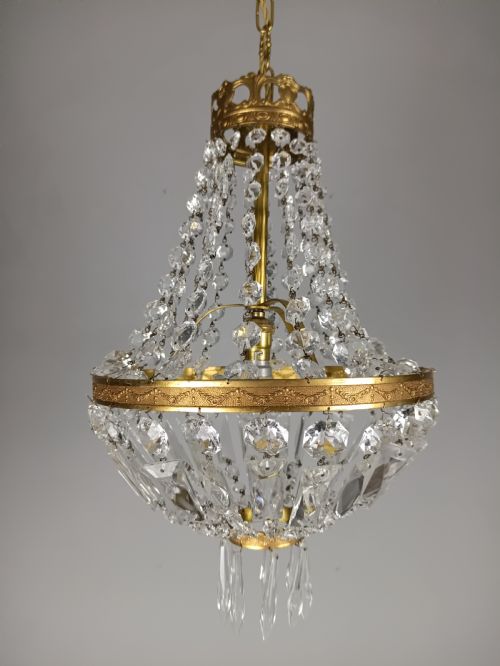
A glass bead light fixture encompasses chandeliers, ceiling lights, and pendant lights originating from the nineteenth century through the 1930s. Buyers searching for a glass bead light fixture encounter diverse configurations, from small dome tops to large French Empire and Italian Florentine examples.
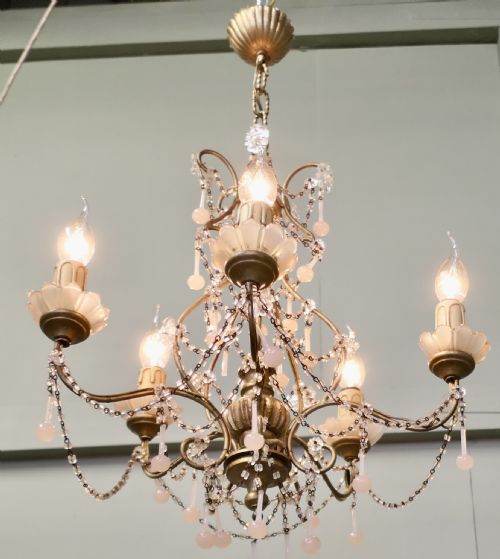
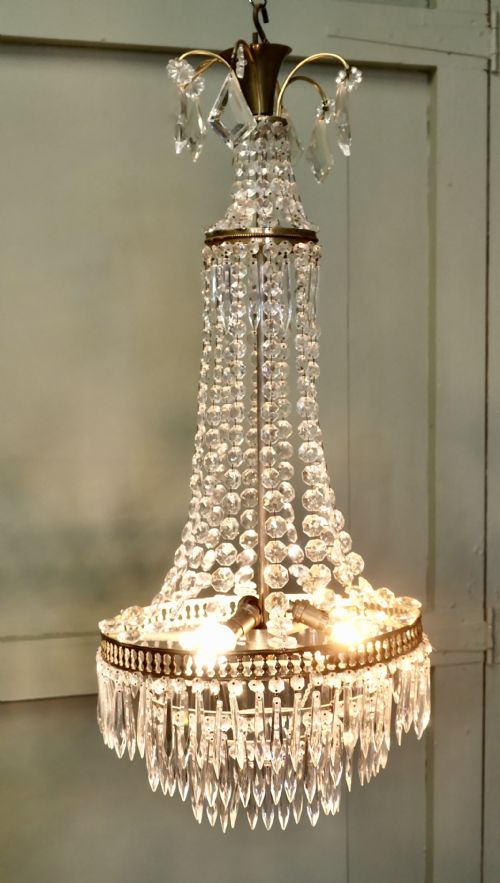
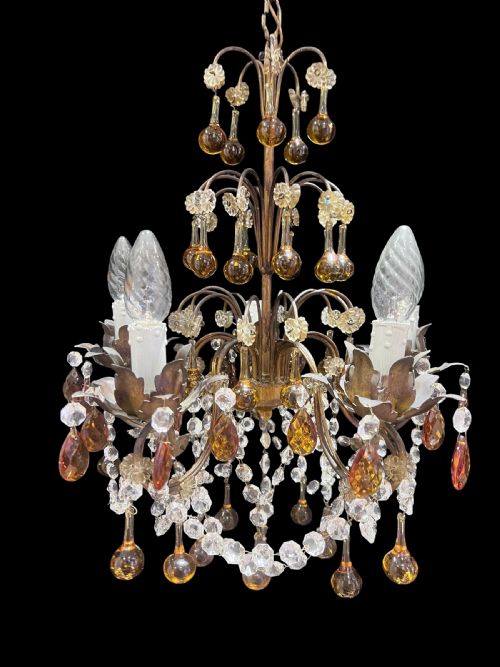
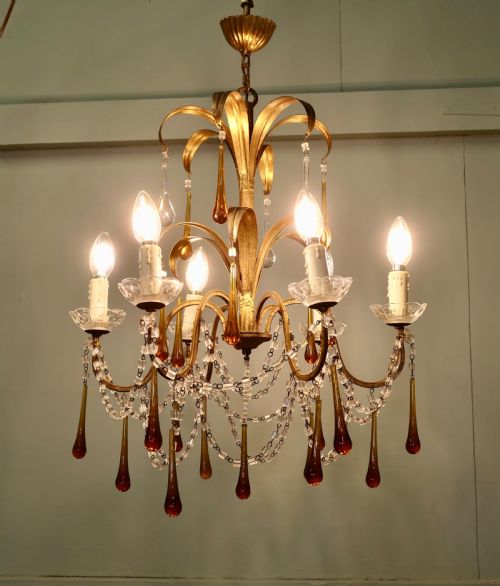
The most common versions on this page are Edwardian and 1920s pieces featuring brass, gilt metal, or iron frames hung with crystal drops and beads. These fixtures range from compact lampshades and bag chandeliers to multi-branched designs adorned with coloured crystals.
Origins span French and Italian workshops, alongside British Edwardian pieces, bringing distinct regional interpretations to the form. French designs often utilise tent and waterfall arrangements, while Italian pieces showcase galleon silhouettes and floral motifs.
Materials and construction
Frames are constructed from brass, gilt metal, chrome, iron, and gilt bronze, providing a sturdy structural skeleton for the hanging elements. Metal components are shaped into baskets, frames, and branches to support the weight of the glass parts.
Drapes, droplets, and beads are formed from cut glass and crystal, sometimes coloured in pink, amber, or various hues to create varied light refraction. Individual beads are wired together by hand to form swags, bags, and complex cascading patterns.
Glass Bead Light Fixture Retail Price Guide 2026
Typical asking prices for glass bead light fixture among the pieces listed under this phrase on Sellingantiques today, from the lower quarter to the upper quarter. They describe what is for sale here now, not the wider market.
Materials used across these light fixtures include brass, chrome, gilt bronze, iron, and cut crystal.
Defining quality
Quality rests upon the clarity and cut of the glass elements, alongside the weight and finish of the metal frame. Finer pieces employ precision-cut crystal that catches and disperses light sharply, paired with substantial cast brass or gilt bronze armature.
The intricacy of the assembly dictates distinction, distinguishing simple wire frames from elaborately structured tent and waterfall configurations. Original matching components and harmonious proportions across the frame and beadwork elevate the character of the piece.
Wedgwood
The Glass Bead Light Fixture Glossary
- Bag chandelier
- A light fixture featuring a flattened or rounded base composed of dense glass beads gathered in a net-like shape.
- Tent and waterfall
- A classic lighting arrangement where strings of beads form an upper canopy resembling a tent, cascading down over the central frame.
- Toleware
- Painted tin or metalware often utilised in historical lighting frames for decorative colour and form.
- Prism
- A cut-glass pendant designed to refract light into spectral colours when illuminated.
- Galleon chandelier
- An Italian lighting form shaped to resemble a historical sailing ship, heavily embellished with glass beads and metalwork.
Glass Bead Light Fixture: Frequently Asked Questions
How do I hang a heavy glass bead chandelier?
These fixtures require secure mounting into ceiling joists using appropriate steel hooks and brackets capable of supporting the combined weight of metal and glass.
Professional electrical installation ensures the internal wiring safely handles the lamp capacity while protecting fragile glass components during placement.
What rooms suit a glass bead light fixture?
Compact dome tops and lampshades work well in hallways, bedrooms, or smaller reception spaces where ceiling height is limited.
Larger multi-branch chandeliers and tent designs suit high-ceilinged dining rooms or drawing rooms needing a strong decorative focal point.
How do I clean a beaded light fixture?
Dust the fixture gently with a feather duster or soft brush on a regular basis to prevent grime accumulation on the glass beads.
For deeper cleaning, wipe individual glass elements with a mild cleaning solution while supported, avoiding harsh chemicals on the metal finishes.
How do I date an antique glass chandelier?
Dating relies on examining the metal composition, wiring methods, and cut of the glass, which shifted from nineteenth-century hand-cut methods to 1930s machine production.
Stylistic markers like Art Deco symmetry or Edwardian proportions also help place the piece within its historical period.